A Handwritten Card, a Gesture of Appreciation, and the Power of Community
earworm: [Miley Cyrus – The Climb]
The techniques mattered, but some of the greatest lessons were about confidence, composure, community, and what can happen when women have the time and space to learn together.
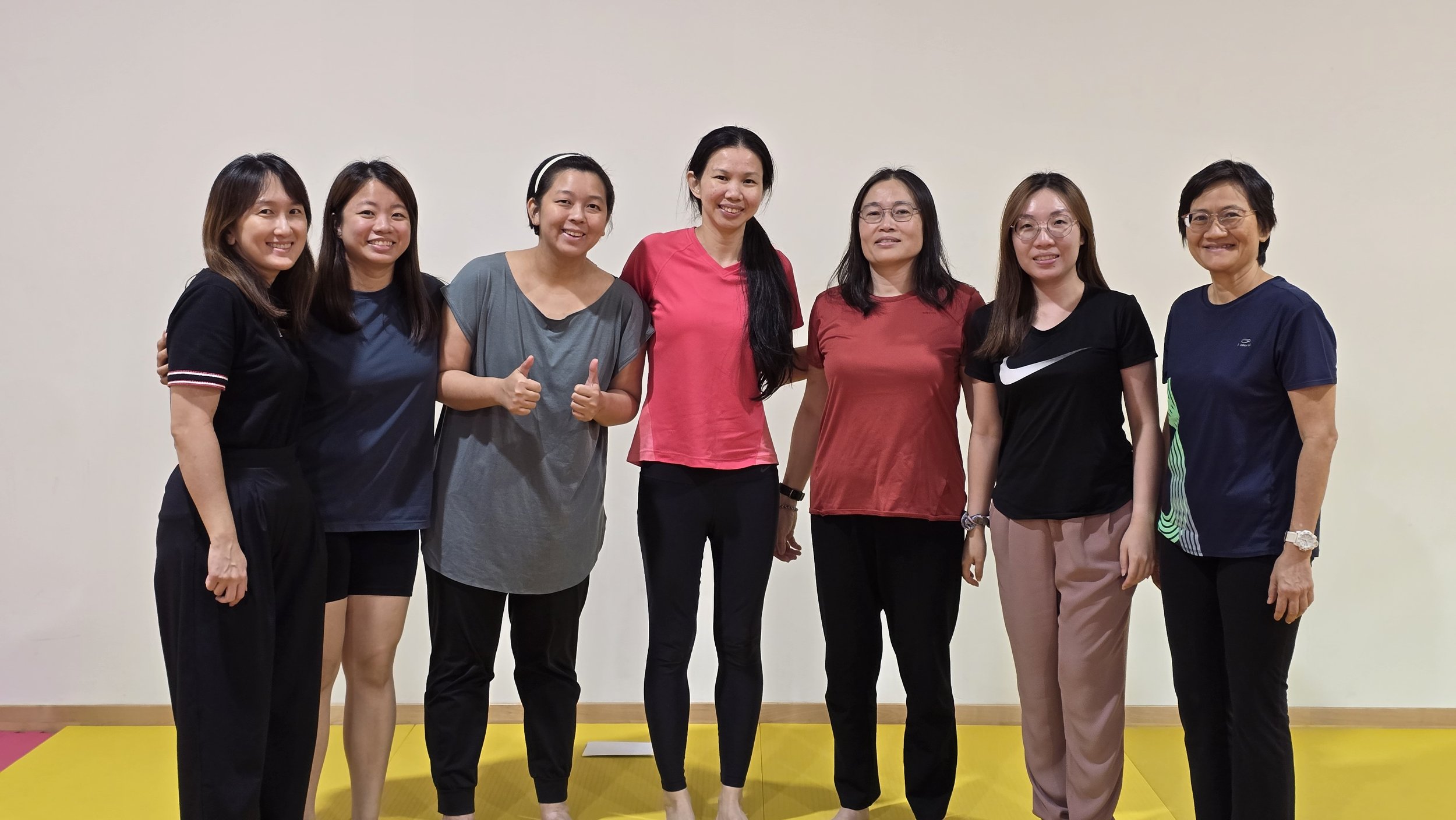
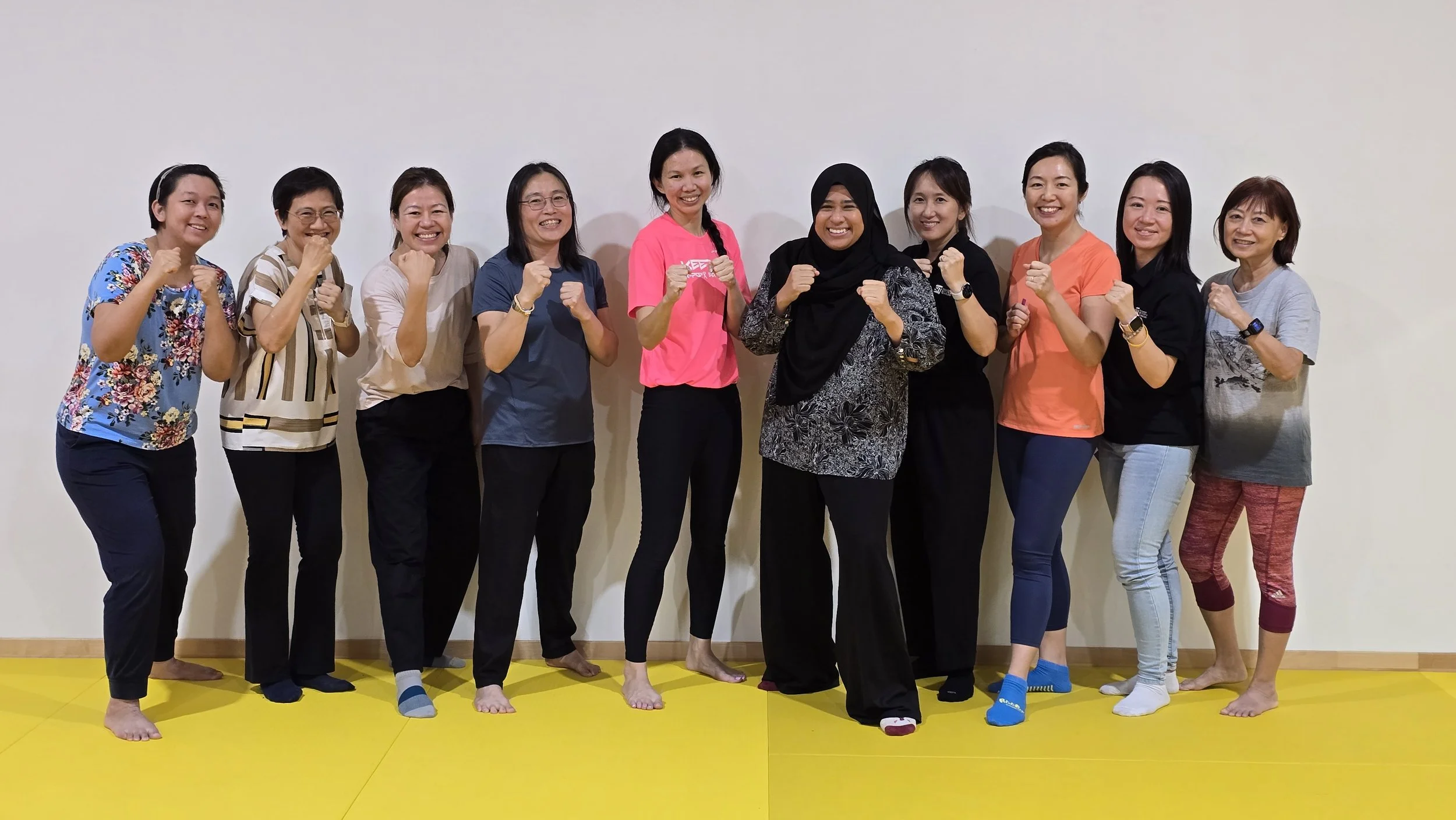
Our final Iron Flora session at SIT after eight weeks together. Shared with permission from participants.
Published: 25 August 2026 | Reading time: 5-6 min | Category: Iron Flora
Empower One. Empower Many.
As we sat in a circle for the final time during our eighth session, bringing the programme to a close, one of the participants suddenly got up and went to her bag. She came back with a small white envelope. I genuinely wasn't expecting anything, so I didn't think much of it at first.
Then I peeked inside.
It was a handwritten thank-you card.
I was very, very touched.
When showing up is already a gift
I never designed those eight sessions hoping to receive gifts. I designed them because this is something I genuinely enjoy teaching and something that has been close to my heart for many years. Simply having women choose to come back week after week was already a reward and a joy in itself.
Every Wednesday from 5pm to 6pm, they could have stayed in their offices finishing something or done any number of other things. Instead, they came to learn together.
Somehow, the time always passed ridiculously quickly. I would look at the clock and wonder how an hour had gone by already. It certainly never felt like an hour to me. Perhaps that is what people mean when they describe being in a flow state.
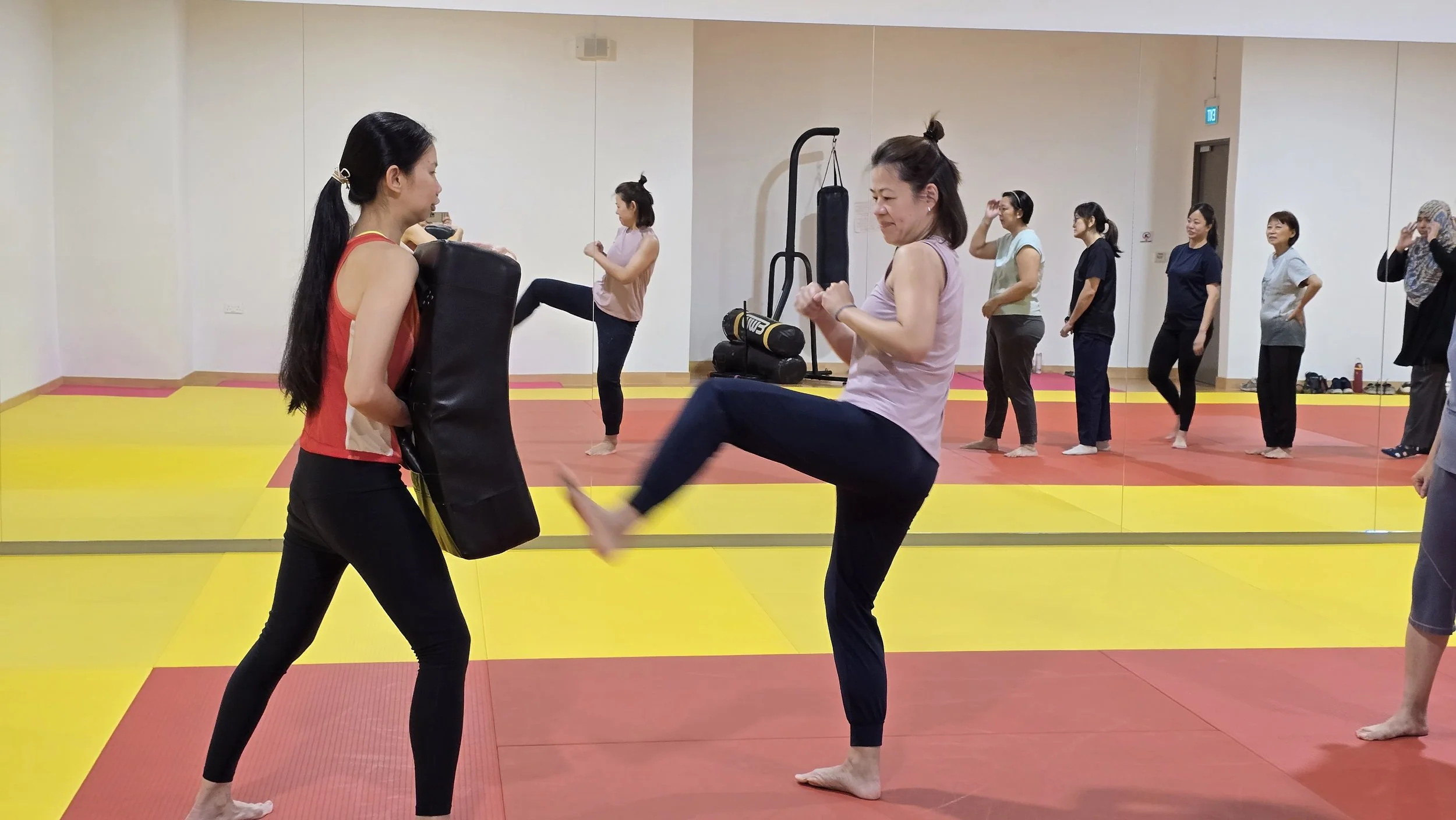
Iron Flora in action, bringing together confidence, awareness, composure and practical self-defence.
I was teaching something I cared deeply about, responding to questions in real time, watching people practise and improve, and thinking about what we could explore next.
I loved it.
Feedback matters
As an educator, I have always been grateful for feedback. Constructive feedback allows me to improve, while positive feedback reminds me why I teach.
The handwritten card was one of those moments.
What touched me wasn't simply what they had written. The participants came from different divisions and buildings across the SIT campus, yet somehow they had coordinated among themselves and found the time to write a card together. Anyone who has worked in education knows what April and May can be like, particularly for academic staff. Final assessments, marking, meetings and deadlines don't disappear because somebody wants to organise a thank-you card.
Everyone was busy.
That was why the gesture meant so much to me. Time is one of the most generous things we can give another person, and they had chosen to spend some of theirs doing this.

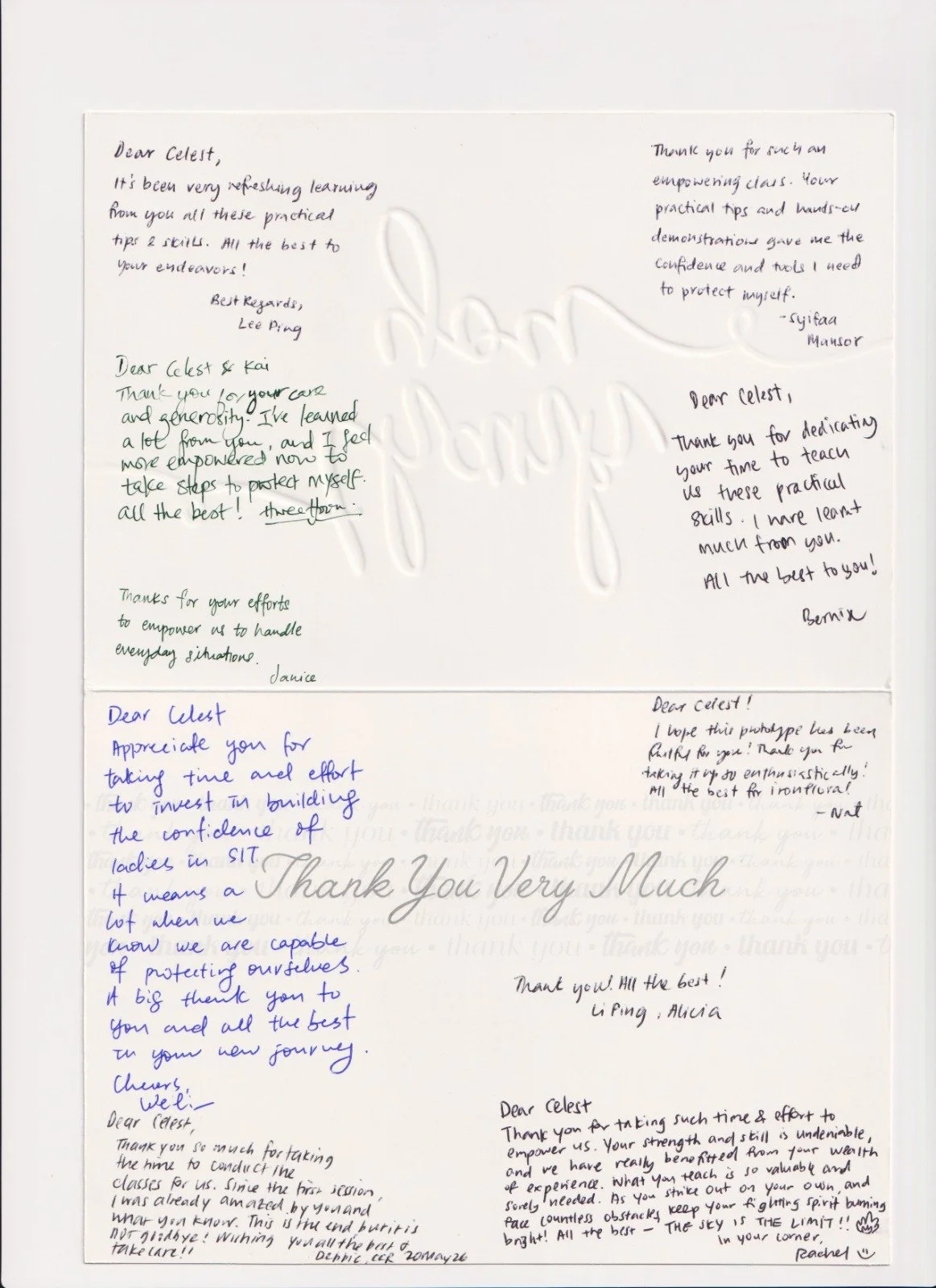
The handwritten thank-you card from the participants. I was very touched that they had even chosen pink deliberately for the message on the front. Shared with permission.
The words inside mattered too. Participants told me that they felt more confident and more aware after the sessions. For me, that was perhaps the most meaningful feedback I could have received because those were exactly the things I had hoped Iron Flora could help women develop.
At the end of the programme, the participants also gave me NTUC supermarket vouchers. I cook a lot at home, so the vouchers quite literally went towards nourishing my husband and me. I was very happy with them.
I still appreciate the handwritten card the most.
“I used to walk around outdoors, not paying attention to my surroundings. This class, conducted by Celestine, didn’t just teach me to punch; it taught me to see and be present. I am so much more aware of my surroundings now, and I finally feel like my reaction time would actually kick in if something felt wrong. Best investment in my safety I’ve ever made. Thank you!”
– Syifaa Mansor, Manager, Recognition of Prior Learning
“I really enjoyed Celestine’s classes. She is good at breaking down complex movements into simple to follow steps. I especially like her class on the “right” way to fall by rolling to avoid injuries. I have also picked up quite a few self-defense tips, such as how to free myself should I be grabbed and facing the attacker while running away to a safer distance, instead of turning around to run which would put me at greater risk of being grabbed again. Overall, I would highly recommend Celestine’s class if you are looking to be empowered with practical personal safety skills, as well as have some fun and exercise in the process.”
– Tan Li Ping, Director of Investment
The physical techniques mattered, of course, but self-protection was never only about techniques. It was also about awareness, communication, judgement, composure, knowing when to leave, knowing when to say no, and being able to act when something didn't feel right.
I had gone into the programme hoping that perhaps one woman would leave knowing a little more than before. Their feedback told me that something had landed.
Confidence takes practice
One thing became particularly clear to me over those eight weeks: confidence isn't something that appears because someone tells you to be confident.
It needs opportunities to grow.
A participant might initially hesitate during a drill, then try it. The following week, she remembers a little more. Someone asks a question. Another participant suggests something. We try a different scenario. Something that initially felt awkward becomes more familiar.
That was also why having eight sessions rather than only one made such a difference.
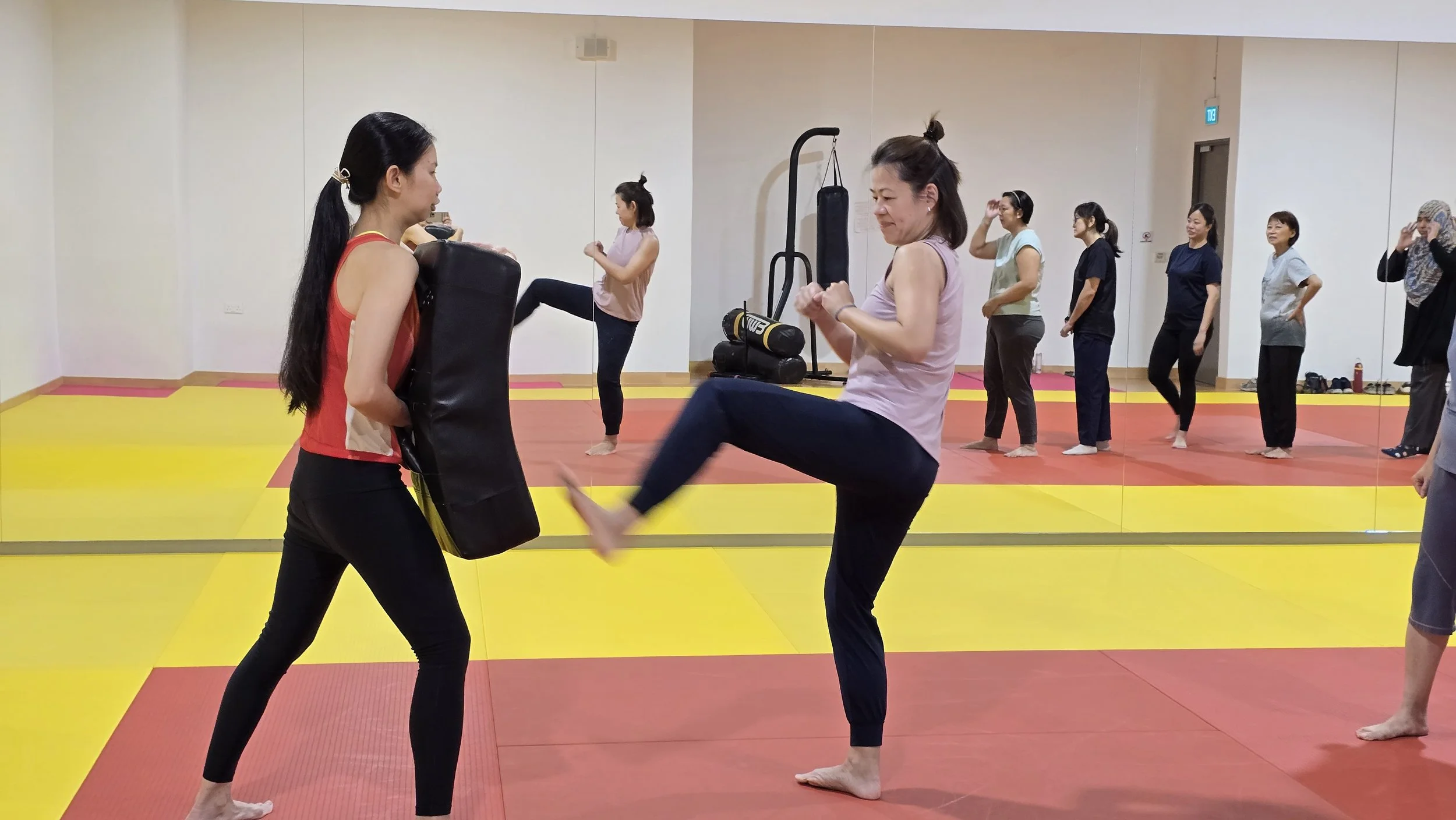
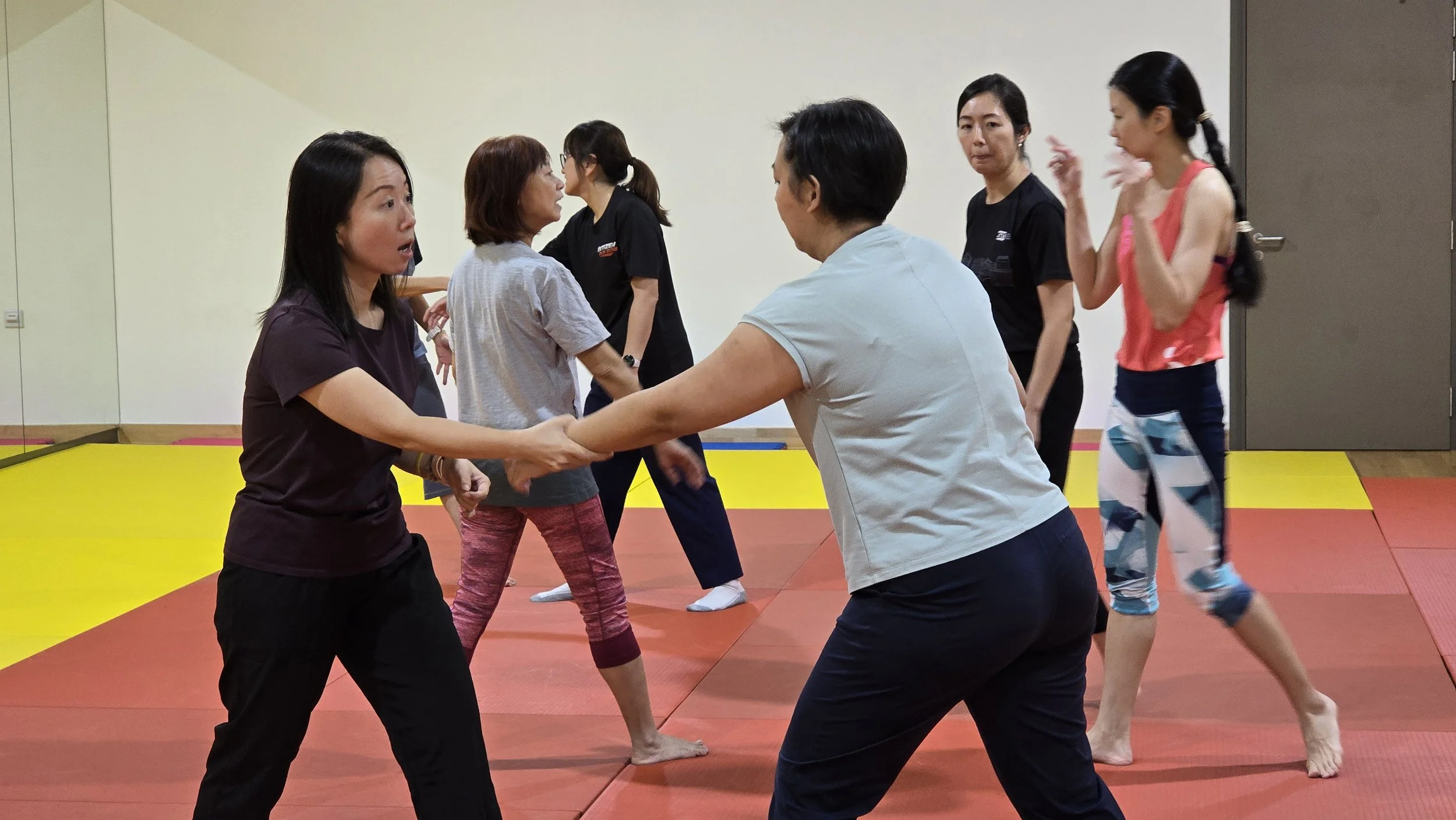
Practising, asking questions and learning from one another during one of the eight Iron Flora sessions at SIT.
We had time and a safe space to learn together. Time to repeat, ask questions and make mistakes without feeling awkward or embarrassed. Time to become more comfortable with one another and, eventually, time to build trust.
Community has always mattered greatly to me in full-contact martial arts too. One reason I have stayed in the full-contact martial arts community for so many years is because of the awesome people I have met along the way. Even after years of training, we still learn from one another, exchange ideas, ask questions, and occasionally discover that somebody else has a completely different way of approaching the same problem.
I had seen the same thing in the self-defence classes I taught at different points over the years, beginning in 2009: a good self-defence class isn't simply about an instructor demonstrating techniques while everyone else copies them. People bring their own experiences, questions and perspectives into the room, and sometimes one person's question gets everybody thinking.
By 2026, I also had more than a decade of experience in education behind me. Through teaching, curriculum and assessment work, adult education training and postgraduate study, I had developed a much stronger understanding of how to design learning deliberately. Iron Flora gave me the opportunity to bring these different strands together: years of martial arts and self-defence training and teaching, my experience with movement and Yin Yoga, and more than a decade of experience and training in education.
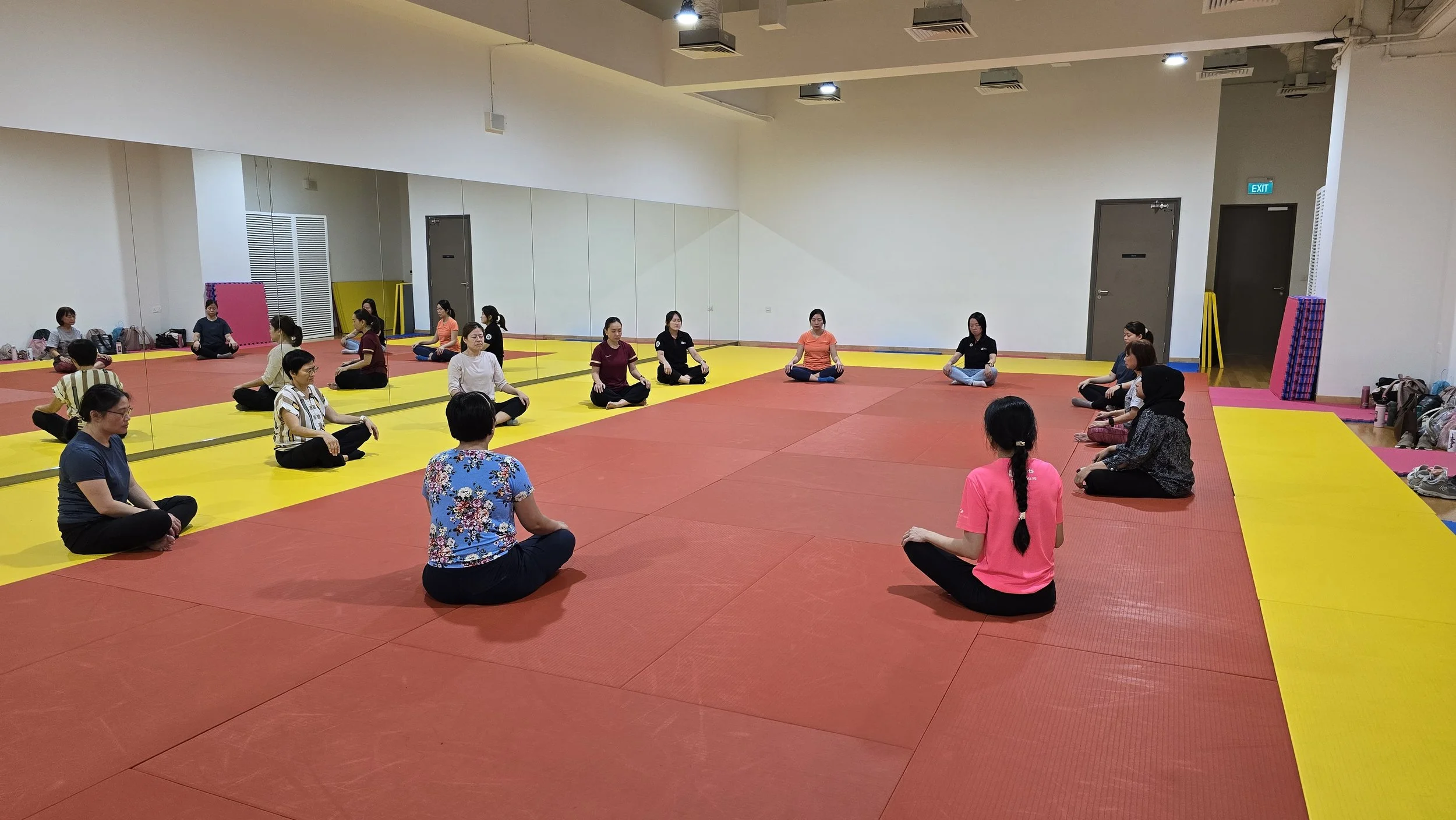
Winding down together at the end of an Iron Flora session.
My background in Yin Yoga also influenced how I thought about the rhythm of the sessions. After practising physical self-protection, I wanted participants to have time to wind down through stretching, gentle movement and breathwork. We could practise something physical and intense, then slow things down and leave feeling calm and relaxed.
The eight sessions reinforced something I have believed for a long time: learning is rarely one-way. Participants learnt from me, but they also learnt from one another, and I continued learning from them.
Building Iron Flora together
There was also someone else who showed up throughout all eight sessions: my husband. After each session, we would discuss what happened, think through different scenarios, and talk about what might work better the following week. He continues to work alongside me as we build Iron Flora today.
As I wrote in Why the Name Iron Flora – Strength and Gentleness Can Coexist, Iron Flora is deliberately centred on women and girls, but I have never believed that women empowerment has to happen in isolation. Men can be partners, friends, colleagues, educators and allies too.
Ultimately, however, the women themselves also became part of building Iron Flora.
When I first walked into that one-hour workshop on 18 March 2026, I hoped that perhaps one woman would leave feeling a little more confident than when she arrived. I certainly didn't expect that one workshop would become eight sessions.
By the end of those eight sessions, Iron Flora was no longer simply an idea I had carried with me for years. The women had brought their own experiences, questions, feedback, and perspectives into the room. They helped me see what worked, what they wanted to explore further, and what Iron Flora could become.
I couldn't find exactly the programme I was looking for, so I built it myself.
Then something even better happened.
Other women helped me build it too.
Bring Iron Flora to your community or organisation
If you're an educator, community organisation, corporate HR or wellness professional looking for practical confidence, awareness and self-defence training for women and girls, I'd love to explore how Iron Flora could support your students, staff or community.
Iron Flora programmes can be adapted for different age groups, needs and contexts while keeping the same core focus: developing greater awareness, composure and confidence, together with simple and practical self-defence skills that participants can remember when they need them.
Empower One. Empower Many.
You may also enjoy reading
I Thought I Was Running One Workshop. It Became Eight Sessions.
earworm: [Panic! At The Disco – Into the Unknown; Idina Menzel – Into the Unknown (Disney's Frozen 2)]
What started as a single women empowerment workshop became an eight-session journey of learning, practising and discovering how confidence can be built over time.
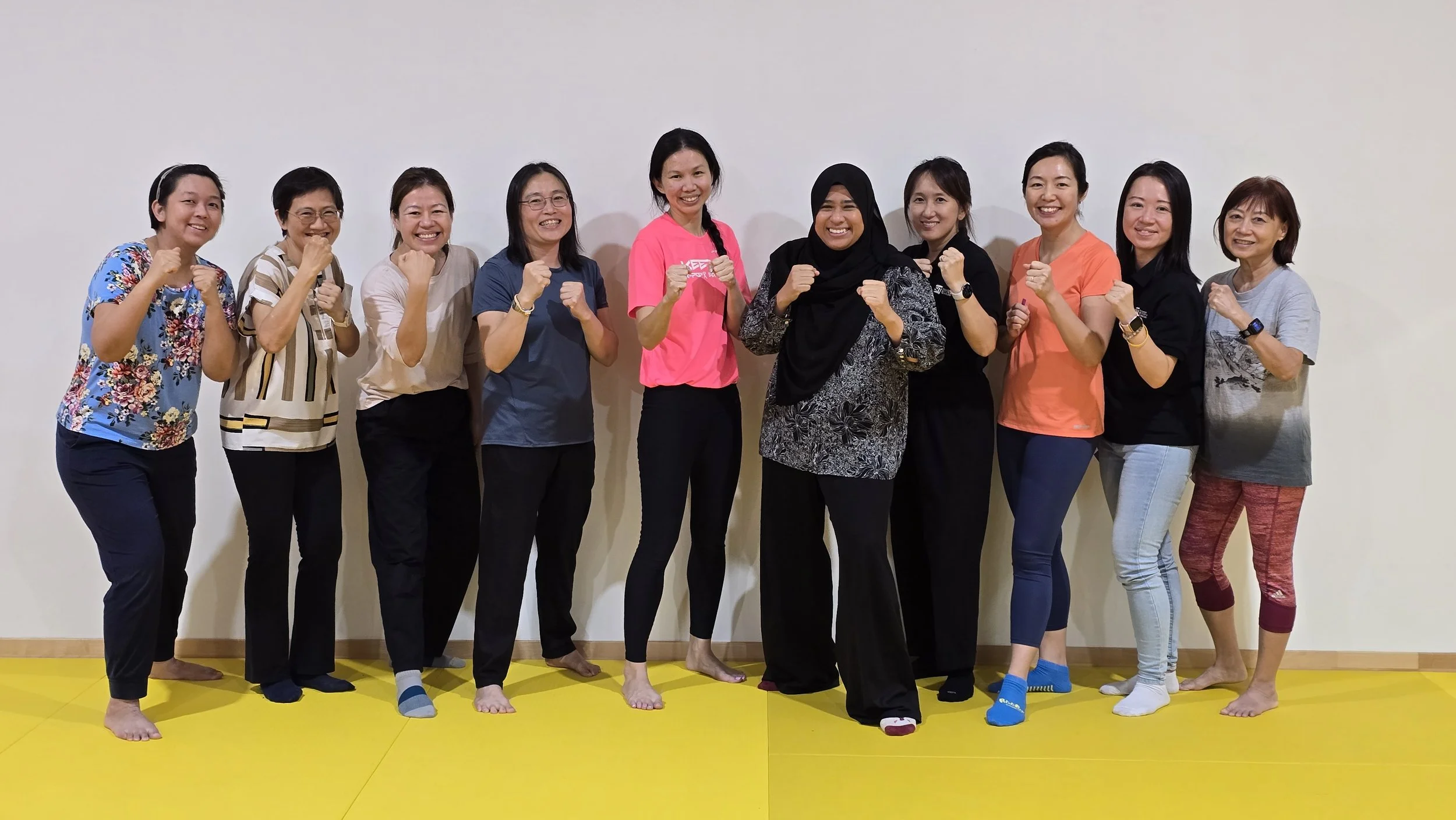
Our first Iron Flora session at SIT — the beginning of eight weeks of learning and practising together. Shared with permission from participants.
Published: 25 August 2026 | Reading time: 5-6 min | Category: Iron Flora
Empower One. Empower Many.
On 18 March 2026, I thought I was delivering a one-off women empowerment workshop at Singapore Institute of Technology (SIT).
I was wrong.
That one-hour workshop eventually became eight weekly sessions.
I had prepared the workshop carefully, hoping that participants would leave feeling just a little more confident and prepared than when they arrived. What I did not expect was that they would want to continue learning.
That was how one workshop became eight sessions.
How it began
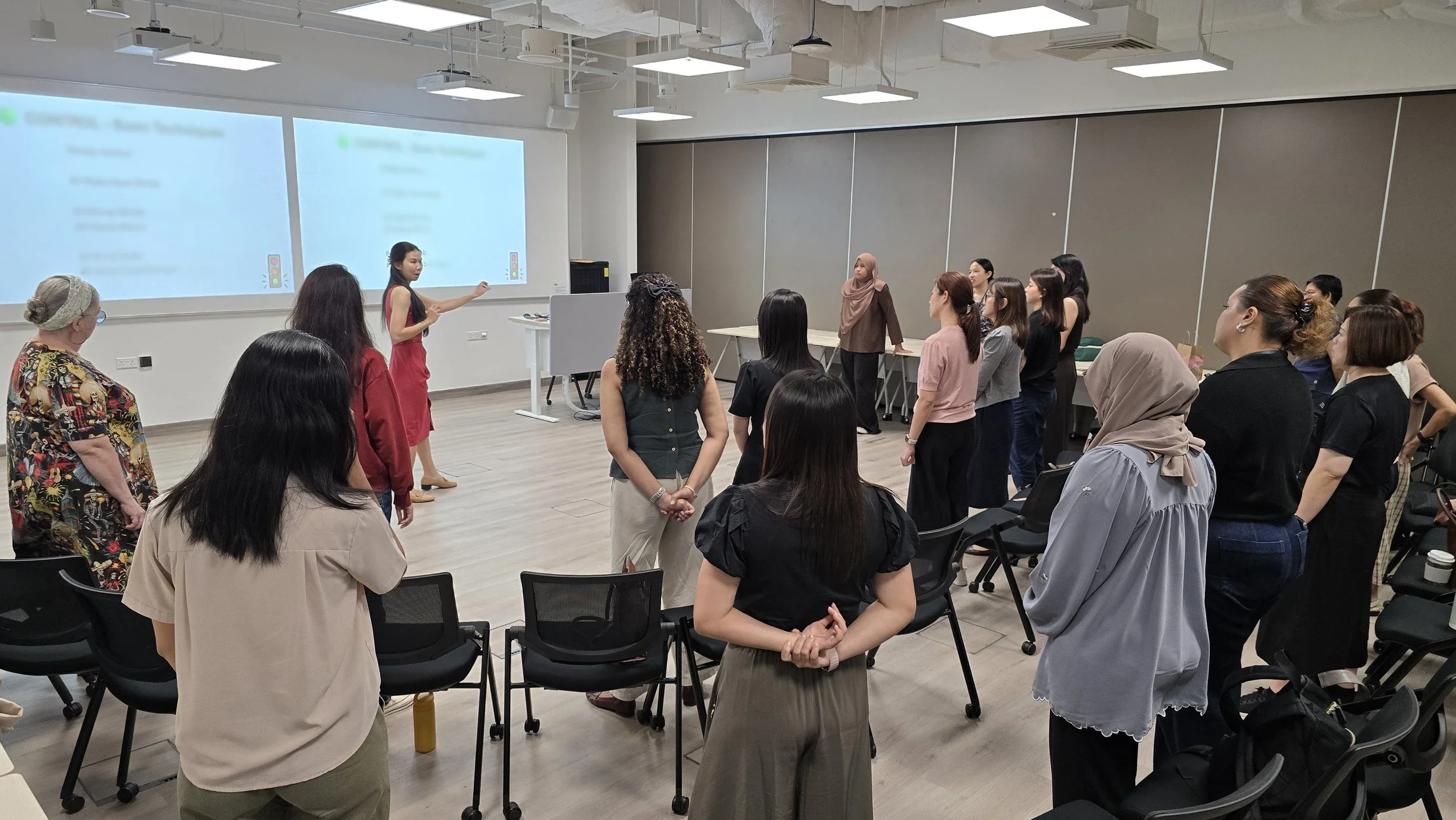
The first Iron Flora workshop at SIT on 18 March 2026, with 26 participants learning together.
As I was preparing to leave SIT, a senior leader asked me what I wanted to do next. I told her about something I had been thinking about for years: Iron Flora. She immediately saw an opportunity for me to try it at SIT and suggested that I run a one-hour workshop for the Employee Wellness Committee before my last day. I said yes. She not only encouraged the idea; she helped make the workshop happen. Twenty-six women signed up.
That single conversation changed everything.
As I shared in Why the Name Iron Flora – Strength and Gentleness Can Coexist, the roots of Iron Flora stretch all the way back to 2006, when I was looking for women self-defence classes myself. Over the years, I had accumulated experience in martial arts and self-defence, while also spending much of my career teaching and learning how to design curricula, lessons and assessments. I wanted to bring those different parts of my experience together into a women empowerment programme combining awareness, communication, confidence, composure and practical self-protection.
What I wanted participants to take away
My goal was never to teach women how to fight. It was to help them feel more prepared, more aware and more confident in making decisions when something did not feel right. Every activity had to be simple enough to remember, practical enough to be used immediately, and realistic enough to be applied outside a training room. That meant repetition, reaction drills, scenario practice and discussion.
Rather than immediately telling participants exactly what they should do, I often asked them: "What would you do?"
Those conversations became some of the richest learning moments. After many years in education, I have learnt that being able to perform a skill and being able to teach it well are two very different things. My approach is also influenced by Kolb's experiential learning cycle: adult learners bring their own experiences into the classroom, and learning happens through experience, reflection and making sense of what happened. I did not want Iron Flora to become an hour of me simply telling everyone what to do. Sometimes the most interesting learning happened when somebody asked a question that made the whole room stop and think.
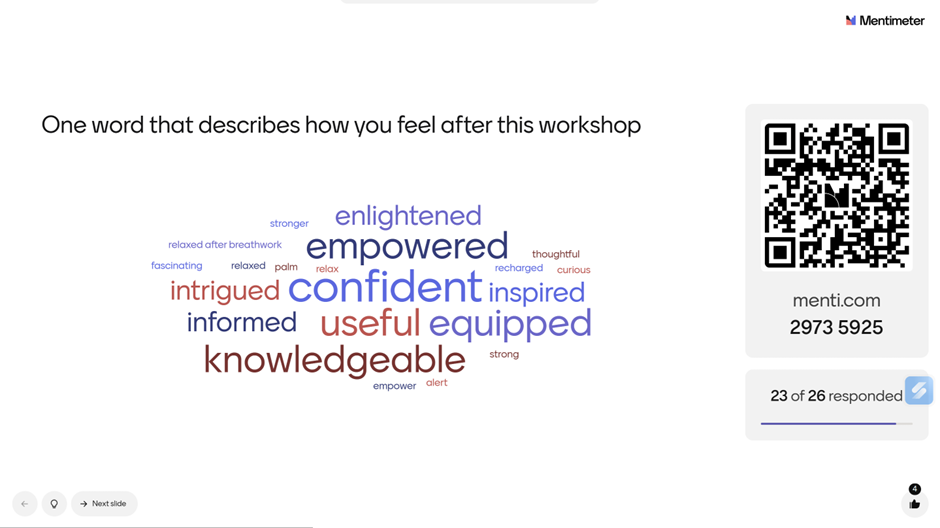
Participants were asked to describe how they felt after the first Iron Flora workshop in one word. “Confident”, “empowered”, “equipped”, “knowledgeable”, and “enlightened” were among their responses. 23 of 26 participants responded.
This was also where my years of martial arts and self-defence training met the educational experience I had spent much of my 30s developing.
Self-protection is more than fighting
One of the ideas I wanted participants to remember was that physical defence should not be the first response to every situation.
Our principle is: Escape → De-escalate → Defend.
If you can safely leave, leave. If a situation can be calmly de-escalated, everyone has already won. Physical self-defence becomes important when those options are no longer available.
The objective is not to win a fight. It is to create enough space to get away safely. This is not a film set. You don't know whether someone has friends nearby, whether there is a weapon, or what other risks you haven't seen. That is also why learning a technique isn't enough. Under stress, people may freeze.
One sentence I found myself returning to throughout the sessions was: "There isn't one best technique. The best technique is the one you remember to use after you've overcome the freeze response."
The aim was therefore not to teach dozens of impressive-looking techniques. I preferred a smaller number of simple and effective ones that participants could practise repeatedly, while also learning to breathe, remain composed and make decisions under pressure.
For me, that is much closer to what practical self-protection should look like.
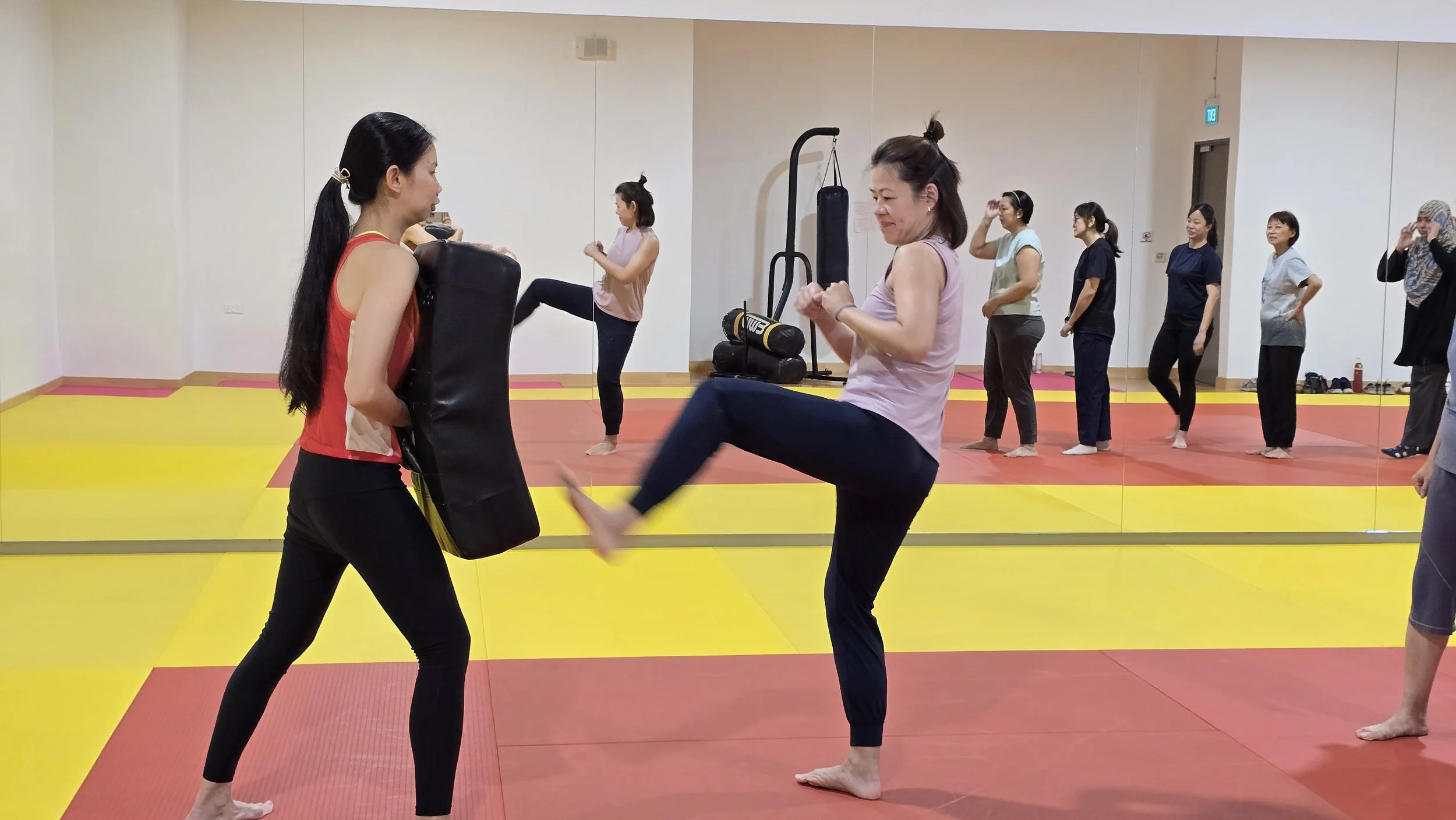
Participants practising a self-protection drill during one of the eight Iron Flora sessions at SIT.
For readers interested in where my approach to full-contact martial arts and self-defence came from, I wrote about being a female full-contact martial artist back in 2015, when I was 29.
In addition, because some of these principles become particularly relevant when we are navigating unfamiliar places alone, my earlier articles about travelling solo around Bali for 10 days and spending a month in Bangkok completing the Cambridge CELTA also reflect some of the experiences that eventually shaped how I think about awareness, confidence and independence today.
What happened after the workshop
The first workshop was supposed to be the end of it. Instead, participants wanted more.
So we continued.
Over eight weekly sessions, we had more time to practise, repeat, ask questions and explore different scenarios. These sessions also allowed me to observe what participants remembered, what they found difficult and what they wanted to learn next.
Because the learning was happening over several weeks rather than in a single afternoon, I could also adapt subsequent sessions based on what I was observing and what participants told me they needed. For instance, after our first session, one participant asked whether I could provide a recap of what we had covered and a preview of what we would be doing the following week. I thought that was a useful suggestion, so from then on, I shared a short recap and preview in our WhatsApp group after each session.
“I really appreciated the relatable stories shared by Celestine, which helped set a meaningful and engaging context for the Women Empowerment Workshop. The session was complemented by practical and effective tips that were easy to apply and genuinely helped strengthen my sense of confidence.”
– Zhang Weili, Career Educator
“Celestine’s workshop offers a rare blend of physical and psychological self-defence skills, making it highly valuable. She gives clear instructions and practical demonstrations that build confidence and empower women to handle everyday situations with strength and assurance.”
– Dr Janice Wong, Assistant Professor
Most of the participants had never stepped into a dojo or trained in martial arts, yet they were willing to try, ask questions, laugh when things didn't quite work the first time, practise again and come back the following week.
I did not take that commitment for granted. Our sessions were held every Wednesday from 5pm to 6pm, during SIT's recreational hour. There were plenty of other things they could have been doing with that time – attending a meeting, finishing up work, taking part in another activity, or simply heading elsewhere. Yet week after week, they made time to come, for which I am grateful.
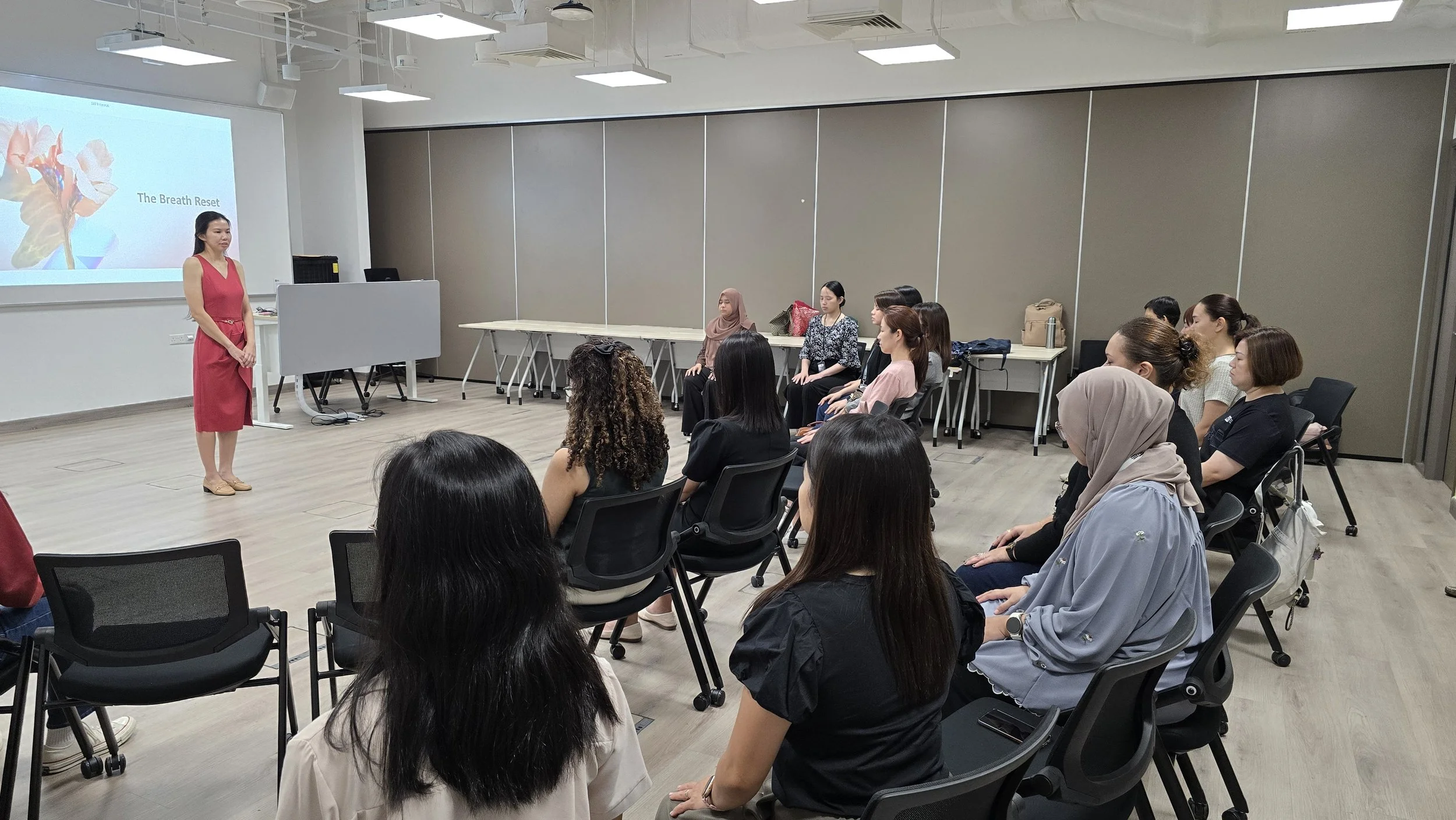
Winding down together at the end of an Iron Flora session.
Every session ended quietly too, usually with some stretching and gentle movement. After practising physical self-protection, I wanted participants to have time to wind down through stretching, gentle movement and breathwork. We could practise something physical and intense, then slow things down and leave feeling calm and relaxed. In some ways, that brought me back to the same idea of yin and yang that inspired Iron Flora in the first place: exertion and relaxation, strength and gentleness, action and calm. That balance mattered greatly to me.
What I learnt
I thought I was going there to teach, but I found myself learning every Wednesday evening as well. Adult learners ask wonderful questions. Some were questions I had never considered before, and those questions made everyone - including me - think more deeply.
Most importantly, the eight sessions reinforced something I already knew from education but had now seen through Iron Flora: Confidence takes practice.
A one-hour workshop can introduce an idea, teach a useful technique or help someone see something differently. However, confidence and composure become stronger through repetition, feedback, reflection and experience. That was what those eight weeks gave us.
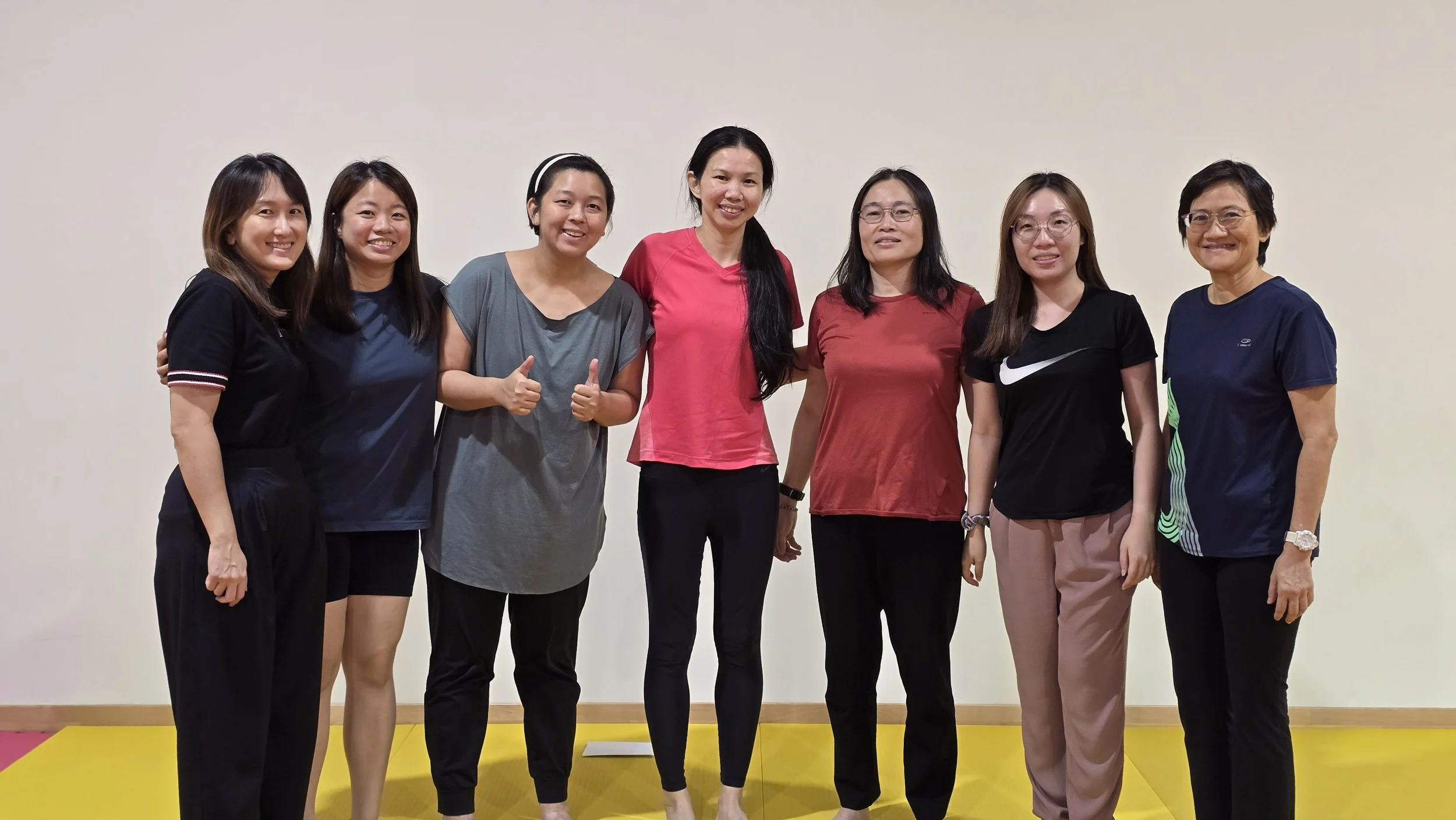
Our final Iron Flora session at SIT after eight weeks together. Shared with permission from participants.
Then, something else began happening along the way. The participants weren't simply learning from me – they were learning from one another. By the final session, what had started as a workshop had begun to feel like a small community: I Thought I Was Going to Teach Eight Sessions. They Became the Beginning of Iron Flora.
Bring Iron Flora to your community or organisation
If you're an educator, community organisation, corporate HR or wellness professional looking for practical confidence, awareness and self-defence training for women and girls, I'd love to explore how Iron Flora could support your students, staff or community.
Iron Flora programmes can be adapted for different age groups, needs and contexts while keeping the same core focus: developing greater awareness, composure and confidence, together with simple and practical self-defence skills that participants can remember when they need them.
Empower One. Empower Many.
You may also enjoy reading
Why the Name Iron Flora – Strength and Gentleness Can Coexist
earworm: [Idina Menzel & Kristin Chenoweth – Defying Gravity (Wicked the Musical)]
How martial arts, gardening and a journey that began in 2006 shaped my approach to women’s confidence, awareness and practical self-protection.
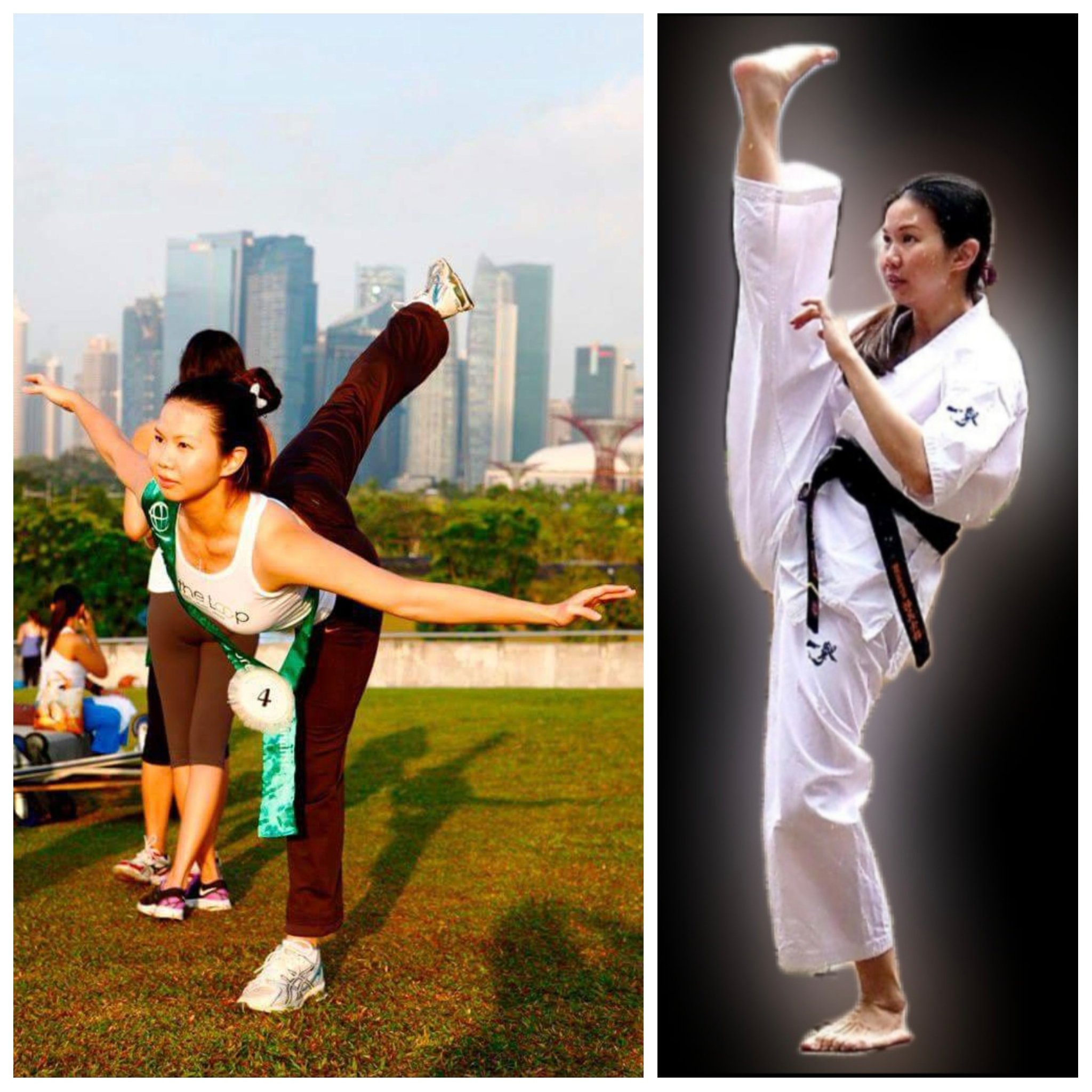
Strength and gentleness in motion — a high mae keage (front rising kick) and a figure-skating spiral, reflecting the balance at the heart of Iron Flora.
Published: 25 August 2026 | Reading time: 7 min | Category: Iron Flora
Empower One. Empower Many.
People sometimes ask me why I chose the name Iron Flora. For many of my friends, though, the name probably came as no surprise. They already knew that I had been practising full-contact martial arts (MA) for many years – and that I always talk non-stop about MA. Haha. At the same time, some have jokingly described me using the Chinese expression 皮包骨 (pí bāo gǔ), literally “skin wrapping bones”, because of my build, while others knew me from my flexibility and dance background.
In many ways, Iron Flora brings these seemingly different sides of me together.
Long before I stepped onto the mats for full-contact martial arts, I trained in flexibility and dance. That surprises some people, but it shouldn't. Bruce Lee won Hong Kong's Crown Colony Cha-Cha Championship in 1958, Jean-Claude Van Damme studied classical ballet for five years, and Michelle Yeoh trained in dance from childhood and pursued ballet at London's Royal Academy of Dance before a back injury changed the direction of her career.
Strength and grace are not opposites; they complement one another. Yin and yang. Hot and cold. This balance eventually became part of the inspiration behind Iron Flora.
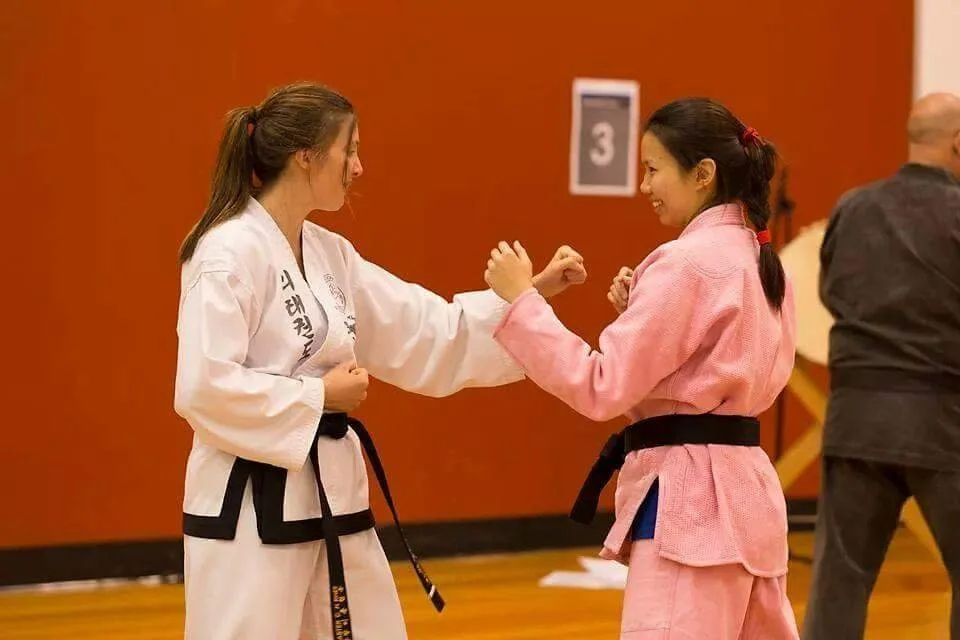
At the Fight For Life martial arts cancer fund-raising seminar in Melbourne in 2013 – more than a decade before Iron Flora had a name.
Iron represents resilience, courage and quiet strength, while Flora represents growth, gentleness and life. Together, they remind me that confidence does not have to be loud, and strength does not have to be aggressive.
I also genuinely enjoy gardening, so Flora was not simply a metaphor chosen for the programme. Anyone who gardens knows how surprisingly resilient plants can be. They bend, adapt, recover and continue growing, even though they may look delicate.
Self-protection begins before the fight
People often assume that self-protection begins with learning how to fight, but I think it begins much earlier—with awareness, communication, confidence, composure, good judgement and sometimes simply remembering to breathe.
If a confrontation can be prevented or calmly de-escalated, everyone has already won. In Iron Flora, the principle is simple:
Escape → De-escalate → Defend.
Physical techniques matter, but they are not the starting point. They are there for situations where the first two options are no longer available—perhaps in an enclosed space, when your back is against a wall, or when you are travelling alone and help is not immediately available. I understand some of that reality because I have travelled alone for both leisure and work myself.
Even when physical self-protection becomes necessary, the objective is not to stay and fight. This is not a film set. The objective is to create enough space to get away and reach safety as quickly as you can. You don't know whether the other person has friends nearby, whether there is a weapon, or what other variables you haven't seen.
More importantly, I want women to learn how to recognise and work through the freeze response, so that they can breathe, think, make decisions and act when they need to.
To me, empowerment is not about teaching women to fight. It is about helping them live with greater confidence, awareness and choice.
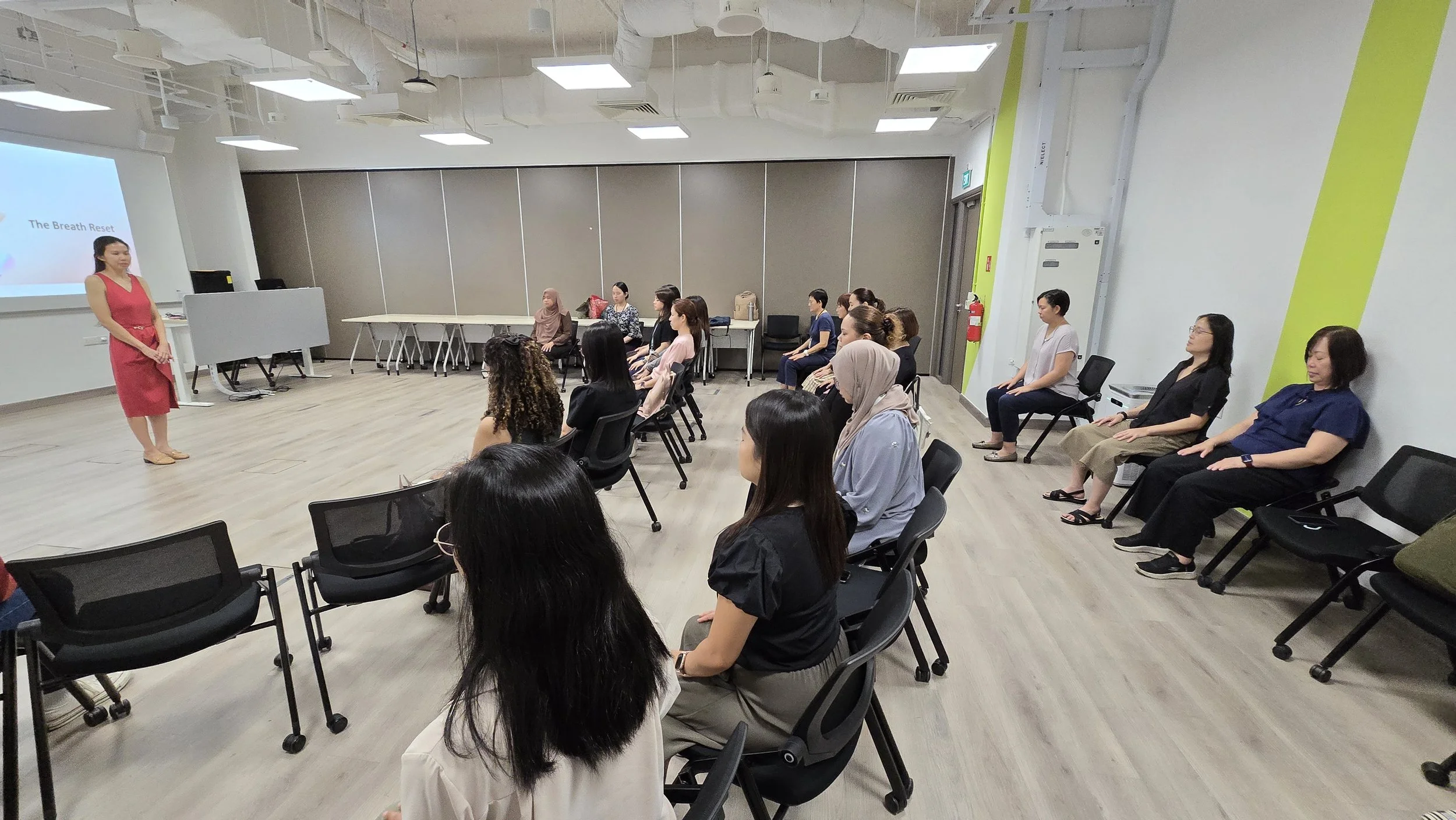
Winding down together at the end of an Iron Flora session.
Physical self-protection can involve moments of intensity, but I also wanted participants to know how to come back down from them. My background in Yin Yoga influenced how I thought about the rhythm of the sessions, so we ended with stretching, gentle movement and breathwork, giving participants time to slow down and leave feeling calm.
In many ways, this reflected the same idea of yin and yang that inspired Iron Flora in the first place: exertion and relaxation, strength and gentleness, action and calm.
Confidence is an everyday skill
Self-protection doesn't begin and end in a training room. Sometimes confidence is as simple as standing a little taller, rolling your shoulders back, making gentle eye contact, keeping your face and body relaxed, speaking clearly, or knowing when to say “no.”
These are not only self-protection skills; they are life skills. They matter during workplace presentations and job interviews, difficult conversations and unfamiliar social situations. They matter on solo trips, overseas work assignments and first dates.
You may never need to use a palm-heel strike or escape from a wrist grab outside a training session, and I sincerely hope you don't. However, awareness, composure and confidence are things that you can use throughout your life.
The roots go back further than I realised
Iron Flora did not suddenly appear in 2026.
Around 2006, I was already looking for women self-defence classes myself. By 2009, I had begun teaching them.
Recently, while looking through my old Google Drive, I found lesson notes that I had created with one of my Jujitsu coaches in March 2010. By then, I already had several years of martial arts and self-defence training behind me, but I also realised that knowing how to perform and teach individual techniques was not the same as knowing how to design a coherent curriculum.
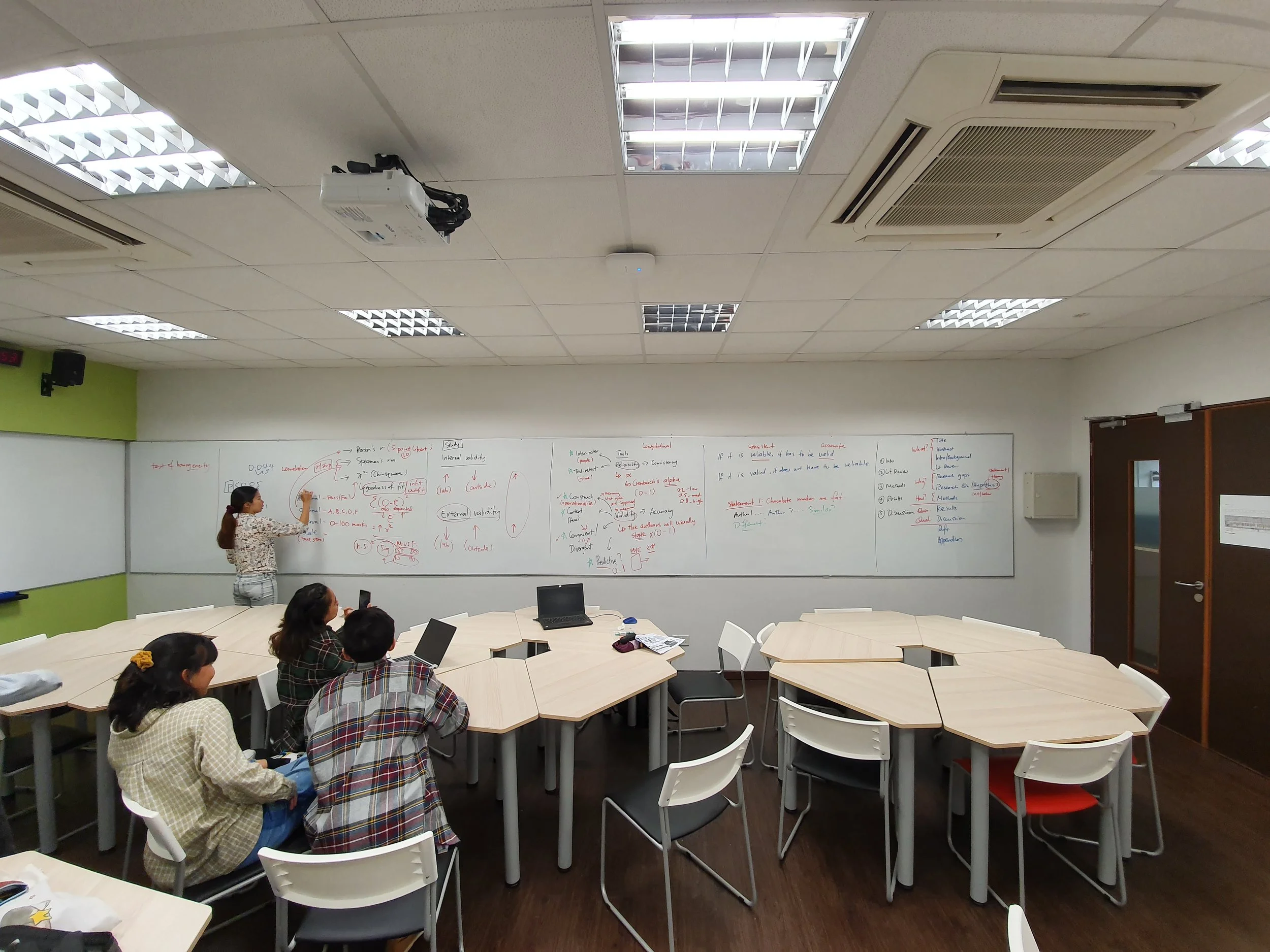
Teaching at Ngee Ann Polytechnic. I didn't know it then, but the years I spent learning how to teach, design curricula and assess learning would eventually find their way back into Iron Flora.
So, over the next decade, I deliberately built that other side of my expertise. I trained and worked in education, learnt how to design curricula and lessons, completed professional training in adult education, and eventually pursued a Master of Education (Educational Assessment), including a 10,000-word dissertation on “Examining Online Formative Assessment in a Digital Literacy Module Using the Rasch Model”. Along the way, I learnt about learning outcomes, assessment, facilitation, learner needs, and how the different parts of an educational experience fit together.
Being able to do something and being able to teach it well are two very different things.
Looking at those 2010 notes now, I don't see something that was inadequate. I see the beginnings of an idea for which I did not yet have all the educational tools to build.
More than a decade later, I do.
The seeds were already there. I simply spent the years in between learning how to help them grow.
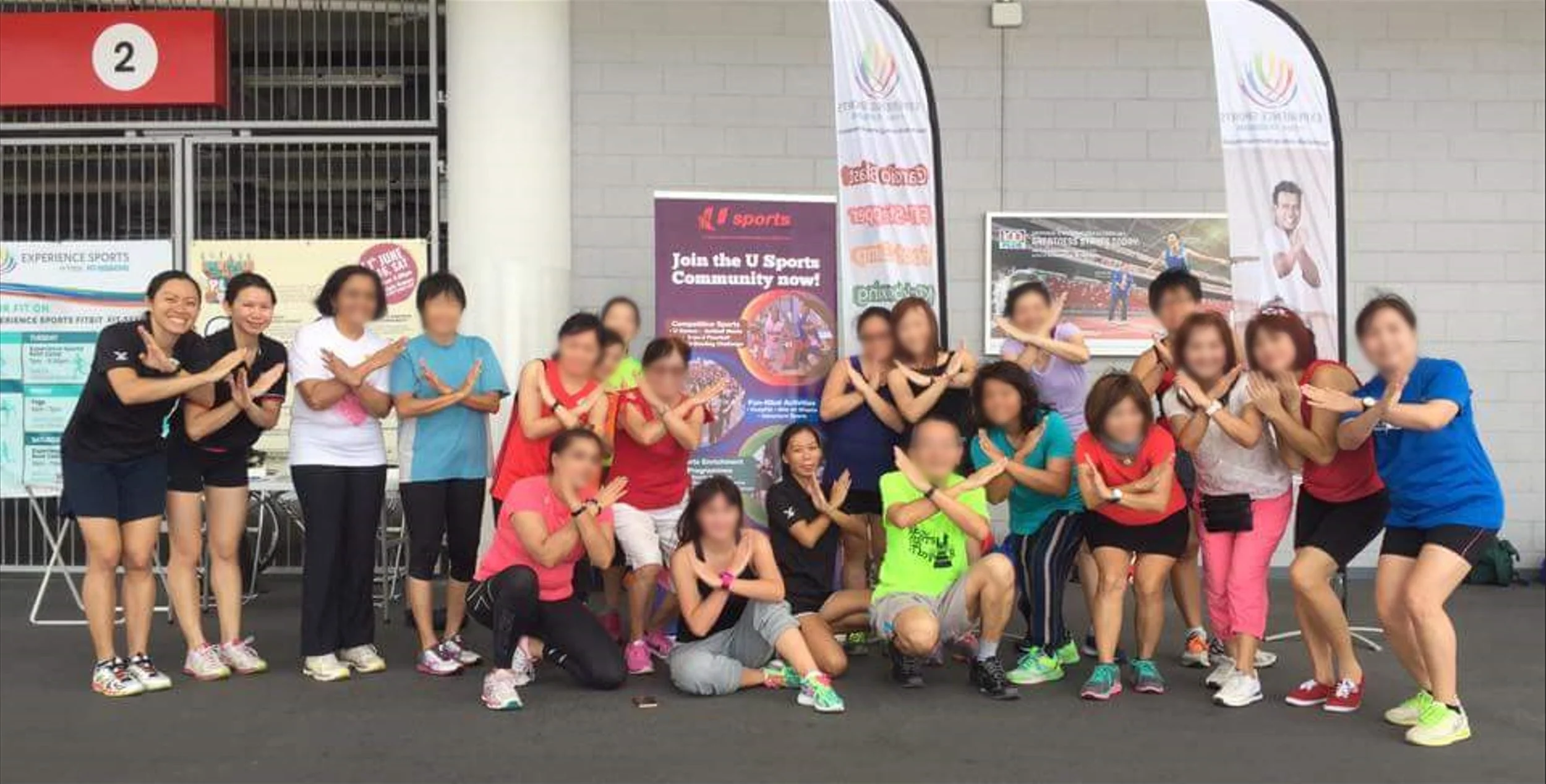
With participants and organisers at an NTUC U Sports self-defence and fitness session around 2015. Participants’ faces have been blurred for privacy.
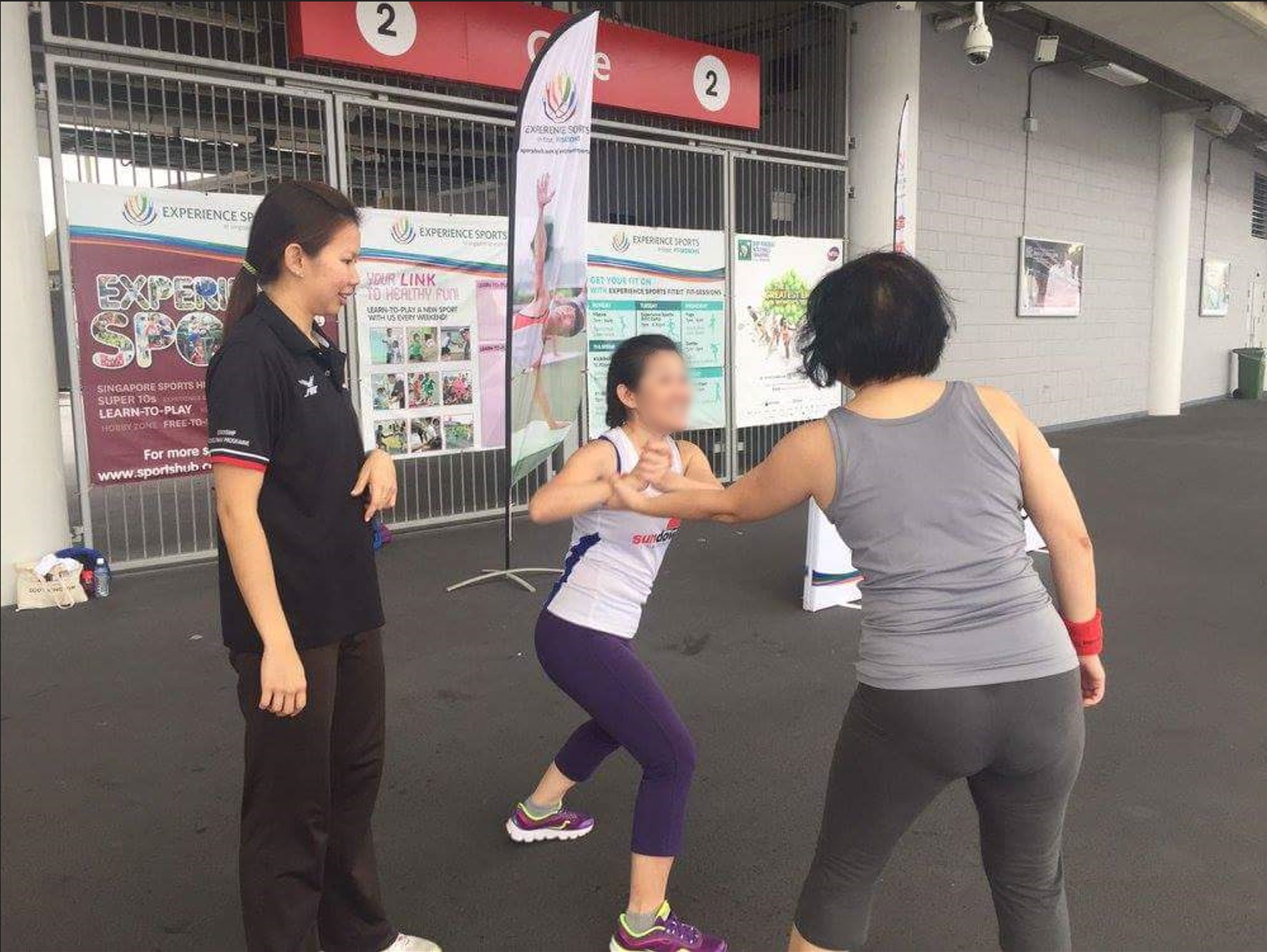
Participants practising a self-defence technique in pairs during an NTUC U Sports session around 2015. Participants’ faces have been blurred for privacy.
Around 2015, I taught an earlier version through NTUC U Sports as a Fitness Ambassador, where the sessions combined self-defence and calisthenics. Some of you may even remember the classes at the Kallang Stadium 100PLUS Track. Looking back now, I realise that those sessions were another step towards what Iron Flora would eventually become.
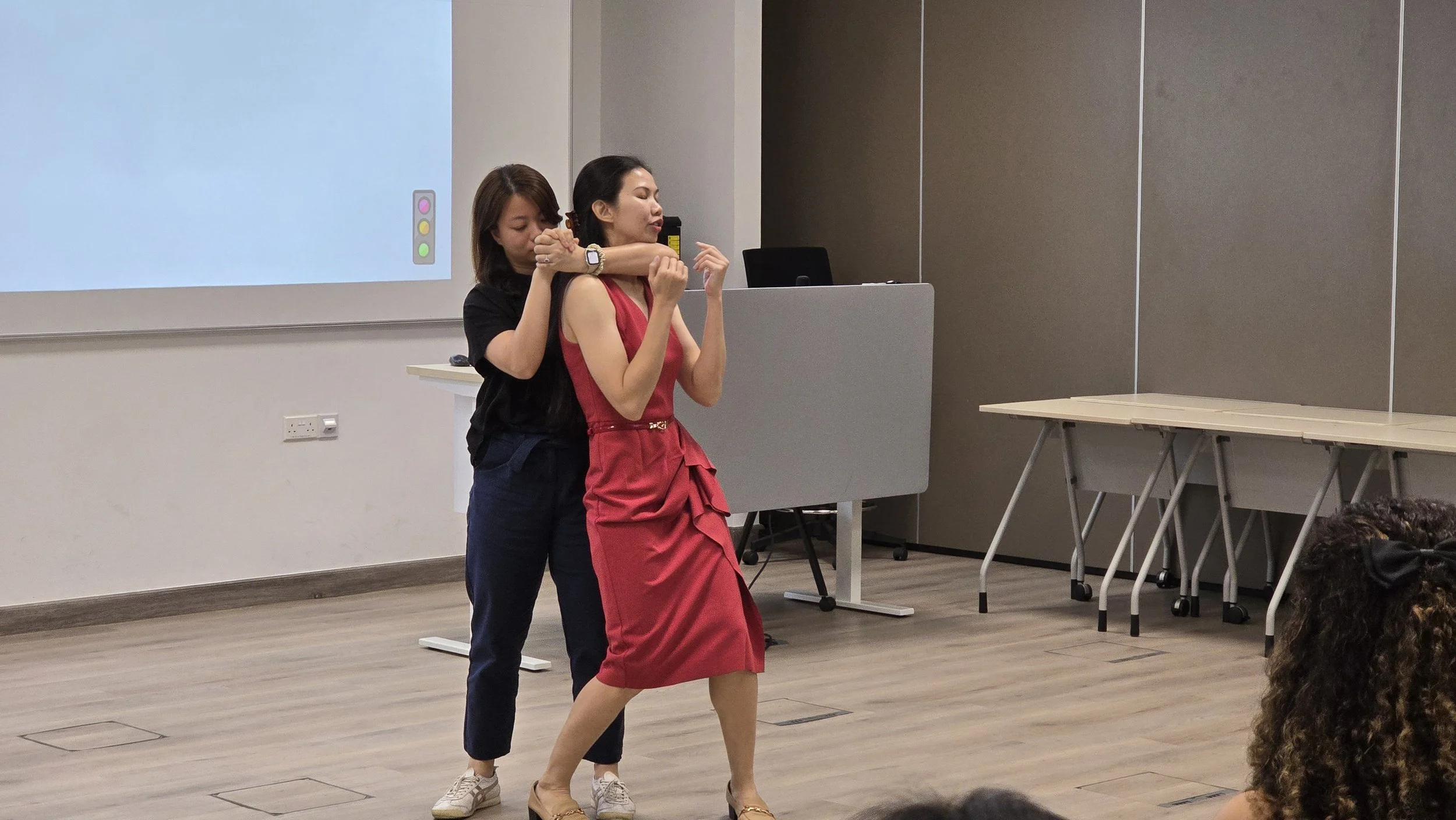
Explaining a self-protection scenario with a participant during the first Iron Flora workshop at SIT on 18 March 2026.
More recently, a one-hour women empowerment workshop at Singapore Institute of Technology (SIT) became an eight-session programme, bringing together awareness, communication, confidence, composure and practical self-protection.
By then, I had spent years training in martial arts and self-defence, while also teaching, designing curricula and assessments, working with learners, and studying education. I finally had the experience to bring these different parts of my life together and build the kind of programme I had been looking for all those years ago.
I couldn't find exactly the programme I was looking for, so I decided to build it.
Iron Flora is still growing
Iron Flora is not intended to turn every woman into a martial artist. You don't need previous martial arts experience, and you don't need to be particularly strong, athletic or flexible. You certainly don't need to become aggressive.
The aim is much simpler: to help more women feel aware, composed, confident and capable, with a few simple and effective self-protection skills available if they ever need them.
Bring Iron Flora to your community or organisation
If you're an educator, community organisation, corporate HR or wellness professional looking for practical confidence, awareness and self-defence training for women and girls, I'd love to explore how Iron Flora could support your students, staff or community.
Iron Flora programmes can be adapted for different age groups, needs and contexts while keeping the same core focus: developing greater awareness, composure and confidence, together with simple and practical self-defence skills that participants can remember when they need them.
Empower One. Empower Many.
You may also enjoy reading
Turning 40, a New Chapter: Why I Am Writing Again
earworm: [S Club 7 – Bring It All Back]
A reflection on turning 40, realising that I have what I want, and building the next chapter with intention.

Waiting for our turn at the vet clinic with my 17-year-old senior puppy. She was always my very happy puppy. Photo by my husband.
Published: 25 August 2026 | Reading time: 7 min | Category: Personal
“Thirty-seven seconds well used is a lifetime."
— Mr. Magorium's Wonder Emporium by Suzanne Weyn
We make plans, but life happens.
For the past few years, I've been unusually quiet on social media, not because nothing was happening. It was because too much was happening.
So why am I back on social media? Eventually, I realised something: Silence has a cost.
There are many people who have checked in over the years simply to ask how I've been, especially friends who are overseas. I realised they weren't looking for achievements. They simply wanted to know that I was okay. Someone even texted me “I thought you died; you’ve been quiet for so long”. Yeah, true story. Haha.
For me, writing has always been food for my soul, but my 30s were simply a very busy period for me. Returning to writing doesn't feel like starting something new. It feels like coming home.
I first began blogging in 2000 when I was just 14, thanks to my IRC friend Dré. We had met as nine-character nicknames (if you know what I’m talking about then you will know that @ and # had different meanings in IRC, lol) on IRC in 2000, back when IRC and ICQ ("uh-oh!") were still part of everyday internet life. He introduced me to Blogger.com when there were other popular sites such as LiveJournal and Diaryland. Later, Blogger invited early users to try Gmail when Hotmail, Yahoo! Mail and RocketMail were still dominant, so that’s how I got the Gmail username of “celest” in 2003.
So I wrote on Blogger/Blogspot from 2000 to 2015, way before generative AI was a thing — from 14 to 29. Sometimes friends would ask me to write about certain topics that they were curious about such as my 10-day Bali solo female traveller trip in 2014, when I was 28, followed by my one-month Cambridge CELTA experience at International House Bangkok and what it was like to be a female full-contact martial artist in 2015, when I was 29. From 2016 to early 2026, I was certainly still writing, but mostly for work in several schools and for my postgraduate studies.
My 30s were busier than I expected
When I turned 30, I knew I wanted to study and work very hard in my 30s. However, I had greatly underestimated how much time and effort I would have to put into working full-time, studying part-time, and changing jobs. Throughout my 30s, my career took me through lecturing, teaching, assessment design, curriculum development, para-counselling, and women empowerment.
While working as a full-time polytechnic lecturer and later on full-time assessment-related roles, I completed the WSQ Advanced Certificate in Training and Assessment (ACTA) part-time, followed by a Master of Education (Educational Assessment) part-time. Instead of taking the coursework-only Master of Education route, I chose to write a 10,000-word dissertation on “Examining Online Formative Assessment in a Digital Literacy Module Using the Rasch Model”in place of two coursework modules – long before generative AI became part of everyday life.
Somewhere along the way, I was just too exhausted to go on social media. There was always one more: one more make-up class, one more consultation session, one more para-counselling session, one more meeting, one more person to help. I was already catching up on sleep on many cab and Grab rides; my one-way work commute was usually 1.5 hours while my one-way commute to NIE was 2 hours via public transport.
Then life took another turn
Right when I was finishing up my NIE dissertation, life took another turn: I unexpectedly fell in love. Both of us were resigned to not marrying at that point because we were older (past this arbitrary threshold of 35 for women and 40 for men), but things just happened. We got married in less than a year – me at 37 and him at 42.
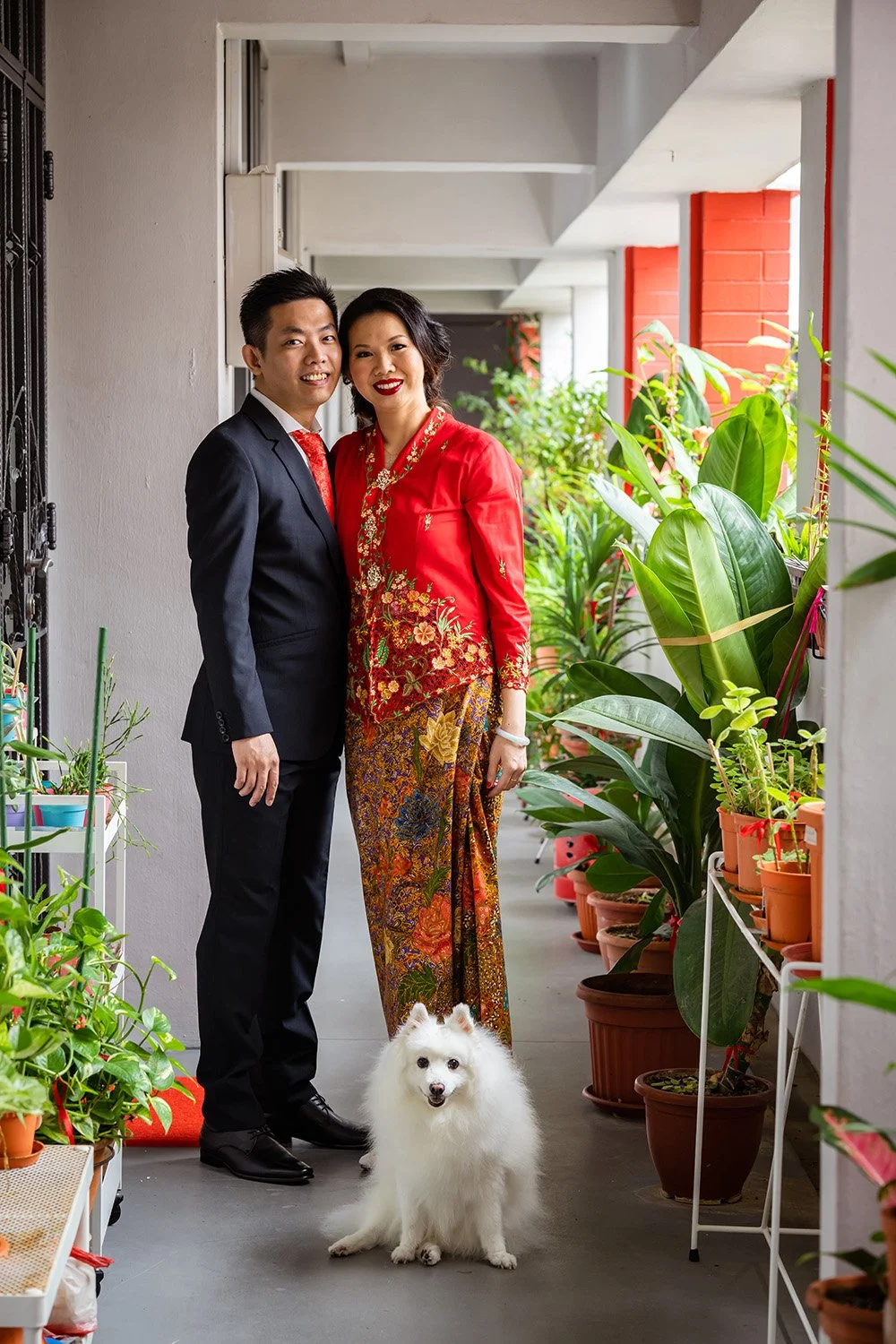
The day we registered our marriage, with our senior puppy - then 15 years old - by our side.
Because he had been based in Taipei for more than a decade, we almost relocated to Taiwan together.
However, our vet told us that our fifteen-year-old Japanese Spitz - who eventually lived to 18 years and 3 months - might not survive the flight to Taipei, although her health had been fine when she was fourteen. It was as if my senior puppy knew she was going somewhere far away, so her health suddenly deteriorated. Granted, I had been trying to crate-train her for several weeks, but she would always scratch the cage door with her front paw after five minutes – how was she supposed to stay in it for 10 hours in the cargo section of an aeroplane by herself?
So, we made the decision to stay in Singapore. We did not want to start the marriage with a dead dog. It meant accepting the loss of a five-digit sum through cancelled flights, relocation arrangements and a year's apartment rental that I had painstakingly searched for on Taiwan's 591 property website – in traditional Mandarin, no less! Husband had patiently taught me how to navigate the 591 property website interface while we chatted via Zoom and video calls for a couple of months, and we spent many hours discussing apartments that we thought might become our new home. We had been dating long-distance during the COVID restrictions, so I couldn't simply fly over to Taipei to visit him.
In the end, he returned to Taipei shortly after our ROM because he was only halfway through the lease on his rental apartment there and needed time to relocate back to Singapore. I stayed in Singapore, so for several months, we became a long-distance married couple. Our next challenge was to look for housing so we could finally be physically together – a process that took us more than a year.
Mundane is exciting
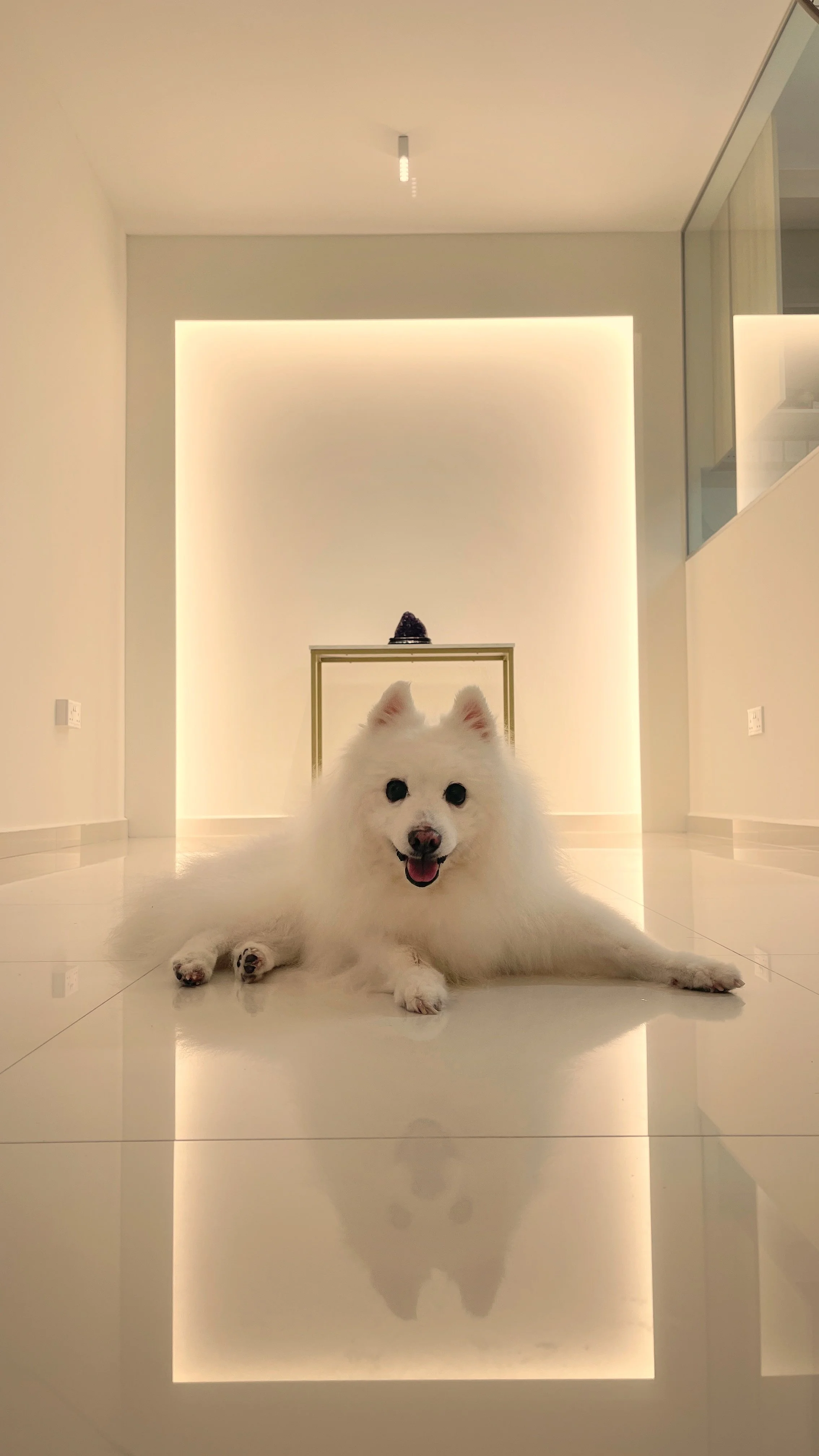
In our new home, thoughtfully designed by my husband. His mood board helped guide our renovation journey with our interior designer. She was 17 years old here – and still my very happy puppy.
After that long house search, we had three-month extension by the previous owners, Home Improvement Project (HIP) works, and finally post-Chinese New Year renovation. By the time we moved into our new home, one year of Minimum Occupancy Period (MOP) was up. Haha. Then we had to air out the built-in carpentry and move our stuff.
Most importantly, in the midst of all these major life changes, we got to spend precious time with our super-senior dog during the final chapter of her life. The typical lifespan of a Japanese Spitz is 12 to 16 years old. Our vet later told us that our dog was the first dog she had seen to survive a pressure sore (at 17 years old, no less) and that later on, she miraculously survived a near-heart attack right after we had moved into our new home.
If you've ever cared for a super-senior dog or cat—especially one who could no longer stand or sit independently – you'll understand how much time and care is required. Caring for her became part of the rhythm of every day: hand-feeding almost every meal, carrying her to drink water, helping her relieve herself, turning her regularly to protect her skin, massaging muscles that ached from lying down, and eventually administering her medication and subcut fluids. Once she could no longer walk, she also developed separation anxiety and needed a human nearby. Thankfully, she had three humans who could adjust their routines around her.
Then I realised: Mundane is exciting.
Sometimes all I needed was to bury my face in her fluffy white coat, and somehow everything felt alright again. Even at 18, her fluffy white coat smelled exactly as I remembered it when I first brought her home at four months old. Her eyesight and hearing remained intact until her very last breath. “She can see you; she can also judge you!” our vet joked in the month before we put her to sleep. She grew up with me from the age of 22 to 40. She was there through my entire young adulthood. Undergrad, postgrad and teaching certificates. Job changes. Heartbreaks. Marriage. Family celebrations. The beginnings of Iron Flora. Perhaps most unexpectedly, she became our matchmaker – that is a story for another day. I have always believed in one simple idea: Love me, love my dog. Both literally and figuratively.
I am also grateful for the friends who have cared for their own super-senior dogs and sent their well wishes to us. It meant a lot. Adjusting to our new routines was the toughest part.
Our awesome vet looked after our senior puppy from the age of 11 until her last breath at 18 years and 3 months. We are looking forward to welcoming another female Japanese Spitz puppy from Australia someday, but they are currently in low supply, so we will just see how things go.
The puppy chooses you, right?
Something else was quietly taking shape
Iron Flora in action, bringing together confidence, awareness, composure and practical self-defence.
Along the way, something else was quietly taking shape. I designed and facilitated a Women Empowerment workshop at Singapore Institute of Technology (SIT), which unexpectedly became an eight-session programme, turning Iron Flora into something real. As I later discovered while looking through old teaching notes, however, its roots stretched much further back than I had realised:Why the Name Iron Flora – Strength and Gentleness Can Coexist
Coming home to writing
Turning 40 doesn't feel like starting over. It feels like returning to something I have always loved – writing. This time, I'll be sharing my experiences about teaching, assessment, gardening, cooking, Iron Flora, and the quiet lessons life has taught me along the way.
Maybe I'll read this again when I'm 50 in 2036 and smile. Haha.
If one person leaves knowing a little more than before, then this was worth sharing.
I hope you've enjoyed reading this as much as I've enjoyed writing it.
You may also enjoy reading
A Handwritten Card, a Gesture of Appreciation, and the Power of Community
I Chose Psychology at 15 – Twenty-Five Years On, It Still Feels Like Home
I Couldn’t Find It, So I Thought: Why Not Build It Myself?
earworm: [Demi Lovato & Joe Jonas – This Is Me]
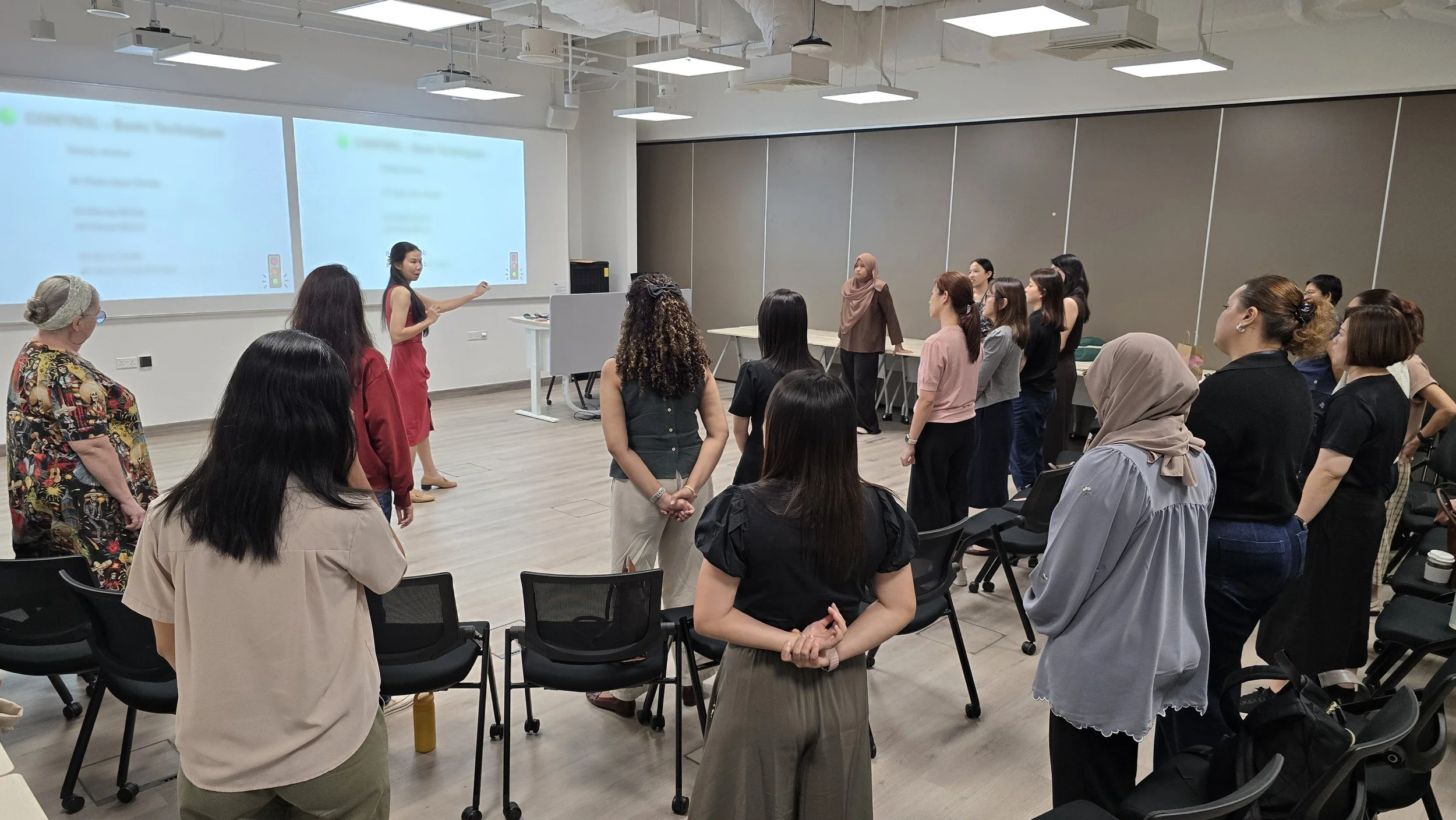
In 2006, I was looking for a women empowerment class like this. Something practical. Calm. Immediately applicable. Techniques that did not rely on aggression or complicated movements, but focused instead on how to stay composed and respond when it mattered. A space where women could practise confidently with one another — especially for shy introverts like me.
I could not find it then, so over time, I decided to create one.
Over the past 20 years, I trained, studied, and worked across different areas — education, assessment, applied psychology, linguistics, full-contact martial arts, and yoga/flexibility training. I have also taught across different spaces over the years — including as a psychology and research methods lecturer, a Japanese Ju-jitsu trainer with the People’s Association, and a fitness ambassador with NTUC U Sports.
Across all these experiences, one question stayed with me: What actually helps people stay composed under pressure?
Today, in 2026, I find myself building what I had once been looking for.
Iron Flora is not just about techniques. It is about giving women a simple, structured way to think and respond in everyday situations. I am building a structured women empowerment programme focused on helping women develop confidence, composure, communication, and decision-making under pressure.
Most of us do not lose composure in extreme moments.
We lose it in ordinary ones:
· Speaking up in a meeting or presenting in front of others (something I had to learn myself through teaching and public-speaking as a lecturer)
· Navigating emotionally-charged frontline situations
· Travelling through unfamiliar environments alone — for work or leisure (something I have experienced myself through years of solo travel)
· Dealing with moments where something simply feels “off”
In these situations, our first reaction is often not deliberate. We freeze, rush, or react in ways we did not intend.
I have come to see composure not as a personality trait, but as a skill that can be trained. This is something I have been developing through Iron Flora — a women empowerment programme centred on strength and composure.
One simple way I frame it is through the Iron Flora ABC framework:
Ask. Breathe. Control. (ABC)
· Ask: What is happening, and what do I want to do next?
· Breathe: Regulate before reacting
· Control: Choose your response
What started as a single 1-hour women empowerment workshop in March 2026 has since grown into an ongoing 8-session women empowerment series. That progression has been especially meaningful to me because it showed that these conversations and skills resonated beyond a single session.
Since then, I have also received interest and enquiries around future public classes, school-based workshops, and organisational runs of Iron Flora.
To me, that signals something important: Many women have quietly been looking for spaces like this too.
I will be sharing more reflections from this journey over time.
Stepping into a new phase
earworm: [Auli'i Cravalho - How Far I'll Go (from Moana)]
I concluded my role at SIT in March.
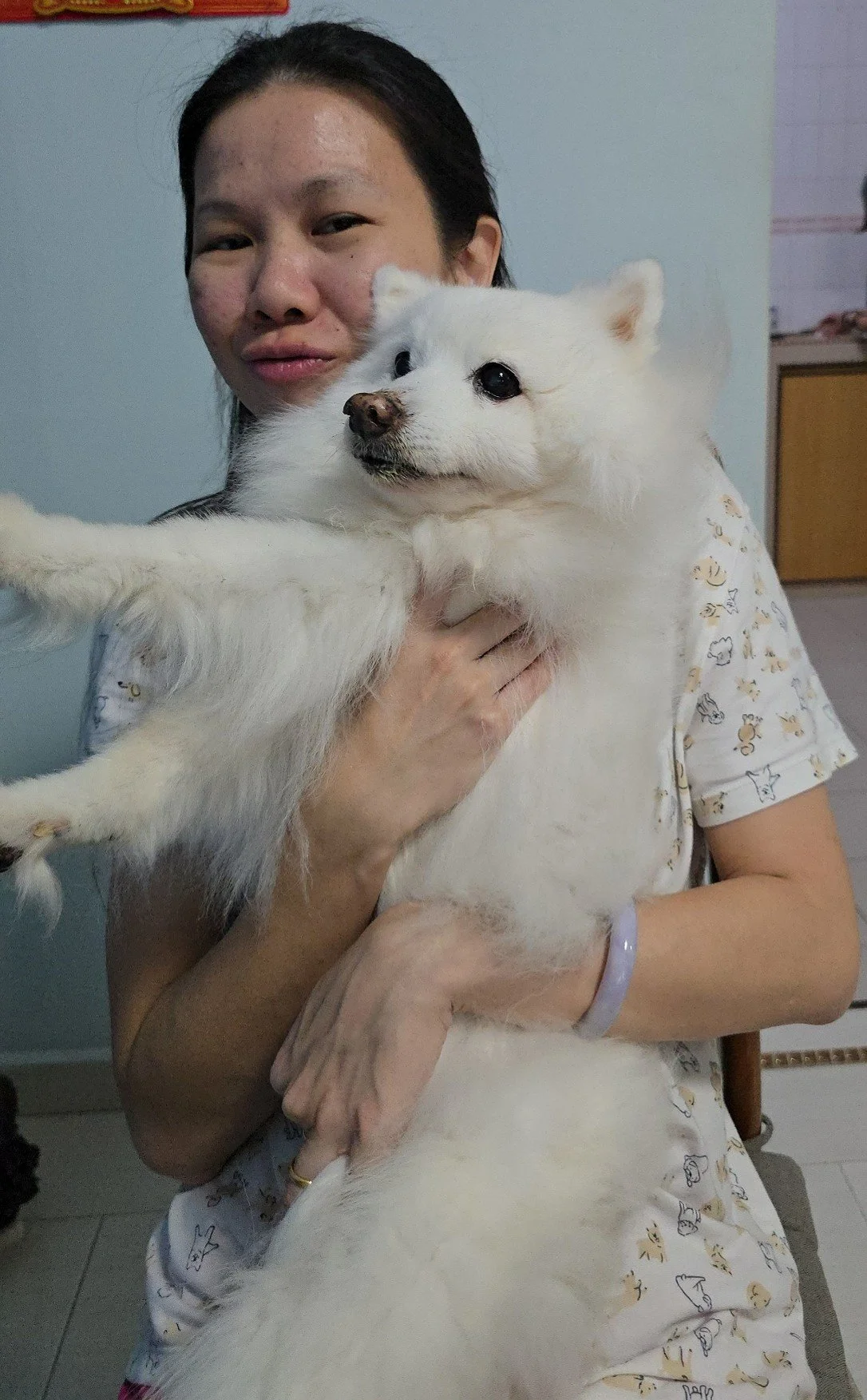
Shortly after, I spent time at home caring for my beautiful senior dog in her final weeks. She was 18 years and 3 months old, and had been with me from my early 20s into my 40s. This was our final photo together. It was a quiet but important period, and I’m grateful I had the time and presence for it.
With that chapter closed, I’m now turning my focus to building something I’ve been working on — Iron Flora, a women empowerment workshop centred on composure, communication, and practical self-defence. The first workshop in March has since grown into a small series, which I’ve been running over the past few weeks. I’ll share more about this soon.
For now, I’m taking it one step at a time — sidikit-sidikit, lama-lama jadi bukit.
Happy 40th Birthday to Me!
earworm: [*NSYNC – God Must Have Spent a Little More Time on You]
When I look back on my twenties and thirties, I realise much of that time was spent building foundations – learning, teaching, making mistakes, and developing skills that only make sense on hindsight. Turning forty feels less like a milestone and more like a quiet transition.
This year feels especially meaningful for three reasons.
1. My puppy is now 18 years and 2 months old.
I bought her when I was 22 years old, using the allowance I earned from my Ministry of Education (MOE) Teaching Internship while I was an undergraduate at the National University of Singapore (NUS).

This photo was taken by my sister on puppy’s first night with us. She was four months old then.
She is an Australia-born Japanese Spitz. The average lifespan of a Japanese Spitz is between 12 and 16 years.
Today, she is 18 years and 2 months old, and I have just turned 40.
In many ways, we have grown up together.
At the time she was just a tiny fluffball, and I had no idea that she would end up accompanying me through my entire young adult life – right up to now, which is almost half of my life so far. That is why she has always been in my profile photo. She has been there through my undergraduate and postgraduate years when I would write long assignments late into the night. She has been there through my entire career so far. She has been there through several relationship heartbreaks – and ultimately when I met my husband (that’s another story for another day). After a few serious health scares over the past two years, every day with her now feels like a precious gift.
We love her very much, and I am sure she loves us back.
I found her wonderful veterinarian by chance in 2019, so she has been under the excellent medical care of Dr Fong since she was 11 years old. I am fortunate that she still wants to be here. She is still alert and recognises all of us. During a recent vet visit, I asked Dr Fong whether puppy could still see and hear properly at her advanced age of 18 years. Dr Fong smiled and replied, “She can see you. She can also judge you. When she looks at me, her expression says, ‘Oh, it’s you again.’” I burst out laughing.
2. 家和万事兴 — when the family is harmonious, everything else can flourish
I recently came across a Chinese saying: 家和万事兴 — when the family is harmonious, everything else can flourish.
I have always known that my immediate and extended families are close-knit. Knowing that my family is always supportive – even if quietly – has given me the strong foundation to go out into the world and contribute meaningfully. It has given me the confidence to explore new experiences that have shaped who I am today.
3. The next chapter of my career in my 40s
As I step into my forties, I find myself increasingly drawn toward work that helps others. Over the years, I have worked across a wide range of education-related roles: teaching, lecturing, sports coaching, para-counselling, and examination moderation. Each of these roles requires technical competencies.
However, what has always mattered most to me has been something else:
the explaining and storytelling in teaching, lecturing, and sports coaching
the listening in para-counselling
the thoughtful exchange of professional perspectives during examination moderation
In other words — the human touch. Perhaps that is what the next chapter of my career in my 40s will be about.
Inspiring and helping others.
For now, I am deeply grateful — for puppy, for family and friends, for good health, and for the quiet joy of everyday life.
A Message From a Former Student - On Teaching, Statistics, and the Moments that Stay with Students Longer than We Realise
One of the quiet joys of teaching is hearing from former students years later.
After my recent post about studying psychology, a former student reached out with this message (shared with permission).
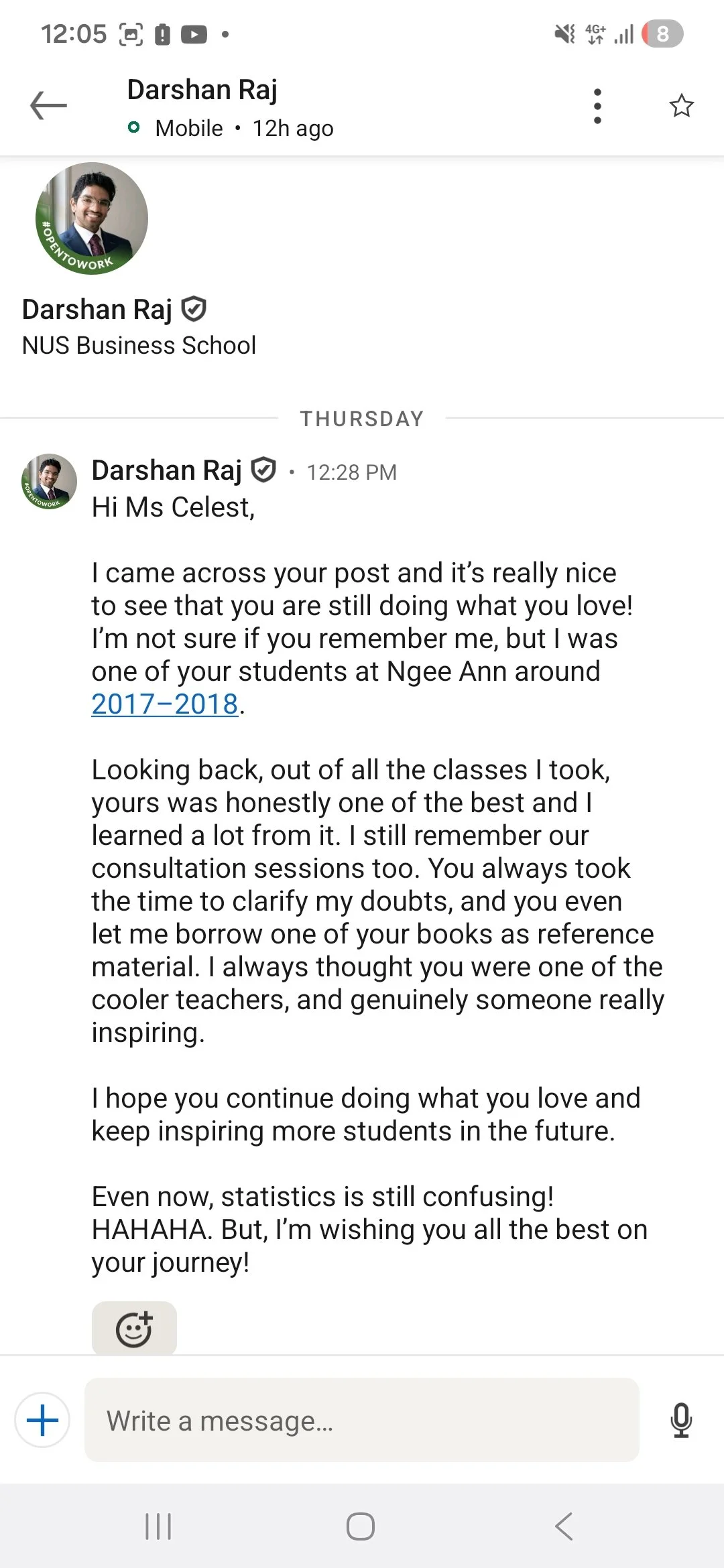
During my years supervising research projects, his group was the only group who pushed the boundaries and ran a proper two-way ANOVA for their analysis. Most groups would typically use Pearson’s correlation, t-tests, or occasionally a one-way ANOVA.
I still remember lending them an ANOVA reference book from my NUS psychology statistics days so they could explore the method further.
What I also remember about him was his student leadership. Long before he entered my class, colleagues had already mentioned his initiative and reliability. By the time he appeared in my classes, I already knew I was teaching someone willing to stretch himself.
Moments like this remind me that teaching is rarely just about content.
Sometimes it is about helping someone realise they are capable of more than they thought.
Messages like this are a quiet reminder of why teaching — and helping others realise their potential — will always matter to me.
I Chose Psychology at 15 – Twenty-Five Years On, It Still Feels Like Home
earworm: [S Club 7 – Bring It All Back]
Last week, the GCE A-Level results were released.
It reminded me of my own results day in 2005 — although I had chosen my path four years earlier.
In 2001, when I was 15, I chose Psychology — when it was far less popular than it is today.

This photo was taken in 2001. At 15, I helped design this mural with my school Art Club team, which we later painted at the Christalite Methodist Home. The following year, I became president of the Art Club.
I didn’t have the language for it yet, but understanding how people think, decide and behave felt instinctively right to me.
When I attended the NUS Open House in 2004, I went straight to the Psychology booth. Alone. My classmates weren’t interested. I was. At the booth, student leaders mentioned that Psychology majors would need to take two compulsory statistics modules. The following week, when our A-Level Math syllabus covered statistics, I paid attention differently.
At the National University of Singapore (NUS), I eventually majored in Psychology and chose to minor in English Studies — an uncommon pairing then. I found myself drawn to research design, survey methodology, and the discipline of measurement. I read the Methods and Analysis sections of every journal article carefully, often during the 1.5-hour train and bus rides to and from campus. I didn’t know then where it would lead — into research, teaching, assessment design and conversations about behaviour. I only knew it felt right.
Twenty-five years later, I’m still doing the work I chose at 15 — and it still feels like home. Some decisions feel small at 15. The ones that fit quietly shape the years that follow. That curiosity has stayed with me ever since — and continues to shape the work I do today.
The Voice Within
This reflection was first written in June 2025.
I’m sharing it again here as the first post on this site — a space where I write more slowly about psychology, learning, and assessment, and how ideas translate into practice.
It felt right to begin by continuing a line of thought, rather than starting something new.
---
[earworm: Christina Aguilera – The Voice Within]
🌺 Coming back on social media — after 8 years
It’s been 8 years since I last showed up on social media.
I didn’t set out to disappear. In late 2016, I had just started as a full-time psychology and research methods lecturer at NP, while attending night classes for the WSQ ACTA — and later, for the Master of Education (Educational Assessment), where I wrote my dissertation on Rasch / IRT.
For five of those eight years, I also had a three-hour daily work commute.
Somewhere along the way, life kept moving:
• I got married, almost relocated (husband was based overseas), stayed, bought a resale flat, and renovated it
• I earned my second black belt in kyokushin karate — I took part in the grading in the second month of my lecturer role; my first black belt is in Japanese jujitsu
• I became a certified Yin Yoga instructor after six years of practice — to balance out the full-contact martial arts
• And now, I’m the first and only Assessment Specialist at a local university — full circle, from assessment to teaching and back to assessment
I’ve always said that writing is food for my soul. I started blogging in 2000, when I was still a teenager, and stopped during my undergraduate honours year when the study load became
very heavy.
Recently, I’ve come to realise I’ve lived through some lesser-known, hard-won experiences that others are curious about.
For example:
• How did you get into assessment? It’s so specialised.
• Why did you major in psychology?
• How did you stay in full-contact martial arts for 18 years as the only woman in the dojo?
So I’m back — to write, to reflect, and to share.
Long-form, just like I used to.
See you soon.
#comebackstory#lifelonglearning#martialarts
[Views are my own.]
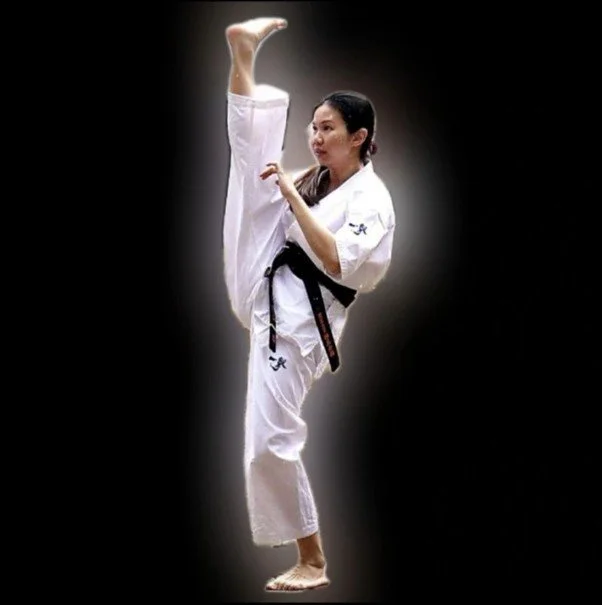
How it feels like to be a female full-contact martial arts practitioner
Curious about self-protection, but worried about feeling awkward?
I wrote this article in 2015 about my experience as a female full-contact martial arts practitioner. More than a decade later, many of the ideas I wrote about then - confidence, preparation, adapting techniques to the individual, and learning how to protect yourself - are reflected in the work I now do through Iron Flora.
If you have always wanted to learn self-protection but feel intimidated because you have no martial arts experience, you are welcome to learn with us. Iron Flora is designed for women, and you will be practising alongside other women, so there is no need to worry about embarrassing yourself or getting everything right.
Through Iron Flora, we practise practical awareness, communication, confidence-building and simple effective self-protection skills in a supportive environment for women.
Explore Iron Flora →
—-
Originally published 23 June 2015
2026 archival note: This article was originally published in June 2015 and is reproduced here substantially as written. It reflects my experiences, terminology and perspective at that time.
Hello!
I’ve been asked to write this blog post many times for the past several years, so I’m finally writing it. I didn’t realise anyone wanted to read this stuff because it seems quite boring to me, until my martial arts family told me that they’d be interested to, so this post is for you guys and gals.
I practise both full-contact grappling and full-contact striking, so I’ll shed some light on how it feels like from my perspective – a female competitive full-contact martial arts practitioner. To provide a background context, I am 168cm and 55kg, which means I’m quite lanky for a female full-contact martial arts practitioner. I am also rather fair-skinned; most people don’t believe me when I tell them that I’ve taught Physical Education (PE) twice to 13 to 17 year old boys in a secondary school and 16 to 23 year old boys in a tertiary institution.
Some people tell me that I move like a dancer – that’s because I started out as a figure-skater and a salsa dancer, before I started training martial arts at 20 years old, and I still dance salsa and bachata at salsa socials and Latin clubs when I feel like it. Anyway, unless you’ve known me for some time or you’ve trained with me, I am the last person you’d expect to practice full-contact martial arts, especially with my gentle demeanour. (hehehe)
I’m going to list down the Frequently Asked Questions (FAQs) that I get; I’ll specify if it’s a grappling or striking question. It should come as no surprise that while I’m built like a striker, grappling – in particular, newaza/groundwork – is still my favourite art, so I’m going to list the grappling questions first. (Note: I was just typing the FAQs that I usually get, then I stopped and realised it’s an extremely long list. Then again, I’ve been practising martial arts for 10 years, so that’s 3650 days of questions.)
Grappling: “What does it feel like having a guy between your legs in open/closed guard?”
It took me one whole year to mentally get used to the idea of having a guy between my legs in open/closed guard. I visited my first dojo in 2005 and only signed up one year later in 2006. Then when I went for my first class, I was told by the guys that I wouldn’t be able to last one hour, but since I had paid for the month’s fees and it was the university summer vacation, I decided to stay; three months became 10 years.
Grappling: “Do you mind having chest-to-chest contact all the time?”
Chest-to-chest contact is quite unavoidable in both nage-waza/stand-up grappling and newaza-groundwork. I am very picky about the sportsbra I wear – I have extra-padded sportsbras that are only used for grappling, so that they don’t wear out so quickly; they are usually tighter than my striking, running and gym weight-lifting sportsbras.
Grappling: “Have you felt like you were sexually violated in newaza/groundwork?”
Not at all. I have had people comment that it looks exactly like a rape scenario, but it certainly doesn’t feel that way. Newaza/groundwork is very fast-paced and rough, and not sexual/sensual
at all, in my humble opinion.
Grappling: “Do people grab your hair, accidentally or otherwise?”
No. Why would they? If I’m grappling, I always make sure that my long hair is bunned neatly. If I’m striking, I always make sure it’s braided; since 2008, I have always wanted to look like Lara Croft while sparring.
Grappling: “What happens when you’re on your period?”
If it’s really bad, I don’t go. Otherwise, I’ll just train as usual. Nobody would be able to tell, though. In fact, I’ve competed twice overseas while on my period and it was fine.
Grappling: “What if the guy is 10kg heavier than you? What’s the heaviest weight you’ve randori-ed/rolled with?”
Even if the guy is my weight, he’s usually stronger than me. I’ve learnt to adapt and train with guys, even those are way heavier than me. The heaviest weight I’ve randori-ed/rolled with in groundwork is probably 90kg – I just had to be very defensive, and use my elbows and knees to prevent him from getting a good position such as a yoko/side control. I’m pretty fortunate though – most of the guys I train with don’t try to steamroll me; if they do steamroll me, it’s probably because they’re inexperienced.
Grappling: “How did you learn newaza/groundwork in the beginning? Wasn’t it awkward to train with men when you just started out?”
Again, I was very fortunate to be able to train under Sensei Lee and Sensei Dan when I first started out in newaza/groundwork. They are both very professional and I didn’t feel awkward at all. I was completely new to the sport; now when I help out to teach the female beginners, I’m reminded of how I was and I salute my senseis for their patience. In particular, I trained my grappling fundamentals solely under Sensei Lee for three years, and picked up more techniques along the way after that.
Grappling: “Does your lanky physique help in
groundwork/newaza?”
No, it doesn’t. I always feel like I’m too light and my legs are too long for me to successfully execute a sankaku-jime/triangle choke. Also, when I compete in grappling, my opponents are usually half a head or a head shorter than me; I just don’t have the typical grappler build. However, my lanky physique helps me a lot more in striking.
Grappling: “Isn’t the grappling gi heavy? How do you cope wearing the additional weight while training?”
You get used to it. I have a single-weave white tournament gi and a gold-weave (1.5 time weave) bright pink gi. The bright pink gi was supposed to be a single weave, but it turned out to be a gold weave; I don’t have a double-weave gi since that’s too heavy for my liking. In total, I have four grappling gis and one striking gi.
Grappling: “How does it feel like to be the only female in the dojo?”
It’s fine. The guys whom I train regularly with know that I try my best to keep up with their pace. I have had my fair share of martial arts injuries, so I just train at my own pace now.
Grappling: “What about your fingernails and toenails? Jewellery?”
All of my nails are always kept short. As for jewellery, I take off my necklace; I rarely wear earstuds, although I have six ear piercings.
Grappling: “isn’t this a very ‘guy sport’? Do you get weird looks or comments all the time?”
Yes, I try to lay low these days. Two ex-boyfriends couldn’t deal with the fact that I train so much in this particular sport (full-contact grappling and striking), so I usually don’t mention that I train martial arts to new people I meet because it scares some people and then I get weird looks. I’m really gentle and soft-spoken – after all, jujitsu/judo in Japanese is “the gentle art/way”.
Grappling: “Have you choked anyone out before? Have you been choked out before?”
Nope and nope. I usually apply the choke at 70% intensity and let the person go; likewise, I always tap when I get 70% intensity. It’s just training, not a tournament, so I really don’t see the point of choking someone out, especially when we both know that the correct technique has been applied.
— — —
Striking: “How did you get started in full-contact striking? Sounds violent.”
I had practised point-system striking for five years before I decided to switch to full-contact striking. My main purpose for training martial arts has always been self-defence and I feel that full-contact striking will be more useful. An acquaintance had introduced me to his dojo, and again it took me one whole year to mentally get used to the idea of training full-contact striking. I finally signed up and I’ve been with the dojo for four years.
Striking: “Is it painful when guys kick you hard? Or do they kick you less hard because you’re a woman?”
I’d be lying if I say that it’s not painful. Of course it hurts, but I guess I don’t allow my mind to linger on the pain. Since I’m a senior belt, the guys don’t kick me less hard, although I’m grateful that they don’t kick me at their 100%; I train with experienced guys who know what they’re doing, which is why I’ve been training with them week after week.
Striking: “Do you wear a breast plate and/or a groin guard?”
Nope and nope. I used to wear a mouth guard, but I stopped because I find it tough to breathe with it.
Striking: “Can you hit as hard as a guy?”
When someone asks me this, I usually reply “You could come to my dojo for a visit”. I don’t see why I should hit when I’m outside of the dojo; maybe I’m old-fashioned.
Striking: “How hard can you hit?”
I don’t know; I’ve been told I “hit like a girl”.
— — —
Grappling/Striking: “How does it feel being the only woman and training in a dojo full of men?”
Good question. Once I enter a new dojo, I usually get strange looks because as aforementioned, I totally don’t look like I play sports, much less practise full-contact martial arts. On the other hand, when I enter one of the four dojos that I train in (how I got myself into four dojos concurrently is another story for a blog post), I always greet and get greeted with a loud “osu!” I think it’s easy to spot me, because my hair is pretty long and I’ve been carrying the same big bright hot pink duffel bag to training for the past 10 years.
Grappling/Striking: “Can’t you do ‘normal’ or feminine sports, instead of competitive martial arts? Why do you even train so
much? You are not a guy, you know.”
I get this question pretty much all the time. My first love is figure-skating, then I started playing pool (billiards), after which I did netball, basketball, and track & field in junior college, and then salsa, bachata & merengue, and handball in uni. If you’ve seen the way I stretch, it’s flexibility training that I picked up 14 years ago; it was a pleasant surprise when I realised that it was a skill transferable to martial arts.
Grappling/Striking: “Why are you paying money to get injured?”
I admit that I get injured during training because I’m not fully focused in training and so I get hit because of that; my dojo mates will attest to this. Sometimes, I’m trying out a new technique, so I get injured as well. Contrary to popular belief, I’m rarely injured in randori/kumite, mainly because I train with guys who know exactly what they’re doing.
Grappling/Striking: “Do you crush/kick the guy’s
family jewels a lot?”
No, I think it’s happened maybe thrice in 10 years. Just to add: last week, I accidentally slapped a dojo mate during a striking drill.
Grappling/Striking: “Why are you always getting such huge palm-sized bruises?”
Because I have fragile veins. The bruises don’t hurt and they go away on their own after two weeks; I usually don’t do anything, except for eating a bit more cleanly and getting a good night’s rest.
Striking/Grappling: “Wow, are you as fit as the guys? Do you do the same number of sets X reps as them in the dojo?”
I’m nowhere as fit as them. I know they put in the hours and effort to train, and so I try my best to train as hard as them, despite being of the fairer sex. I don’t do the same number of sets and reps for sure, especially push-ups, because of an old injury.
Grappling/Striking: “Don’t you feel tired training martial arts at such an intensity?”
I feel lethargic if I don’t train martial arts and every fibre of my being always misses the mat when I haven’t trained for a while, i.e. more than a week. Of course, I have had months-long hiatuses due to some commitments, but I try to train at least once weekly. I climb the stairs regularly instead of taking the elevator and walk from place to place a lot, so I consider these daily activities to be part of my training as well.
Grappling/Striking: “Do you do drop-ins?”
I have done drop-ins in several dojos in several countries – I love it! I always drop the owner of the dojo/gym an email or a Facebook message to ask them if it’s okay to do a drop-in. The only downside is that my grappling gi usually takes up quite a bit of luggage space and I have to wash it thoroughly after training, before packing it in my luggage.
Grappling/Striking: “What are the advantages that you have over a guy?”
I’ve always said this: What I lack in size and power, I make up for in flexibility, speed and stamina.
Grappling/Striking: “With all that martial arts training, how are you physically different from the average woman?”
Hm. My finger knuckles are big and calloused. I get bruises here and there sometimes. I’m quite muscular compared to the average Singaporean woman.
Grappling/Striking: “Are you going to grapple or hit me unexpectedly?”
No. I will only grapple or hit you if you grapple or hit me first – it’s actually quite difficult to get me to show you “some of my moves” if we’re not in a dojo.
— — —
Hope you enjoy reading this long entry, as much as I enjoyed writing it. I’m sure there are still a few questions that I forgot to include. Just drop me a text if you have a question.
Explore Iron Flora →
30 days solo in Bangkok – I passed the CELTA!
2026 archival note: This article was originally published on 24 May 2015 and is reproduced here substantially as written. Prices, businesses, links, technology and travel information reflect the original 2015 experience and may no longer be current.
Why I chose to do the CELTA
Several years ago, a Swiss/Canadian friend who has a bachelor’s degree in linguistics and a CELTA equivalent told me about the CELTA (http://en.wikipedia.org/wiki/CELTA). While the CELTA certificate isn’t exactly recognised in Singapore since English is the official language here, I’d always wanted to take it anyway. Being the grammar nerd that I am and the fact that the CELTA is offered by the University of Cambridge (like most Singaporeans, I took the Cambridge GCE ‘O’ and ‘A’ levels examinations), I told myself I would do the CELTA when the opportunity presented itself.
I had always hesitated to do it in Singapore, mainly because of the high cost (read more here: ttp://blog.moneysmart.sg/career/find-work-overseas-easily-with-these-3-qualifications/); basically, the CELTA costs SGD5900 (~USD4415) in Singapore and USD1600 in Bangkok – this amount excludes daily expenses, CELTA course books and so on. In late March 2015, when a good friend suggested that I pursue the CELTA in my “second home” and showed me the aforementioned moneysmart article, I immediately starting doing some research on the course (IH Bangkok versus ECC Bangkok), accommodation (an inexpensive hotel versus AirBnB), flight tickets (which were slightly expensive because they were booked just four weeks prior), and overall expenditure for 30 days. I’ve been travelling to Bangkok and other parts of Thailand every year for a vacation since 2009, so I am generally familiar with Bangkok/Thailand; I went to Bangkok twice and Phuket once in 2014.
As usual, I read many blogs written by people who have done the CELTA, in particular Singaporeans who have taken the CELTA in Bangkok and read many positive reviews; in fact, every single review – written by a Singaporean or otherwise – strongly recommended the CELTA, that it was a very useful teaching course, which I found to be absolutely true, not just in terms of grades, but as an enriching experience as a whole. I met so many lovely people from all walks of life: my fellow CELTA course mates and some of the DELTA school mates (we had a common break room and so most of us would just chat easily); my AirBnB host; the everyday people I met while eating, commuting and shopping at everyday places.
The CELTA admission process
What I noticed was that the main adjective used to describe the CELTA was “intense”. Having graduated six years ago as a humble English linguistics minor (my honours degree is in social, counselling and biological psychology), I really didn’t know what to expect since I don’t have the proper English linguistics training per se. I have always enjoyed the syntax and grammar, critical discourse analysis (CDA), and film studies modules, but I wouldn’t consider them “intense” modules, in comparison to the psychology honours modules. I once wrote a 5000-word term paper for CDA (the text that I had analysed was the Black Eyed Peas’ song lyrics “Where is the love?”) so that I could avoid taking a final written exam, but that was it.
To apply for the CELTA, there is a pre-interview task that is to be emailed to the school; within an hour, I received an email asking me to schedule a Skype audio interview. Apparently, I had failed an entire grammar section and so I was ‘drilled’ on it during the Skype interview – six tough grammar questions were asked in quick succession. At that point, I thought I didn’t pass the interview, when the British voice on the other end suddenly said, “Congratulations, you are accepted”. With that, I immediately booked the Bangkok flight tickets and AirBnB room. There was a pre-course assignment and two course books to read; I completed half of the pre-course assignment and didn’t read the two course books.
What the CELTA was like
CELTA classmates
On the first day of the CELTA, we had to mark our attendance and I noticed that I was in the only Singaporean in my group of 17, but there was another Singaporean lady in the other group of 12. I later found out who she was, because the guys in the other CELTA group told me, “Hey, there’s also a Singaporean lady in our group! Have you met her yet? There she is!” It was great having someone to speak Singlish (colloquial Singapore English) to; she told me that she even used Singlish in one of her lessons, which I thought was cool. Both CELTA groups were very friendly and we all got along very well, which is something I had hoped for and read about in some of the CELTA blog posts, but didn’t expect, so it was a very pleasant surprise. Everyone shared
their invaluable life experiences, knowledge and notes, which convinced me even more that I had made the right decision to fly in to Bangkok to do the CELTA at IH Bangkok.
I looked forward to going to class every day to interact with my classmates and learn new teaching techniques. When I describe my CELTA experiences to my Singapore friends, they commented that it seemed like the CELTA was a reality TV programme, with a group of people spending long hours together for a short period of time, except that we didn’t stay in the same house.
CELTA students
I have to say: I had a tough time adjusting to the CELTA method at first. According to my CELTA classmates, the other Singaporean lady and I speak really quickly; it took me four teaching practice sessions to reduce my talking speed and reduce my teacher talk time (TTT). I had to think back about the elementary Thai and Korean classes that I had taken and remember how
difficult it was for me to learn the simplest vocabulary.
We had to teach two levels of students (elementary and intermediate) and a range of English systems and skills (reading, writing, listening, speaking, etc). The students that we had came from Syria, Somalia, Sri Lanka, China, Japan, Iraq, Jordan, and Thailand; they were kind and patient with us, since they knew that we were trainee teachers. While we were not allowed to speak in our mother tongues with the students, I would speak in Mandarin with the China students after class to find out more about them. I hope all of them learnt something from my lessons.
CELTA schedule
The official CELTA timetable was Monday to Friday 9am to 5.30pm, but I would arrive at 8am on most weekdays to prepare and print my lesson plans and written assignments. My daily weekday schedule was this: 8am-6pm CELTA; 6-9pm dinner and wash-up; 9pm-1am sleep; 1-5am work; 5-7am sleep; 7am get ready and go to school. On the weekends (Saturday or Sunday), I would wake up at 12 noon, go to school to do lesson plans from 3pm to 6pm, after which I would have dinner and do some shopping.
There was a total of eight teaching practice sessions and four written assignments in a short span of 20 days, which meant that if I wasn’t working on my teaching practice lesson plans, I was doing a written assignment or thinking about new activities – I have a comment in my CELTA report that reads “she regularly tries to incorporate new techniques into her teaching”. I think this probably stems from the regular flexibility training and martial arts training that I do, and the fact that I’m quite a huge risk-taker – I’m always trying to find a better and different way to do things. (“Do not go where the path may lead; go instead where there is no path and leave a trail.” – Ralph Waldo Emerson)
And yes, I would say that the CELTA is “intense”. Good time management and working well with CELTA classmates are vital.
Accommodation
I soon found out that the Silom/Sathorn area has very expensive accommodation since it’s the central business district, so that was a main concern. I was looking at the inexpensive hotels
within walking distance, since I’m the sort who would pay a little more for a good location to avoid the well-known traffic jams in Bangkok, but the pictures of the rooms didn’t appeal to me at all – some of them looked really small and dimly-lit with no windows. I decided to try AirBnB for the first time, but I still couldn’t find a reasonably-priced room for a stretch of 30 days.
After six days of searching for a room, I decided to go with the AirBnB search term “CELTA” and found an inexpensive room; apparently, this AirBnB guy regularly hosts CELTA people since his houses are quite near IH Bangkok; a married couple from the other CELTA group rented from him too. However, the room didn’t have an air-conditioner, and I know how hot and humid Bangkok can be in April and May, so I dropped the owner a message. The next morning, I received a link from him for another room and it looked fine – it was a long rooftop room on the 6th floor, with a balcony and more importantly an air-conditioner. It was dangerous to go out after 11pm, so I tried to be in my room by 11pm on most nights, except when I went out pubbing or clubbing.
Transport
Motorcycle taxi
As a tourist in Bangkok, I would usually take the BTS and metered/non-metered taxis, and avoid the tuk-tuks since I’ve had bad experiences with them (in particular, temple and jewellery factory scams). For this trip, my AirBnB host told me that I could take the motorcycle taxi to school; my initial thought was “I’ve seen the motorcycle taxis before and they look so dangerous!” Well, yes, I still consider them a dangerous mode of transport, even after taking them for 19 rides on most weekday mornings; the only time I didn’t take time was when it was rained one weekday morning.
You’re probably wondering: if you think it’s dangerous, why do you still take the motorcycle taxi? First of all, the weekday morning traffic jam was always bad, so I would take a motorcycle taxi which could weave through traffic. When it was off-peak on the weekends, I would take a metered taxi, which costs 10 baht more. Secondly, it was a 10-minute walk to Lumphini MRT and
the weather was too hot to walk in, so it was convenient to hop on a motorcycle taxi. Thirdly, it was a five-minute motorcycle taxi ride from the AirBnB house to school, instead of a 10-minute walk to the MRT station, one MRT stop and a five-minute walk to school for a grand total of 20 minutes. 5 minutes versus 20 minutes – I could use the extra 15 minutes of sleep.
Since I usually wore an office dress to school, I would sit sideways with my shoulder bag (and laptop bag on some days) and put one hand on the rider’s shoulder, with the rider going at speeds of 60-70km/h – without a helmet. Quite an adrenaline rush, I must say. I’m not a thrill-seeker, but I have snowboarded on Grouse Mountain in Canada, deep-dived 31 metres below sea level in Bali, and zip-lined at 30 metres above ground level with both arms dangling – the guide had asked me to not hold the support harness – in a tropical forest in Cambodia, so yeah, I would count taking a motorcycle taxi while seated sideways as one of the riskier activities I’ve done.
I suppose coming to Bangkok alone to do the CELTA was a huge risk in itself too? Anyway, there was one time when the rider turned left and the bottom of my ballet pumps scraped the tarmac; after that, I always tensed my legs while seated sideways to ensure that my long legs didn’t hit the road barrier or the ground.
MRT/BTS
Since my AirBnB room was a 10-minute walk from Lumphini MRT, I took the MRT more often than the BTS. Before this trip, I had only taken it once from the Chatuchak weekend market, but this time, I took it a lot more. It’s actually a very convenient mode of transport and definitely a lot safer than the aforementioned motorcycle taxi. IH Bangkok is right beside a BTS station,
so of course I took the BTS too. Also, there is an Ochaya bubble tea stall at the BTS, which sold passion fruit green tea with very chewy black pearls – all that goodness for just 35 baht.
Taxis
I stayed in a small soi (a small lane), so I would use a third-party taxi app (UberX or GrabTaxi) if I went home late, as I could key in the room address. There was once when I had tried to flag a taxi from the road – not only did the driver try to steal my mobile phone twice, he also quoted me a ridiculous amount; I took the BTS/MRT back in the end.
Private car
I was very fortunate to have a friend fetch me from Suvarnabhumi airport when I had arrived and send me to the airport when I went back to Singapore. My first meal in Bangkok was with them – I had salmon gravadlax at IKEA and then went to Big C to get my household items. My last meal in Bangkok was also with them at the airport – I had tom yum goong and Thai iced milk tea, of course. I had a huge 25kg hardcase and a 10kg carry-on, so I really appreciate the help.
Food
The cost of my meals ranged from 25 baht (SGD1) to 250 baht (SGD10). I had one simple rule: don’t eat the same dish twice, unless I need to or I really like the food. I ate from a variety of places as well: “12” coffee shop; chicken rice coffee shop; street side food along Lumphini road (25 baht chicken drumstick and egg rice!) and Lat Phrao; small coffee shops at Lumphini; Noom restaurant (90-220 baht meals); Dolores hummus; Siam Paragon food stalls; Siam Paragon supermarket; Platinum Mall food court; karaoke pub pineapple rice; SIlom Sunday market (which I
discovered when I went to school on Sundays); street hawker fruits (I got charged the tourist price of 20 baht, instead of 10 baht); Ochaya passion fruit bubble tea (35 baht); Starbucks tiramisu; Tops supermarket salmon sashimi; etc.
I eat every two hours when I’m awake, so I was always looking for something to eat. I used to think that I have a sensitive stomach but it seems like the converse is true, so I didn’t get food poisoning at all, although I had brought Po Chai Yin pills (traditional Chinese medicine for an upset stomach) and bought travel insurance, just in case. I brought along six packets of traditional Chinese medicine for sore throats, but gave them away in the end; I probably drank enough fresh young Thai coconut water to feed a small village to stay hydrated.
Laundry
I did my own laundry once or twice a week, since most of my office dresses need to be hand-washed. I would soak the clothes in a pail for 30 minutes, wring the clothes, and rinse off the laundry detergent. I bought a clothes rack, clothes hangers, detergent powder, and pail at Big C and Tops supermarket, and gave them away at the end of my stay.
Shopping/Recreation
As a tourist, I would usually go to Siam Paragon, Platinum Mall, Chatuchak weekend market, and some martial arts gear shop if I was looking for gear. However, since I had a month in Bangkok this time, I explored a little: I went to Silom Complex (opposite IH Bangkok), Siam Square, Terminal 21 (by chance), and Union Mall which is a stone’s throw away from Chatuchak. I did foot and Thai massages at Malaysia Hotel, which was near my AirBnB room and recommended by my host. Because I was so busy with the CELTA, I only managed to do massages from the third week of the CELTA. On my second last day (a Saturday), I was going to try the Thai massage at Heath Land Asoke, but the weekend queue was too long, so I decided not to.
I almost brought my judo gi, but figured I might not have the time to train, so I didn’t. I had already contacted a Bangkok judo friend and he was going to take me to train at Chulalongkorn University judo club, and a friend wanted to take me to daido juku, but I just didn’t have the time. It would have been so fun to do full-contact MMA with the daido juku gear! Also, my AirBnB host told me that there was a free yoga class every morning at the nearby Lumphini Park, but I just didn’t have time on weekday mornings. On the weekends, I would sleep in and wake up at 12 noon. In short, the only exercise I did was walking and climbing many flights of stairs in my ballet pumps or flip-flops. I didn’t bring my Asics running shoes, so I didn’t go to the gym to lift weights.
Nightlife
The first weekend, I went to check out Soi Cowboy which was a bit of an eye-opener for me, had English breakfast tea at the Robin Hood pub (I was really sleepy), and then went to the 48th floor of the Bangkok Marriott Hotel for the view, lounge music and drinks, although I was quite reluctant to go to the Marriott since it was 1am and I had been awake since 6am.
There is a Flann O’Brien’s pub just two minutes from school, so some of us would go there to relax on Friday evenings. On the last night of the CELTA, we also went to a karaoke pub at a Patpong soi; it wasn’t my first time in Patpong (I had been there in 2010/2011), but it was certainly my first time in a karaoke pub there.
I also went to a nightclub at Thonglor/Ekkamai with a few classmates and that was the first time I witnessed a street brawl that involved someone I know; I’ve been clubbing regularly since I was 18 and even went clubbing solo last year, but this was definitely my first time being somewhat involved in a street brawl – it was a good experience.
I’m just glad that I was unharmed despite standing in front of him after he got the first punch (I honestly don’t know why I did that – guess I saw a lot of blood and my instincts just kicked in; it was impossible to hit back since there were five men and just two of us), and that he only had a light hook punch while being restrained – he sustained some burst blood vessels in his eye and a small eyebrow scrape which bled profusely (I had to apply pressure on it for 20 minutes to stop the bleeding), but his eye socket bone didn’t break and his vision wasn’t affected (I did a quick vision test with him after the bleeding had stopped).
Thank you, Bangkok
On hindsight, I am extremely glad that I did the CELTA in Bangkok, and that I didn’t fall sick at all – I really don’t know how I would have coped if anything had happened. I have always loved Bangkok as a “second home”, but this time, I left my heart in Bangkok.
If I could find a job that matches my Singapore salary, I would definitely work in Bangkok.
In any case, I’ll probably pop by for a weekend getaway between now and November – it’s just a two-hour flight away!
See you again soon,
Bangkok! <3
—-
Studying overseas, working overseas, or travelling solo?
I wrote this article after spending a month in Bangkok completing the Cambridge CELTA in 2015. More than a decade later, many of the lessons I took away from living and studying overseas on my own - awareness, composure, confidence, independence, and adapting to unfamiliar situations - are also reflected in the work I now do through Iron Flora.
If you are preparing to study or work overseas, travelling alone for a professional programme, or simply want to feel more confident navigating unfamiliar environments on your own, you are welcome to learn with us.
Through Iron Flora, we practise practical awareness, communication, confidence-building and simple effective self-protection skills in a supportive environment for women.
Explore Iron Flora →
Bali 10 days: My first trip as a solo female traveller!
2026 archival note: This article was originally published in April 2014 and is reproduced here substantially as written. Prices, businesses, links, technology and travel information reflect the original 2014 experience and may no longer be current.
Hello, my dear reader!
My apologies (again) for the lack of posts! I have positive feedback from you guys, that you enjoy reading my posts -- I appreciate it and thank you very much! If there is any topic in particular that you would like me to write about, please let me know.
---
Yes, I am back safe and sound from 10 days as a solo female traveller in Bali, for which I am thankful. I had an amazing time in Bali, mainly because I made new friends along the way who took good care of me and had a 'relaxed' itinerary which I'll explain later. Needless to say, most of my family and friends were not supportive because the idea of it sounded very dangerous ("don't you have a friend who can go with you?") and they were right, but the few who were encouraging gave me sound advice and so I went with that.
I have several requests from friends who are planning trips to Bali to do a photo entry, and some who are curious about what I did during the trip ("isn't it boring to spend 10 days in Bali by yourself?"), so I thought it would be good to consolidate everything - the planning, the itinerary, my thoughts - into one extremely long entry, instead of dividing it into parts. In addition, I am trying to 'pay it forward', since I usually read many travel blogs and reviews while planning my trips, so I hope that this entry will be useful to whoever reads it, just as how the aforementioned travel blogs and reviews have been useful to me.
I have included clear headings and highlighted some key phrases, so I would suggest scrolling through the entire entry to pick out and zoom in on the ones that interest you.
Disclaimer: This entry is entirely written by me and I am not sponsored by any company or anyone. The views and experiences are all mine and I'm just sharing my S$0.02 worth (two cents' worth). On hindsight, I was extremely fortunate -- I could have been easily kidnapped or attacked by a group. I am just very thankful that nothing untoward happened to me at all.
I would not encourage or discourage anyone from doing a similar trip, since I believe it's a personal choice, and you have to weigh the pros and cons yourself. I suggest reading the "9 points I had considered while planning the trip" section below and see if any of these apply to you.
If you have any questions or feedback, please feel free to drop me a comment. :)
Why I decided to do the trip:
Firstly, I am naturally a painfully shy and reserved introvert, despite my extrovert facade. If I am in a group, you will probably not hear me speak at all; I will just listen quietly. Therefore, I decided to step out of my comfort zone - how cliché, but true - by going to a city which I've never been to, for a good 10 days. I wanted to meet new people and have new adventures along the way, which I felt could be provided only by a 'relaxed' itinerary.
Secondly, I wanted to do my first real solo leisure trip. I did a 'solo' trip last November: I went to Melbourne for a vacation and also to attend the Fight For Life 2013 [https://www.facebook.com/events/390418907744666/?ref=22] cancer fund-raising martial arts seminar with my martial arts friends from Melbourne and Auckland (and made new friends), but it wasn't really a solo trip since the only time I was alone was during the airport transit and on the plane. During my eight days in Melbourne, I had learnt how to relax and plan the itinerary for the day - on the same morning - so I was rather sure that I was going to do the same for this Bali solo trip.
Last but not least, I just wanted to be alone for a while. That's all. I managed to clear my head over the course of the 10 days, which was something that I didn't quite expect. It really helped that the different environments were conducive for me: I was 31 metres below sea level for the deep dive and did a night dive at a real shipwreck under the watchful eyes of my dive instructor, Chris; I was calmed by the vast and flat beach shores of Bali (Kuta, Nusa Dua and Jimbaran); I sat on the sand while taking in the brilliant orange-red sunset on the Legian/Kuta beaches before going for dinner and a movie; I stood by the cliffs to watch the powerful waves crash at Tanah Lot and Ulu Watu; I admired the perfectly-manicured rice terraces; I walked barefoot on the moist moss-covered rock surface of the enormous Gunung Kawi temple -- it was so quiet, tranquil and spiritual.
9 points I had considered while planning the trip:
1. I have travelled solo for work several times, so I am familiar with airport and hotel check-ins, airport transits, and so on. Also, I am completely comfortable sleeping in a hotel room alone, because of said past work trips and overseas jujitsu tournaments (my team mates were guys, so I usually had a room to myself).
2. I am considered tall and muscular for an Asian woman, so I probably look like I will struggle like crazy - which I will - if I am attacked. Also, I like to think that I am rather fit for a woman: I can sprint and also regularly take part in long-distance and obstacle races (NTU X-Physique, Commando Challenge 2013, Men's Health Urbanathlon, Army Half Marathon, etc), and I train in judo and kyokushin karate at least twice weekly.
While I have been very fortunate to not have any untoward encounter, knowing some self-defence techniques helps. If you like to learn some self-defence moves, feel free to ask me -- I used to teach sport jujitsu ladies self-defence as a jujitsu trainer in a People's Association community centre for a few months, in 2009-2010.
3. I know my personal 'tolerance' for a 'long alone trip' is about 10 days; I know this from my past work, FFL and jujitsu tournament trips, which ranged from three to 10 days. Everyone has a different 'tolerance' level, so if you are planning a solo trip, I would strongly suggest considering this factor.
4. I read many travel blogs and reviews. I have mentioned this earlier and it really helps to read as many reviews as you can. You have to determine if the reviews are legit, though. If you're unsure, you could ask your friends for their advice. Social media is a very powerful tool; I had asked about what I should do while in Bali and many of my friends gave their recommendations about what to do and what not to do -- thanks, everyone! :)
5. I bought travel insurance from a friend who is also my agent, as I was concerned about food poisoning. I didn't buy the one that covered diving, since my friend and I figured that I would be in the safe hands of a dive instructor.
6. I chose a cheap no-frills hotel, so I had to bring my own daily toiletries which I always do, anyway. I forgot to bring my lip balm and I was reluctant to pay USD10 for a generic brand, so I did without it. In short: bring your own supplies if you're going to Bali. Anyway, I knew I was going to forfeit one night because of my one-night stay during the Tulamben dive trip; in the end, I forfeited two more nights, because of an impromptu decision to stay two nights in Ubud (I'm glad I did), and it was okay since the room rate was relatively cheap (SGD30/night).
Staying in a cheap no-frills hotel meant that I had to take extra safety precautions. There was no safe deposit box in the room, but there was a safety deposit box service at the front desk which used a two-key system (two keys were needed to open the box: they had one key and I had one key to keep with me) -- it was a thin slender metal box, which meant that I could put only my passport and cash, which was fine; nothing was stolen.
In addition, thanks to a friend's suggestion, I decided to put a stool against the door, in case anyone broke in during the night. I'm a pretty light sleeper, so I knew that the stool was sufficient. Maybe it was my paranoia, but the security was pretty low, compared to other hotels that I've stayed in.
7.Always contact people before the trip and be very sure about the dates and times (this also applies to flight timings), because you have no one to rely on during the trip, and people will graciously make time for you and expect you to show up on those dates (duh). I had read several reviews and decided to go with Bali Scuba to do my advanced open water dive licence, which was a great choice!
I also decided (at the last minute) that I would like to bring my grappling gi to roll at Synergy MMA, which was also a great choice! I've brought my gi to San Francisco, Vancouver and Melbourne, so I figured I'd bring it to Bali too. I did a quick Google search and found out that I have seven mutual friends - all well-respected names in the MA scene in Singapore - with the head instructor, Niko, so I contacted him via Facebook and rolled at his gym at the scheduled time.
The Ubud contacts were given to me by a friend, but they were local Bali numbers, so I made sure to contact the Ubud guide as soon as I found a local prepaid SIM card. In addition, it is good to ensure that all appointments after the trip for the next two weeks are well taken care of. It is nice to come home to just rest after the 10-day trip and also, it is quite difficult to contact people with the poor wifi in Bali.
8.Travel light; I usually opt for one hardcase luggage and a shoulder bag. Since Bali is a tropical country like Singapore, it's easy to pack. In fact, I don't know why my luggage was 16.7kg when I left Singapore for Bali and 15.5kg when I left Bali for Singapore. The popular travel tip "bring half the clothes and twice the money" is a good gauge. If you run out of clothes to wear, just use your body soap or gel to wash your clothes and make sure you have enough time to air-dry them before you want to wear them. Another option is to bring a small packet of detergent, which is what I did for this trip, since I had my grappling gi, sportbra, sports tights, and singlet.
9. I like and can walk for hours along the streets, as long as they are relatively safe. It's important to pack light, yet bring the essentials such as your mobile phone, wallet, hotel room key (or you can leave it at the front desk), waterbottle, tissue paper (it's important to me, heh), and an umbrella. This was also useful when I went to visit the Gunung Kawi temple, since there were many steps to climb on the way to the temple, and I also walked through the padi fields which required some balance.
· Useful Bahasa Indonesian words and phrases:
· Selamat pagi/malam = Good morning / night
· Terima kasih = Thank you
· Sama sama = Same to you (This is the usual reply from the other person if you say "Selamat pagi/malam" or "Terima kasih")
· Apa khabar? = How are you?
· Baik = Good
· Pergi (hotel/airport/desired location) = Go to (somewhere)
· Count up to 10
· Satu orang = One person (table for one when at a restaurant)
· Berapa? = How much?
· Kiri / Kana = Left / Right (directions)
· Mana? = Where? (I'm a woman, not a man, so I will ask for directions if I'm lost)
· Mau / Tak mau = Want / Don't want
9 points that I noted while in Bali:
Pre-trip bookings:
Hotel
9 nights in Legian/Kuta: A good friend and his girlfriend went to Bali last December, so I asked him for the hotel that they had stayed at. Since it is the best hotel in Legian and I didn't want to spend that kind of money as I knew I was going to forfeit one night (and it turned out to be three nights -- Tulamben and Ubud), I searched Agoda for nearby hotels with lower prices. I found one that seemed decent, read up plenty of TripAdvisor, Agoda and other reviews I could find, and booked nine days via Agoda for a twin room with no breakfast since the hotel reviews said that the breakfast wasn't good, which was true.
1 night in Tulamben: Bali Scuba booked the room for me and I paid the hotel fees to them, together with the dive course fees.
2 nights in Ubud: On Sunday, my Ubud guide - I got his contact from a friend - suggested that I spend some time in Ubud, since it was closer to the temples, padi fields and white-water rafting rivers, which meant a much shorter travel time and more time to appreciate the beauty of these places. He helped me to book Tuesday and Wednesday nights at Suly Resort [http://www.sulyresort.com/], which is a nice Balinese-style resort with small plots of padi fields beside the restaurant where I had breakfast at.
· 9 nights in Legian/Kuta: A good friend and his girlfriend went to Bali last December, so I asked him for the hotel that they had stayed at. Since it is the best hotel in Legian and I didn't want to spend that kind of money as I knew I was going to forfeit one night (and it turned out to be three nights -- Tulamben and Ubud), I searched Agoda for nearby hotels with lower prices. I found one that seemed decent, read up plenty of TripAdvisor, Agoda and other reviews I could find, and booked nine days via Agoda for a twin room with no breakfast since the hotel reviews said that the breakfast wasn't good, which was true.
· 1 night in Tulamben: Bali Scuba booked the room for me and I paid the hotel fees to them, together with the dive course fees.
· 2 nights in Ubud: On Sunday, my Ubud guide - I got his contact from a friend - suggested that I spend some time in Ubud, since it was closer to the temples, padi fields and white-water rafting rivers, which meant a much shorter travel time and more time to appreciate the beauty of these places. He helped me to book Tuesday and Wednesday nights at Suly Resort [http://www.sulyresort.com/], which is a nice Balinese-style resort with small plots of padi fields beside the restaurant where I had breakfast at.
Flight ticket
Jetstar [http://www.jetstar.com/sg/en/home]: [http://www.jetstar.com/sg/en/home] I had considered Garuda, but they had a transit at Jakarta, so I chose Jetstar. I flew by Jetstar for my short trip last month to Phuket and the flights for both trips were fine.
Scuba
Bali Scuba : [http://www.baliscuba.com/] I had read great reviews about this dive school and the reviews were spot on! I didn't really compare prices between dive schools, since I was willing to pay more to learn with a more established dive school, as I'm not an experienced diver. As it was USD50 less if I started the dive trip on a Thursday or Sunday, I opted to start on a Thursday, so my dive trip was Thursday and Friday. I did the Advanced Open Water Dive course and PADI e-learning; if you're interested, you could email them. I had asked on Facebook if I should go to Nusa Penida (manta rays) or Tulamben (ship wreck and night dive), and a friend highly recommended the shipwreck at Tulamben, so I took her advice.
BJJ
Synergy MMA, Bali [http://www.synergyjiujitsu.com/location.html]: The gym was a 10-minute cab ride away from my Legian/Kuta hotel and I did a two-hour drop-in.
Daily expenses
· I read online and decided to set aside S$10 for every meal, so I brought S$10 x 3 meals/day x 10 days = S$300. I had set aside the same amount for shopping and other expenses, but because I bought only one pair of flip flops which cost me S$20 during the whole trip, I used the amount for restaurant food (better restaurants meant better wifi) and Rp 50 000 massages.
· While the popular tip suggests bringing twice the money, I bring 1.5 times, which came in handy when I stayed at the Ubud resort for the last two nights. I prefer cash over card, so I brought extra SGD and USD. This amount is highly personal and subjective, so just bring the amount you feel comfortable bringing.
Bali 10 days solo
Day 1 (Tuesday): Legian/Kuta - Recce
· After I had checked in, the first thing I did was to look for a prepaid 3G SIM card.
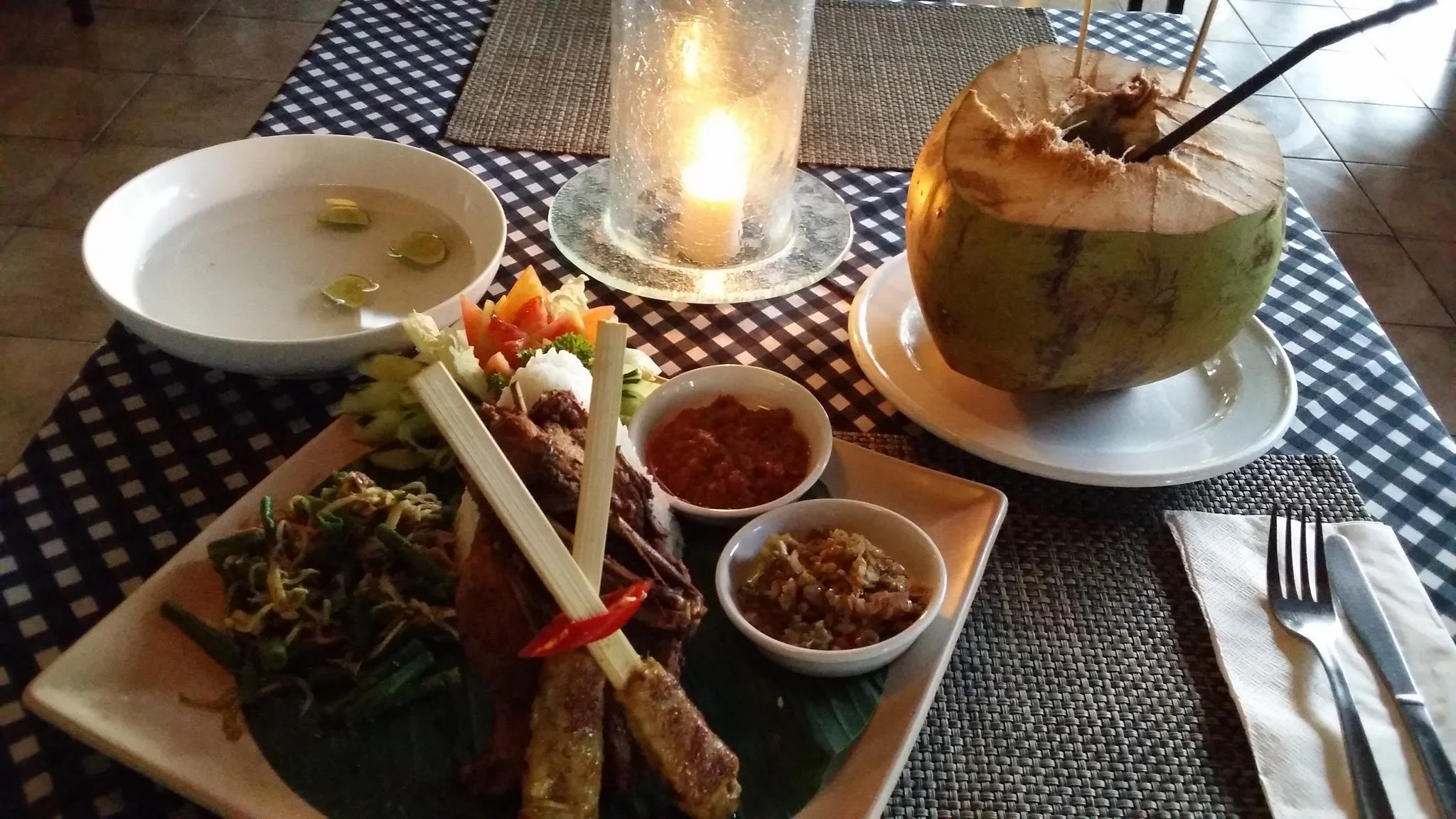
Bebek goreng and a young coconut
· I had bebek goreng and a young coconut for dinner.
· After dinner, I walked around the streets of Legian/Kuta for two hours. I bought a pair of flip-flops from one of the numerous surf/beach wear shops. Surf/beach wear is cheaper in Legian/Kuta.
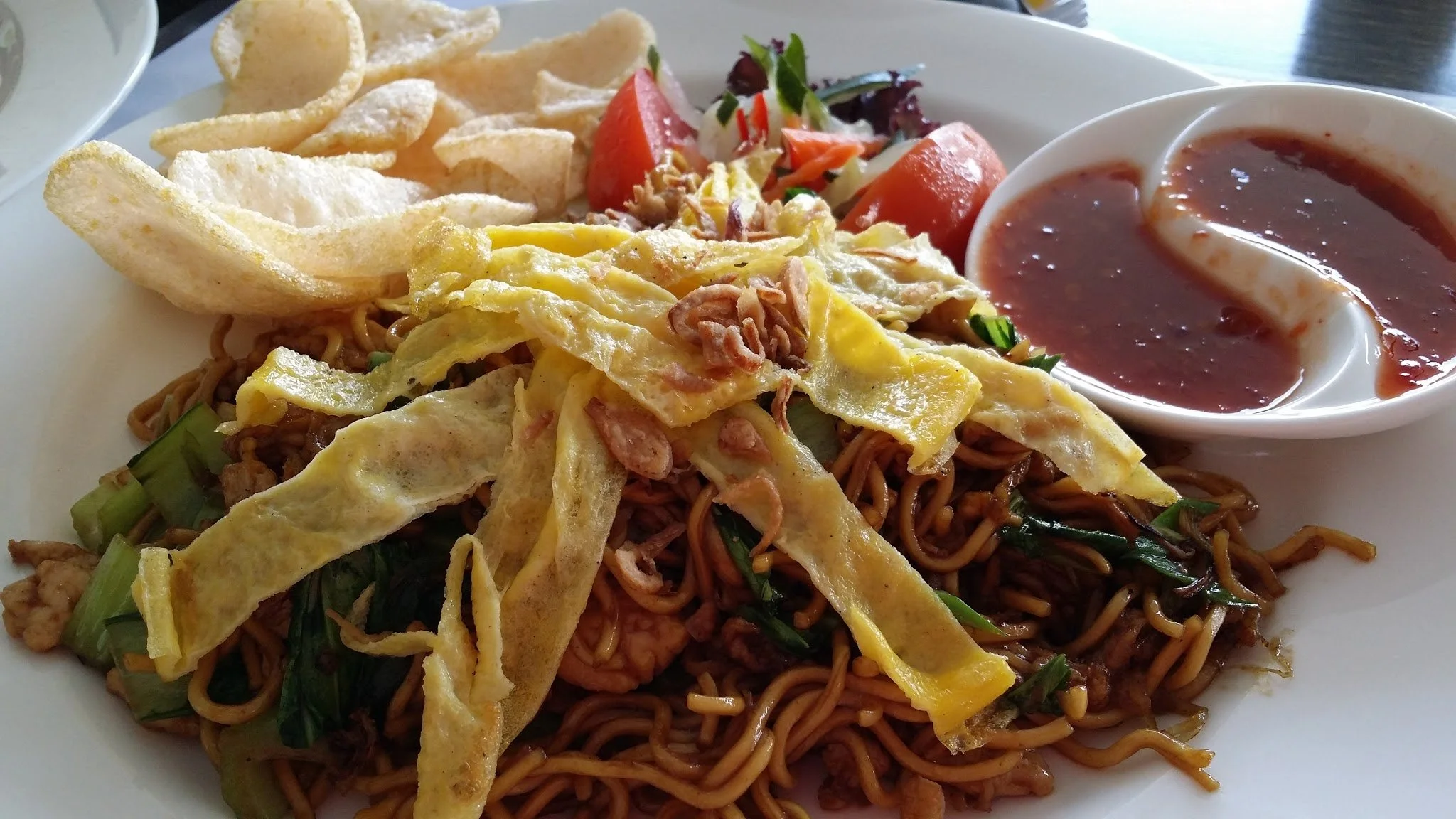
Fried noodles (a la carte)
Fruit platter that came with my fried noodles
The Magani hotel
· I decided to have a good breakfast at the Magani, since I wanted to lower my risk of getting food poisoning before my advanced dive course. Since the buffet breakfast had ended at 10am, I had their a la carte set.
· BJJ: I went to roll ("roll" means to grapple) at Synergy MMA. I brought my gi, but ended up wearing only my gi pants, since the guys were training nogi. I had a very good training session, with Niko (the head instructor) teaching and demonstrating a variety of BJJ techniques, some of which were new to me. The guys had good grappling fundamentals, helped me with my BJJ techniques as I don't know BJJ, and did not steamroll me (read: they did not crush me, even though I am at least 15-30kg lighter), so I had four technical rolls with them (I don't know the duration of each roll, though), which I appreciate very much!
· I have done many drop-ins at different dojos and gyms for the past nine years, so I am perfectly fine with being the only stranger on the mat, even if it means I am usually the only woman. I have been training with guys since day one, so I am used to it.
Post-BJJ dinner: pork ribs and pineapple juice
· I took a cab back to my hotel, washed up and had dinner which was so-so.
· Many thanks to my Tulamben dive instructors, namely Toto (the lead dive instructor), Chris (my dive instructor for all five dives), Guo Lu, and Cory. I was a little concerned that I would feel out of place since I would be alone, but I had so much fun, laughter and professionalism with you guys over the two days! Guo Lu, "Jia1 Hou4" is my favourite Hokkien song and I was really pleasantly surprised when you shared it with me on your device during the drive back to the Bali Scuba HQ. Thank you for the once-in-a-lifetime experience and I will always remember how I had such a good time while doing my advanced open water course in Tulamben, Bali. :)
One night at Tulamben
Tulamben dive site
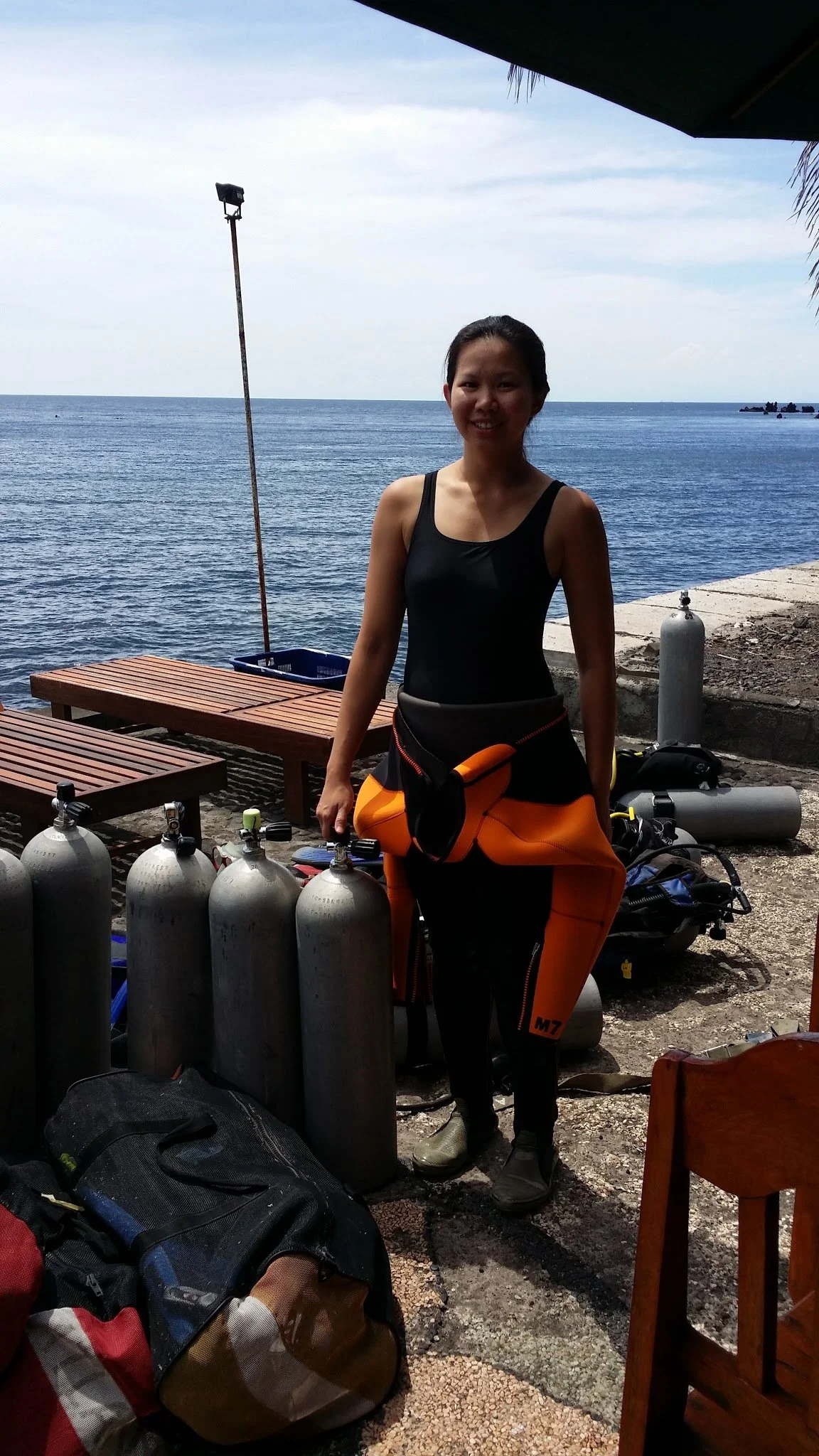
Wore my scuba wet suit while resting between dives
· Wreck dive: The wreck dive was my first dive after some time; my last dive was in Tioman, Malaysia, in March 2012. I had forgotten how to use the scuba gear, but my friendly dive instructors were patient and helped me to gear up. The different parts of the wreck were teeming with marine life!
· Navigation dive: I had to do a navigation skills test using an underwater compass and I passed. The current was a little strong, so I had to relax and just read the compass. After the skills test, it was a leisure dive.
· Night dive: The night dive at the shipwreck was my favourite dive! It wasn't as dark as I had expected since there were other divers as well. Nevertheless, I almost crashed into coral walls twice when I was away from the rest for a while, since I was so focused on moving forward that I didn't look to my left and right.
· To do a successful night dive for the first time, you have to trust your instructor: I had complete faith in Chris, since I knew that he was keeping an eye on me all the time. While we didn't dive side by side, we weren't far away from each other at all times, which is especially important for a night dive due to the low visibility. I have been told that I am good with air consumption, so I wasn't too worried about running out of air while doing the night dive. Anyway, I was hoping I would see a giant squid charging from out of nowhere, and live to tell the tale; I later watched a recent TED video [https://www.google.com.sg/url?sa=t&rct=j&q=&esrc=s&source=web&cd=1&cad=rja&uact=8&ved=0CCkQtwIwAA&url=http%3A%2F%2Fwww.ted.com%2Ftalks%2Fedith_widder_how_we_found_the_giant_squid&ei=CFJOU9X6DqWXiAeLmIGIBg&usg=AFQjCNGDXT0tH-cVjhylChNnjr1NHwUjFw&sig2=tIur3Vi7hZLJs6ZJ56wPbw&bvm=bv.64764171,d.aGc] that showed how they finally managed to have footage of a giant squid after years of research, so I think it isn't that easy to spot one. Haha.
Babi kecap, which was delicious, and it's not because I was hungry
· We had dinner at one of the restaurants nearby and the babi kecap was yummy! Or maybe it's because I like kecap manis a lot. I was exhausted, so I went to sleep at 10.15pm, instead of joining the dive instructors for a dive.
Day 4 (Friday): Tulamben Day 2 - Deep; Peak Performance Buoyancy
Good morning, Tulamben!
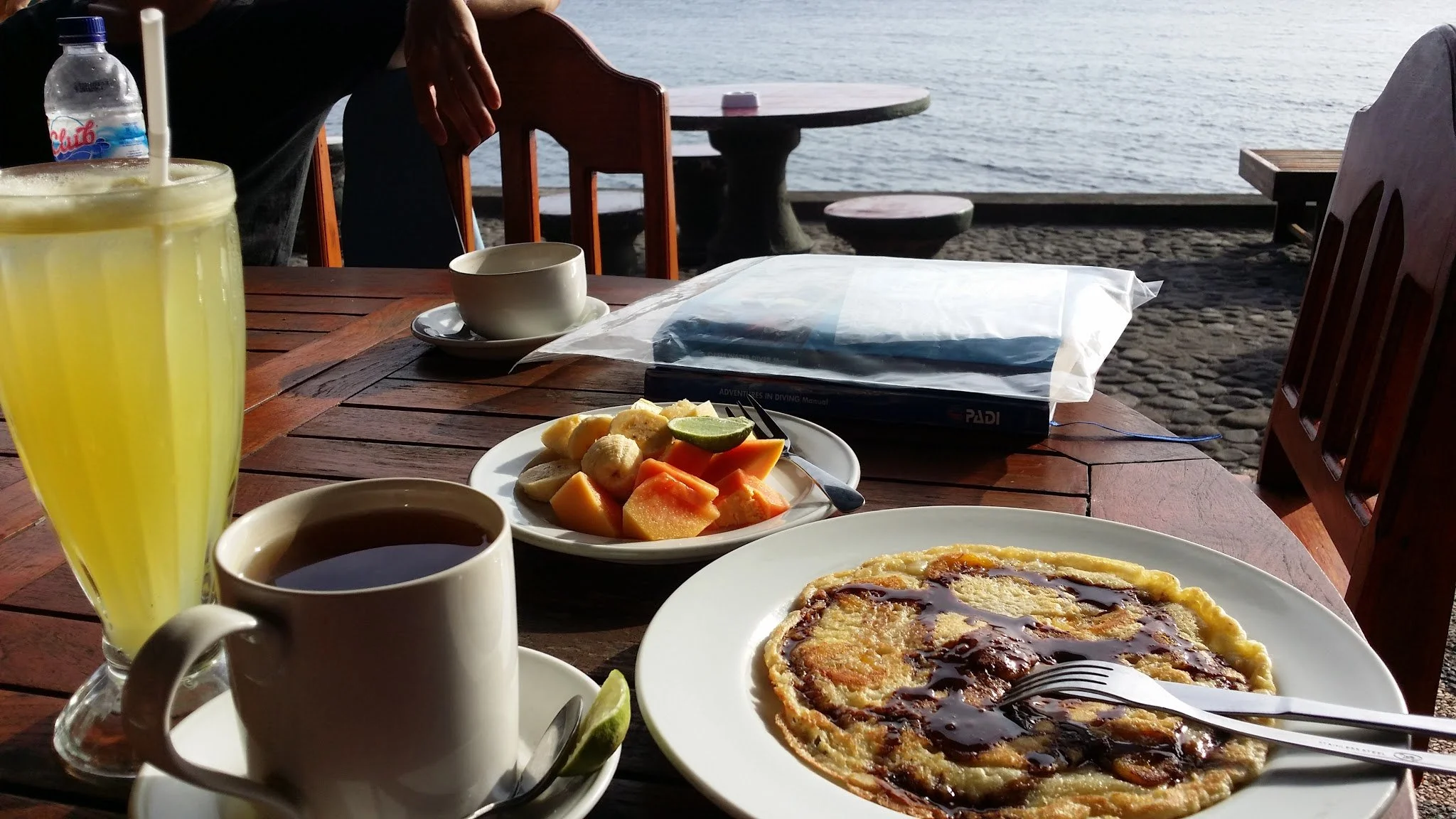
Breakfast by the sea
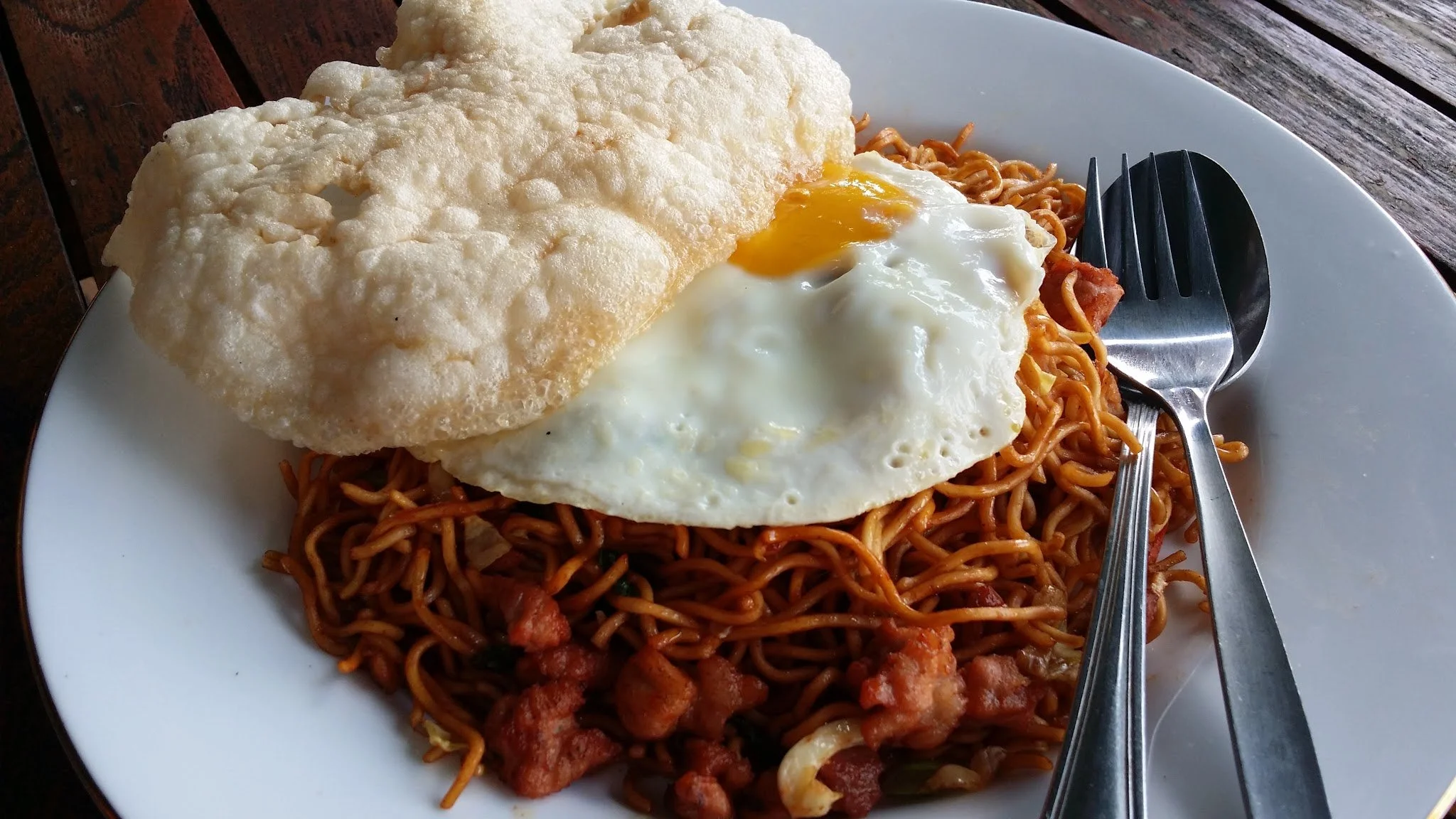
Lunch by the sea
· Deep dive: The deep dive was 31 metres below sea level, against a cliff drop. I think I had experienced slight nitrogen narcosis, since I remember wanting to dive further towards the bottom of the sea, which wasn't a wise thought, since the seabed couldn't be seen at all. Again, being good with air consumption (read: I think my longest dive was 53 minutes) meant that my dive instructors and I weren't too worried about me running out of air. Diving is such a surreal experience for me -- it's like being in another world, so I am always breathing slowly since I love the water.
· Peak Performance Buoyancy dive: My buoyancy is terrible. I'm not sure if it's partly because of my lanky physique, but I think one of the dive instructors had to slip an extra weight into my BCD during one of the dives and I was already wearing five weights on my weight belt. I learnt how to improve my buoyancy during this dive, although I will need to dive more to get it right. Having better buoyancy would mean that I will be able to dive closer to the corals - I'm currently a foot above the corals, which is rather far compared to the dive instructors - and see the intricate marine life more closely.
Bread and cheese
Steak with balsamic vinegar, cheese and greens
Strawberry and passion fruit vodka cooler
· I was rather hungry after the dive trip, so I decided to have steak and a light drink at a restaurant that had a live band - I like live bands - for dinner. We had to walk a distance (about 200 metres) with our scuba gear (BCD, weight belt, mask, flippers, and occasionally the oxygen tank) to the dive sites and back, so I guess I had a good workout for the two days.
· If you are physically fit and are comfortable with being in the sea, I would recommend scuba diving. I have always said that aquariums try to recreate the experience for land-dwellers, but it is just different when you are in the sea, with the fish and sea creatures right in front of you, without a glass barrier. For this Tulamben dive, I saw a reef shark, many different kinds of strange and colourful fish, shrimps (spearing mantis shrimp and so on), crabs, cuttlefish (two of which were well-camouflaged in the sand and two were rather aggressive while swimming), blue-spotted ray, lots of corals of different colours, sizes and shape, and so on. I have yet to see a sea turtle and a whale shark, so I will definitely dive again.
Day 5 (Saturday): Seminyak - Potato Head Beach Club

Potato Head Beach Club at Seminyak
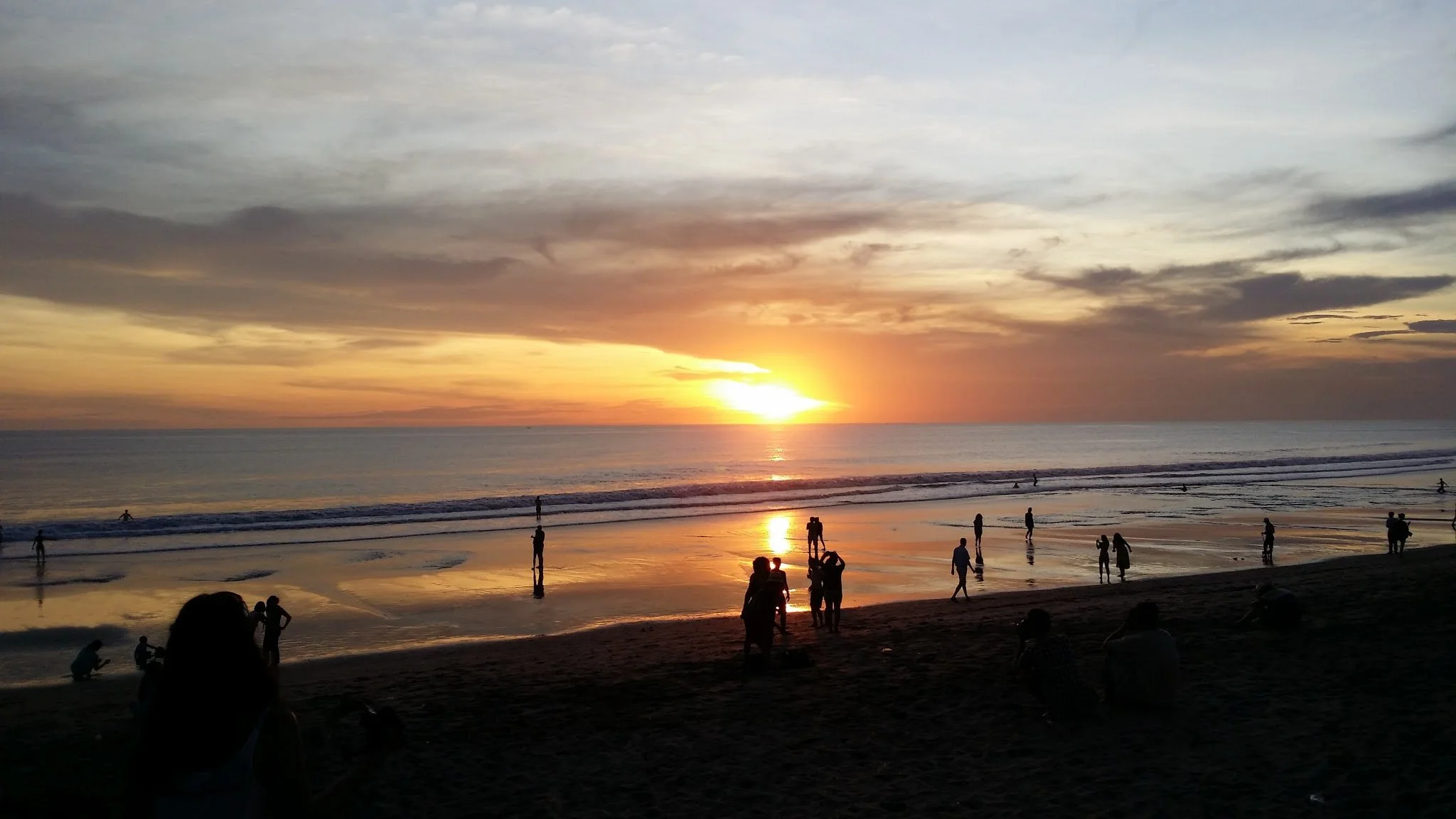
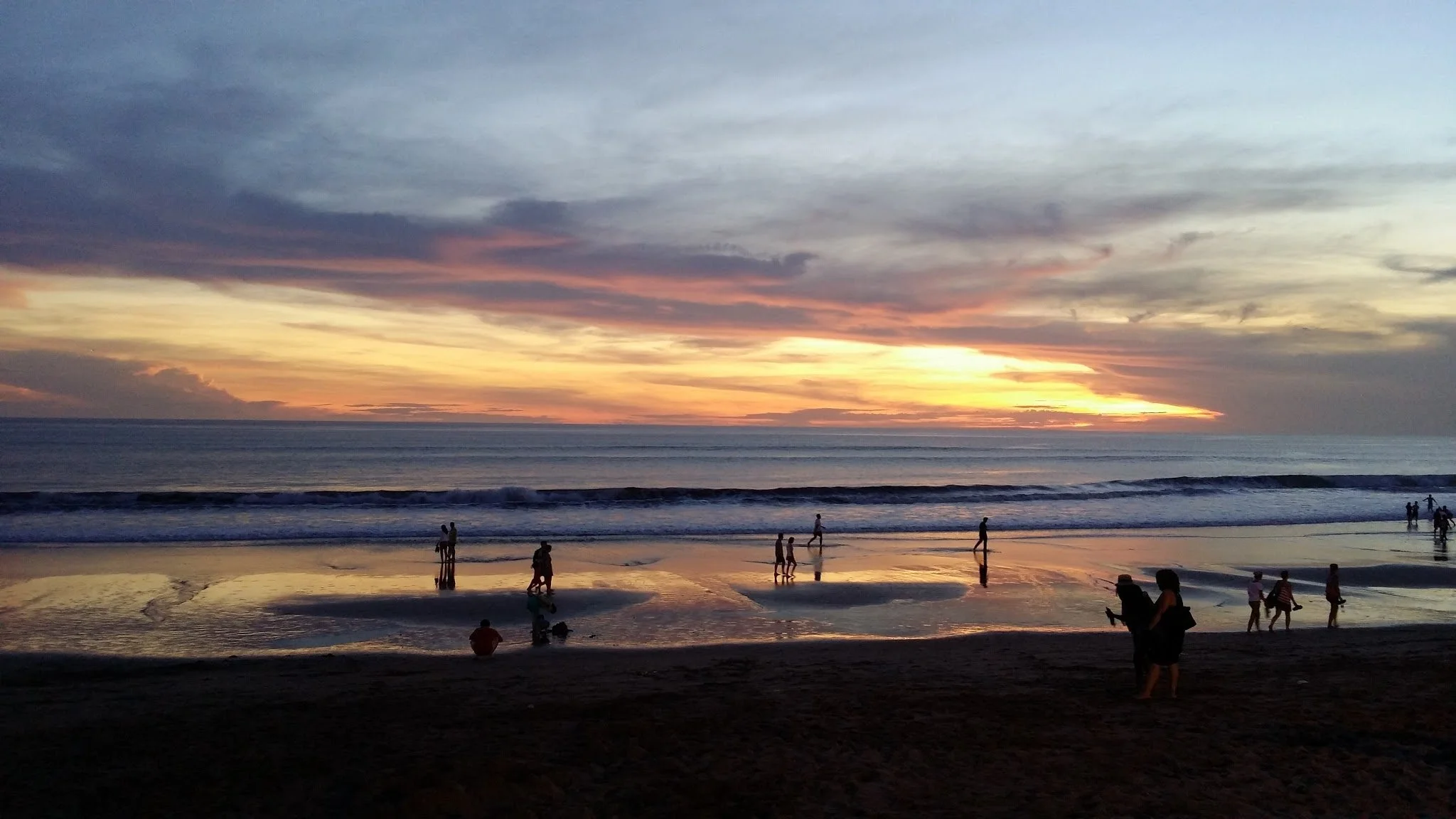

Sunset at Seminyak
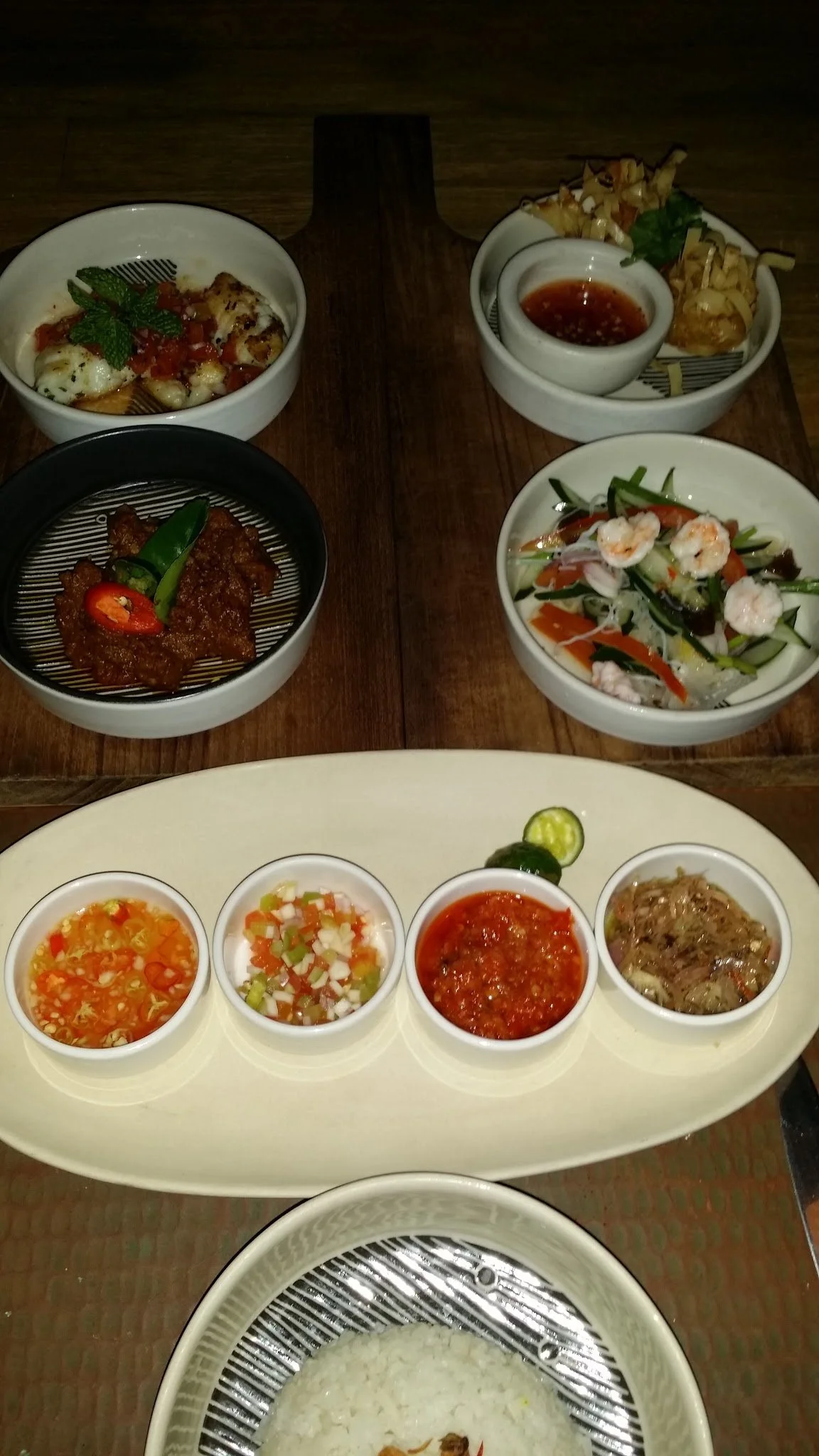
Asian tapas set and a young coconut at Lilin, the Asian restaurant
· The ambience at the Potato Head Beach Club was good, with the lounge music and dim lights -- perfect for chilling with friends and just relaxing under the stars on the large lawn of carpet grass. The Asian food was alright -- you would be able to find similar food in Singapore. I took a cab there and took a cab back to Legian/Kuta; it was a 10-minute cab ride one-way.
Rp 50 000 massage
· I did a Rp 50 000 one-hour massage at 10.30pm.
Day 6 (Sunday): Tanah Lot temple; Nusa Dua; Uluwatu temple; Jimabaran Seafood
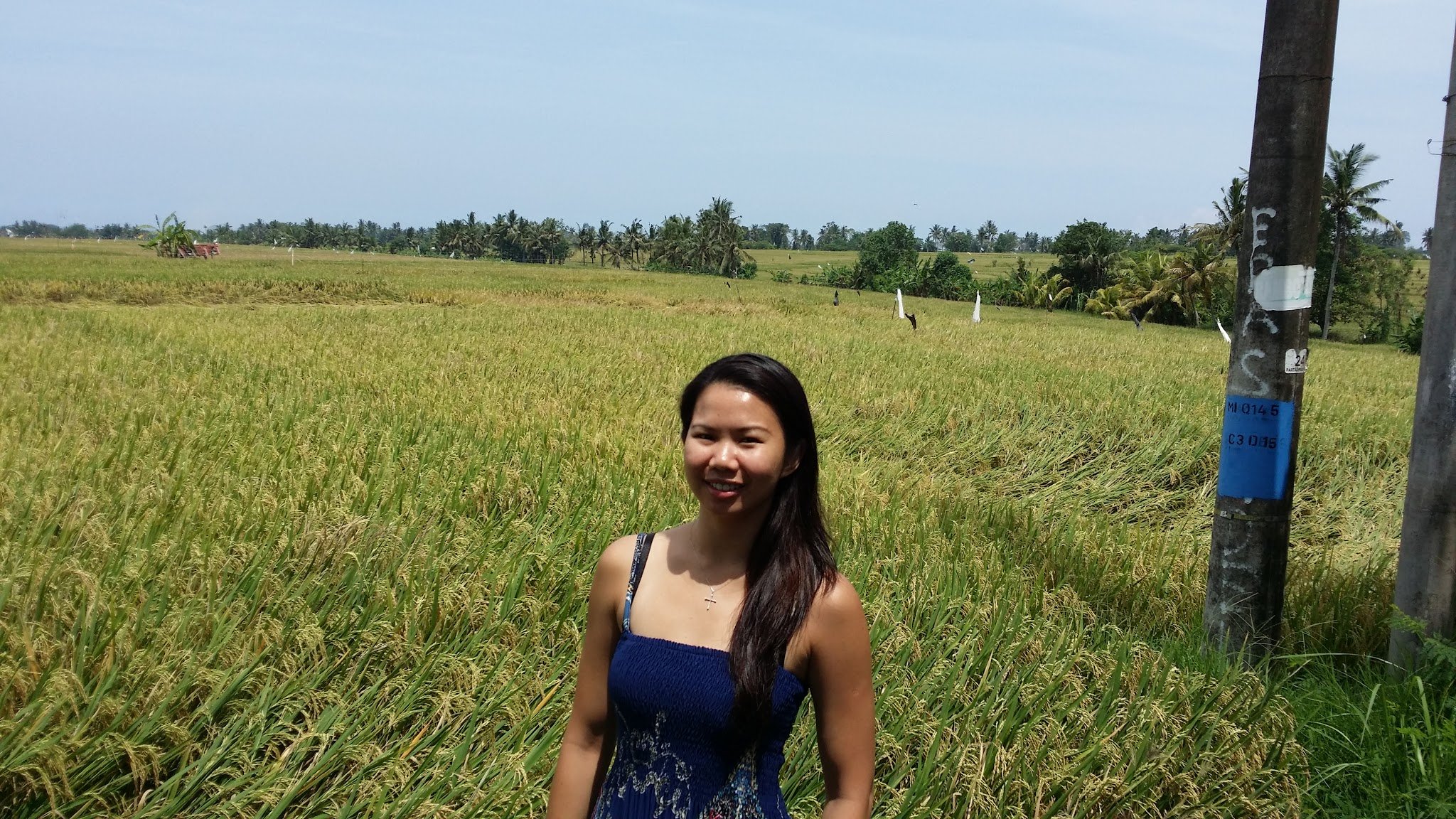
Padi field
Padi
· On the way to Tanah Lot, my Ubud guide stopped along the road for me so that I could see the padi fields up close; I think I had asked many questions about padi fields. Haha.
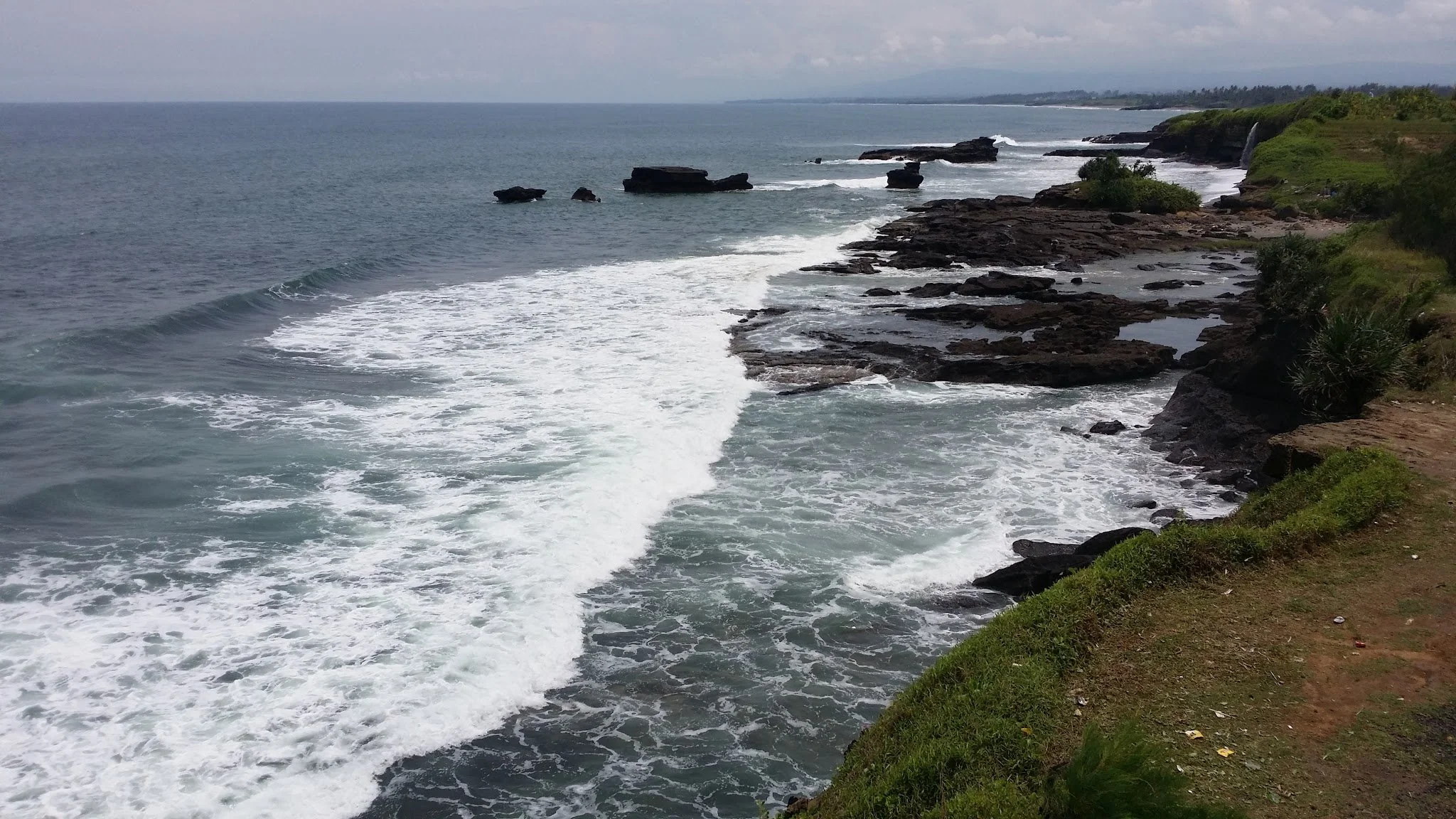
Cliff
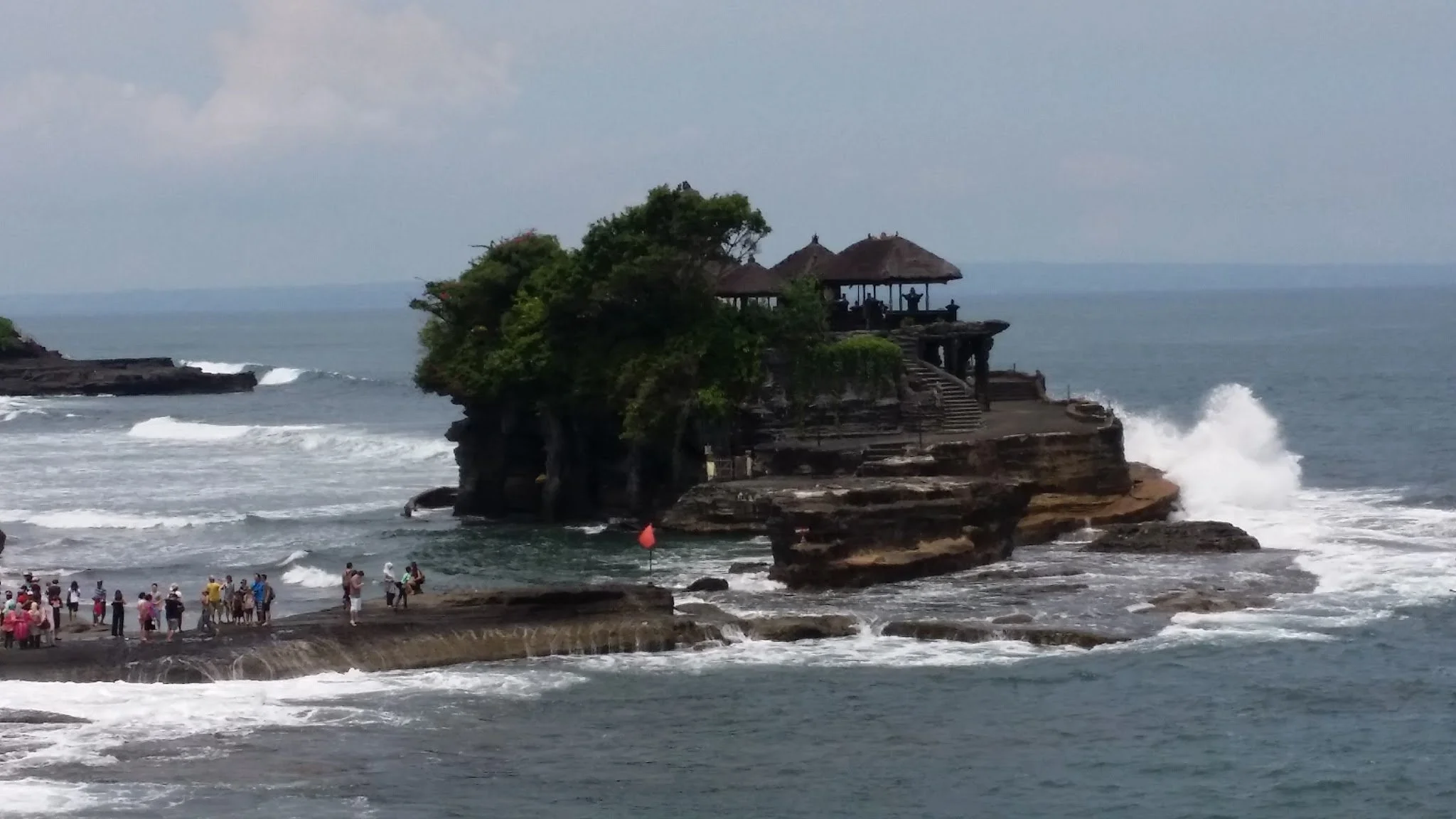
Tanah Lot temple
This yummy kueh is similar to ondeh ondeh, with a gula melaka filling and shaved coconut
· The Tanah Lot area was full of tourists and there were many smaller temples. I was taken in by the cliffs and waves, though, since I didn't think I'd see such cliffs in this part of the world. Also, it was during this time that the Ubud guide suggest that I spend two nights at Ubud since Ubud is closer to the other temples and padi fields and has a different vibe, which I eventually did.
Orange juice, which was very sweet and tasted similar to Thai orange juice
Sop Buntut (Oxtail Soup)
The soup
· We had lunch at a local mall, and I had sop buntut and an orange juice, which was very nice.
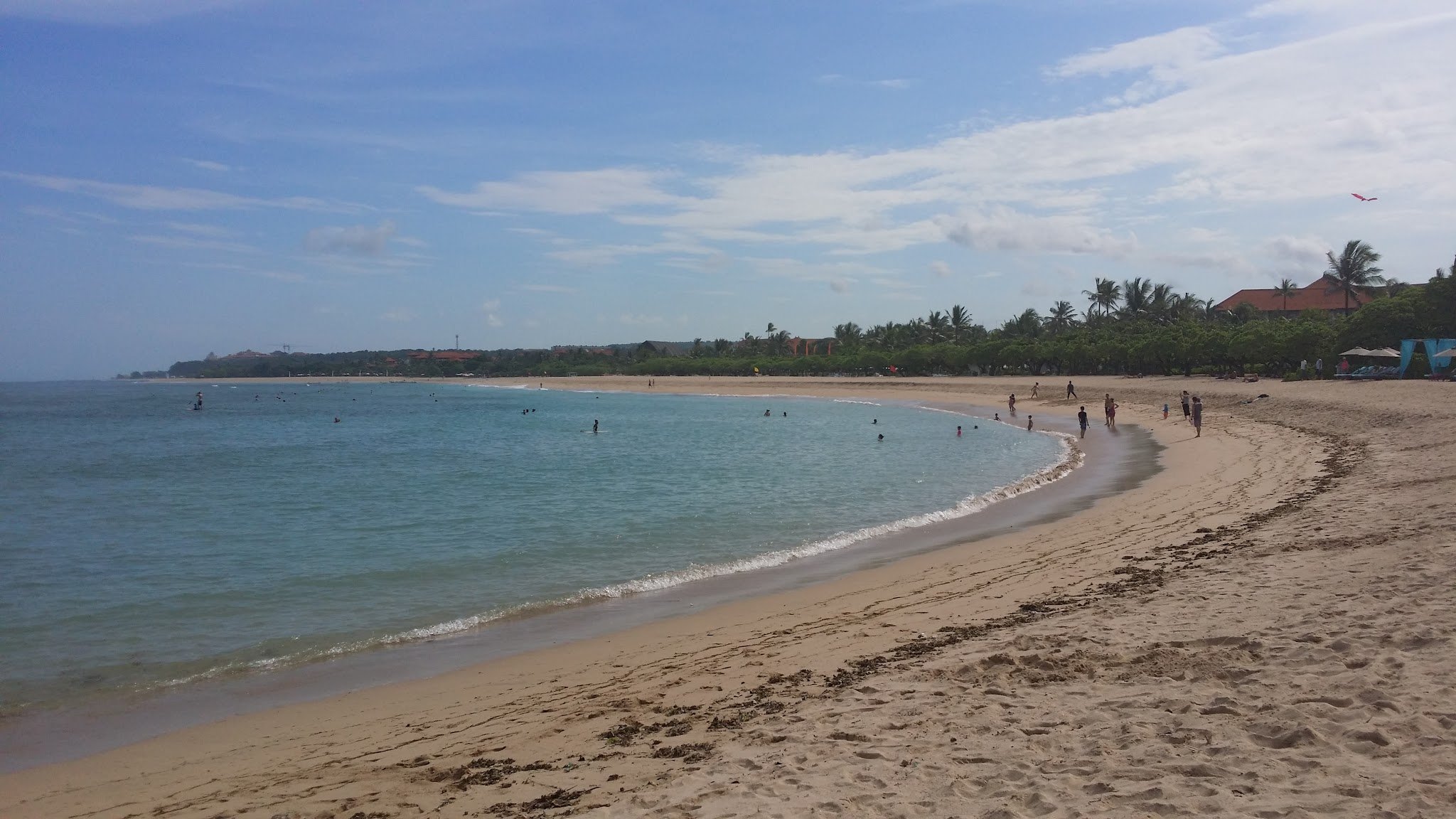
Nusa Dua
· Nusa Dua is different from Kuta, with five-star hotels and pretty gardens; I would like to stay there for a few nights in future.
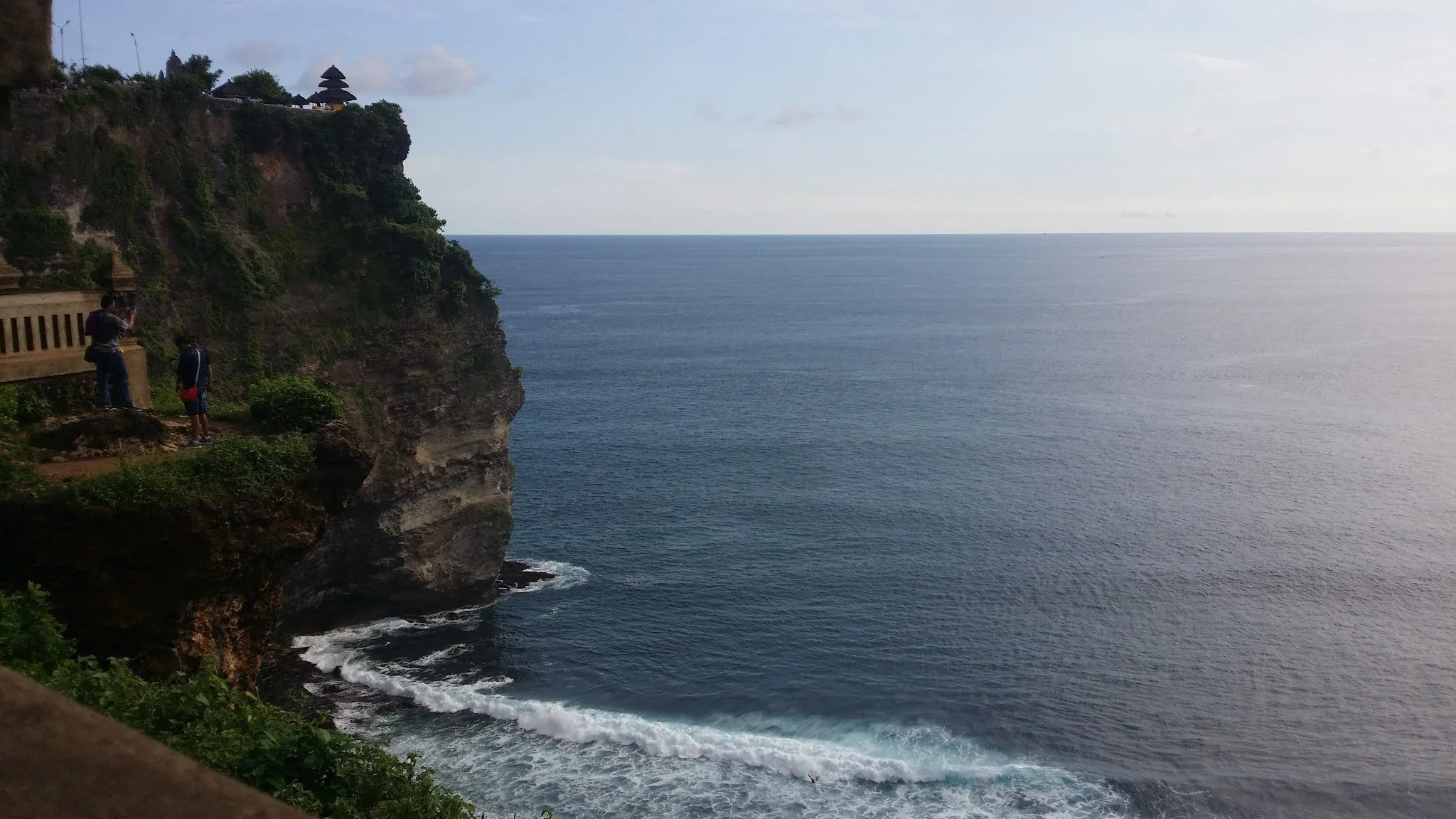
Uluwatu temple
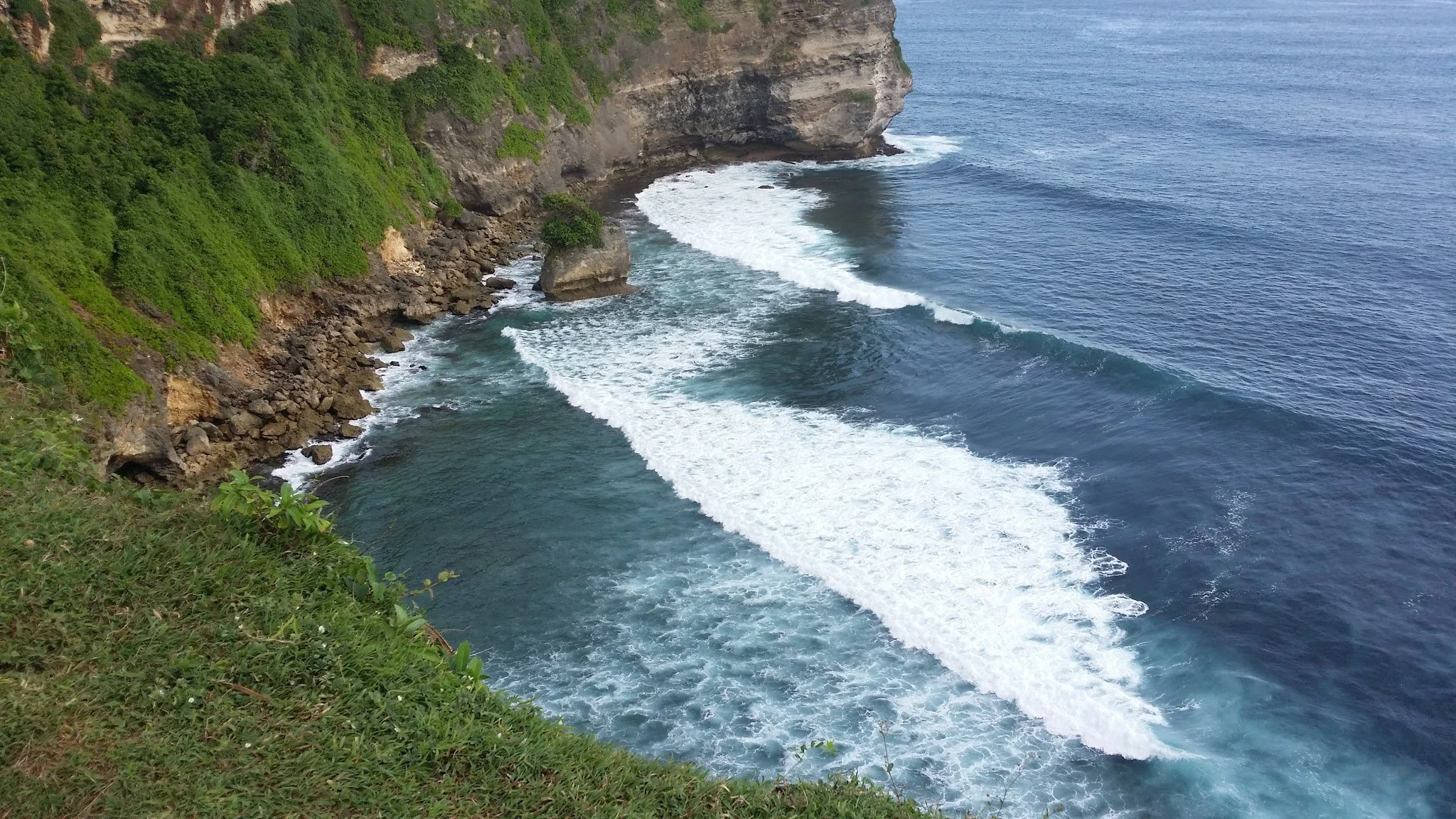
Strong waves
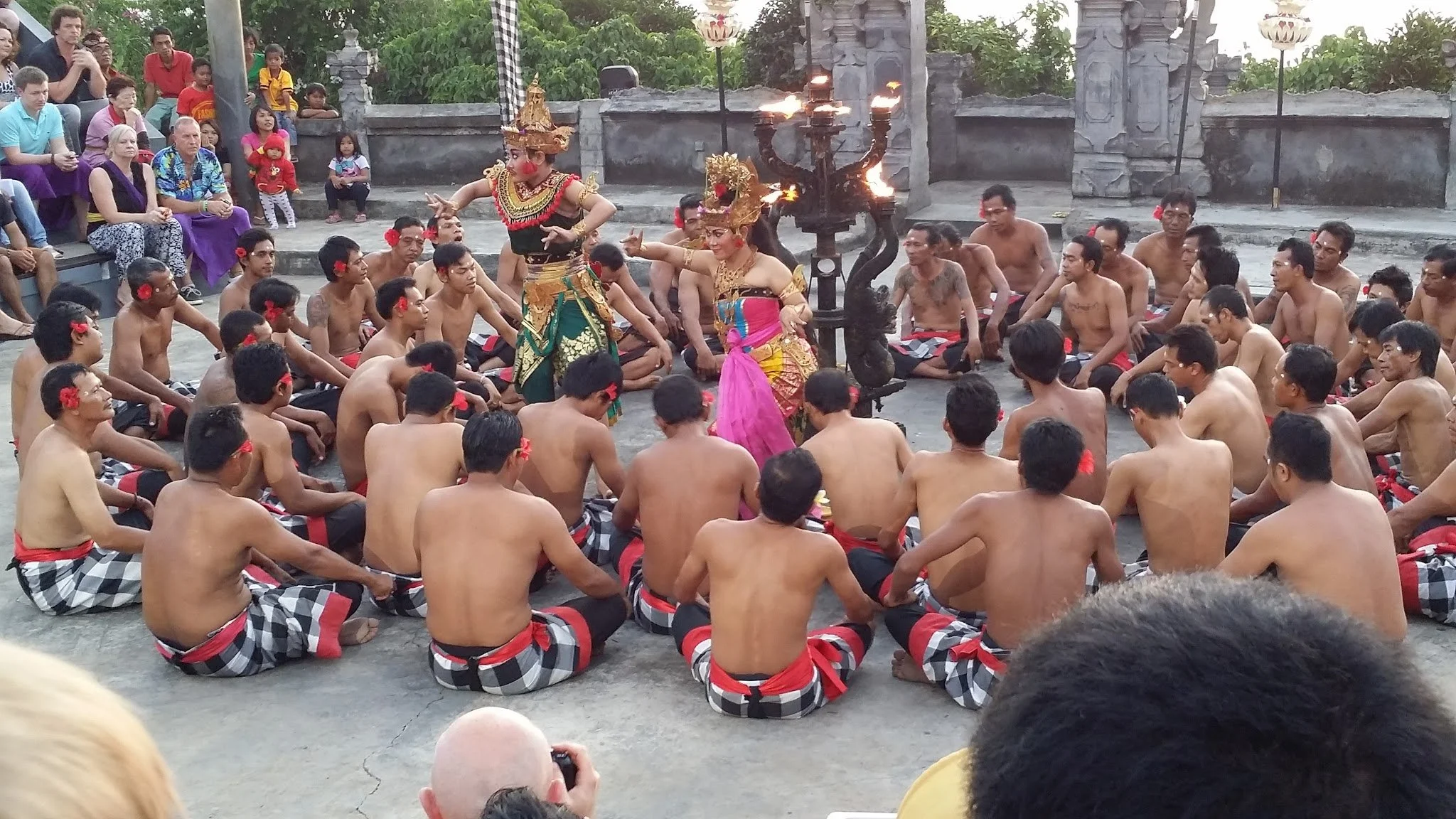
Kecak dance
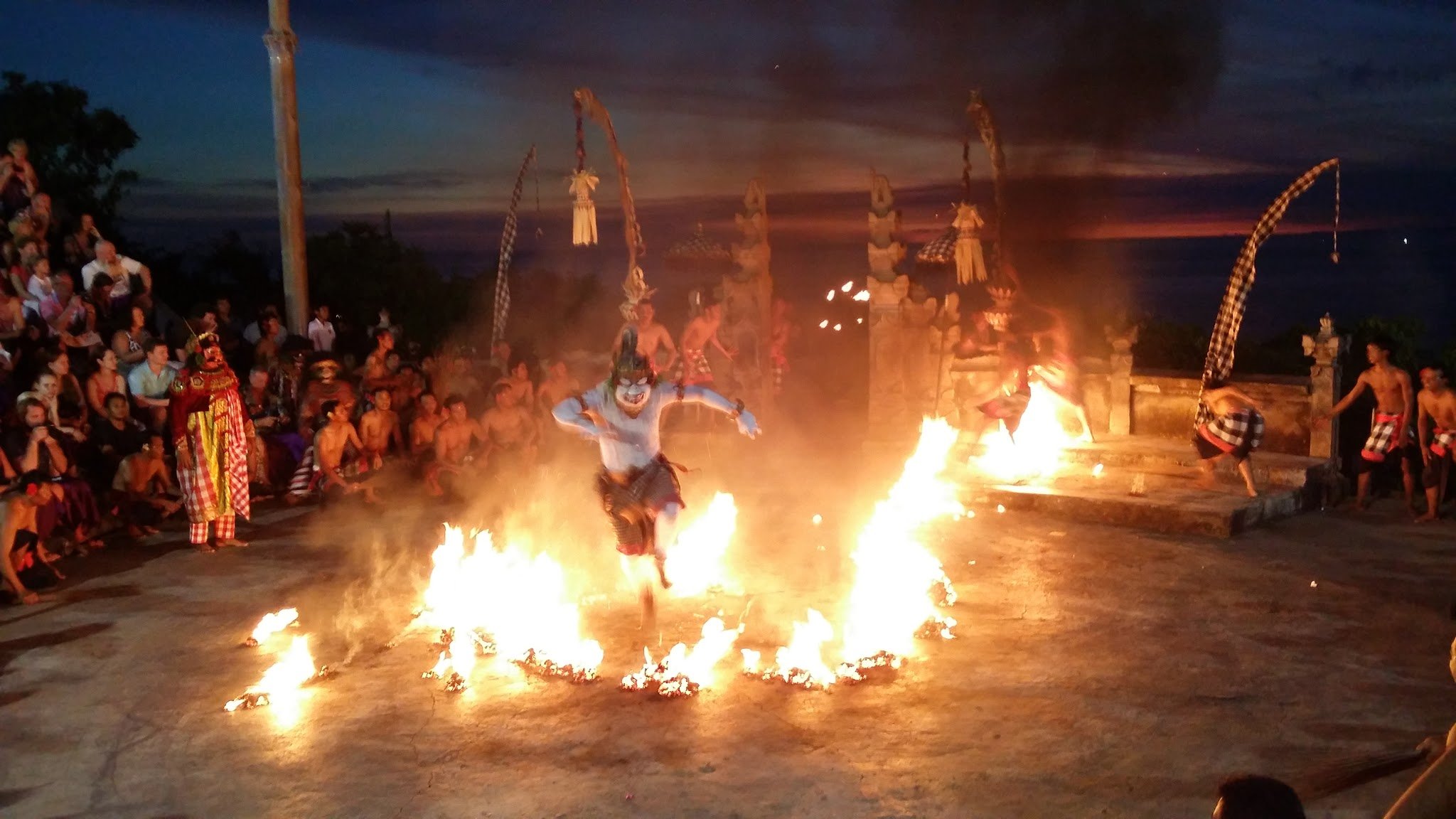
Fire!
· The Uluwatu temple and Kecak dance was our second last stop for the day. I thought I'd see one Balinese dance while I was in Bali, since it was a 'cultural' day for me.
Lobster
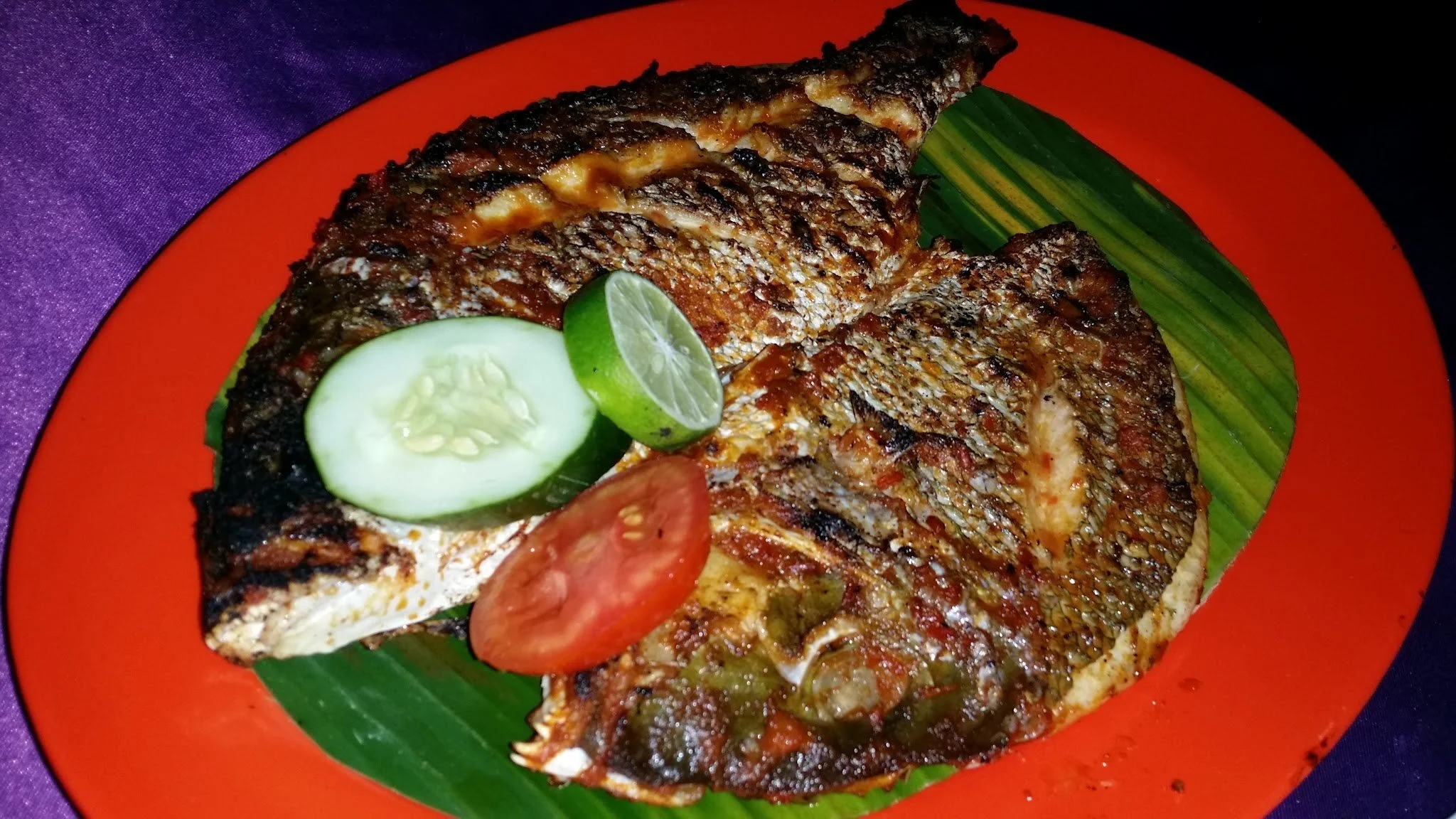
Fish
Jimbaran
· Jimbaran seafood was average. I suppose just going there once was enough.
· Since it was last day at Kuta, I decided to spend some time at the mall; I had already walked along the small streets on my first day.

Happily sipping on my ice blended

Eggs Benny and Ice blended
I had the whole place to myself
Beachwalk Shopping Centre, Kuta
· I walked for about 10 minutes to Beachwalk Shopping Centre and had breakfast at The Coffee Bean and Tea Leaf as I felt like having a pure double chocolate ice blended with whipped cream.
· I walked around the mall for a bit and found a cinema, so I checked the reviews for "Divergent" and "Captain America: The Winter Soldier" using my smartphone and decided to go with the latter, which was pretty good.
· I did a Rp 50 000 massage at the same massage place before walking back to my hotel to take an afternoon nap. I had planned to surf at Kuta beach before going up to Ubud for the next three days, but the weather was too hot for me and I didn't want to be sunburnt.


Selfie at Legian beach during sunset
Sunset at Legian beach
Bebek betutu at Bebek Tepi Sawah (Beachwalk Shopping Centre, Kuta)
· I had bebek betutu at Bebek Tepi Sawah [http://www.bebektepisawahrestaurant.com/menu-beachwalk.htm], which I thought was decent, although it was my first time eating the dish and I had no basis for comparison.
Day 8 (Tuesday): from Legian/Kuta to Ubud
While waiting for my room; I had an early check-in at 12 noon instead of 2pm
My room at Suly resort
· In the morning, a driver - not the Ubud guide since he was busy - came to pick me up from my hotel in Legian/Kuta and off we went to Ubud. Before I had arrived in Bali, my plan was to do white-water rafting at Telaga Waja river, but I may be white-water rafting somewhere else, so I decided not to.
Babi guling, which was very tasty
The soup was very good too
My usual drink, since I love the jelly-like flesh of young coconuts that can only be found in Bali and Thailand
· Babi guling @ Mum Oka/Ibu Oka
Fish, which was nice
Vegetables
Self-explanatory
We ate in a 'hut' and sat cross-legged
· Dinner was with the Ubud guide at a local Balinese restaurant. The ambience was good: quiet and there was a slight drizzle.
Day 9 (Wednesday): Ubud; Gunung Kawi temple; Tirta Empul temple; Tegallalang Rice Terrace; 2-hour Massage, Scrub and Spa; Organic Food dinner
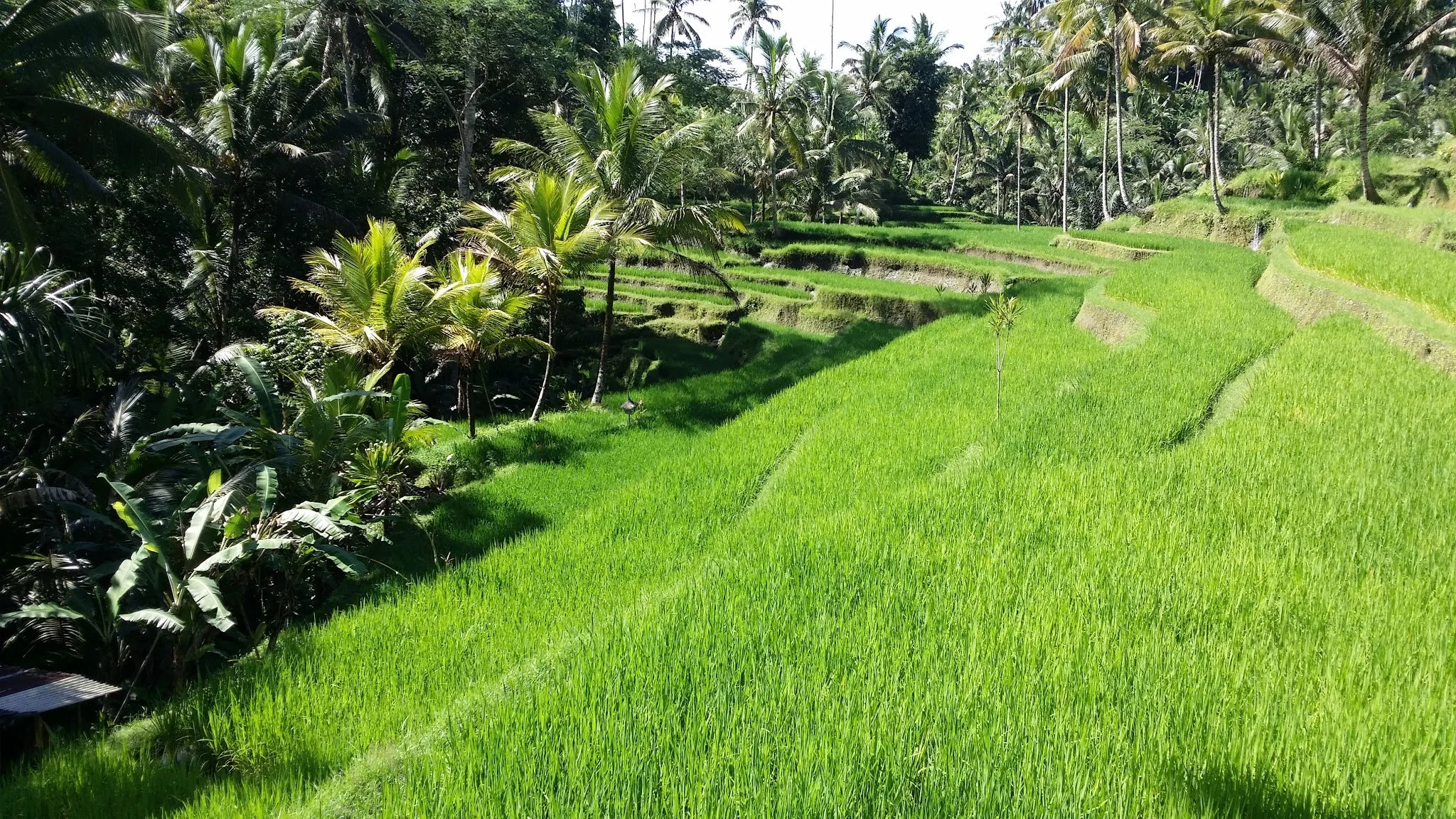
While walking to the Gunung Kawi temple
While walking through the rice terraces
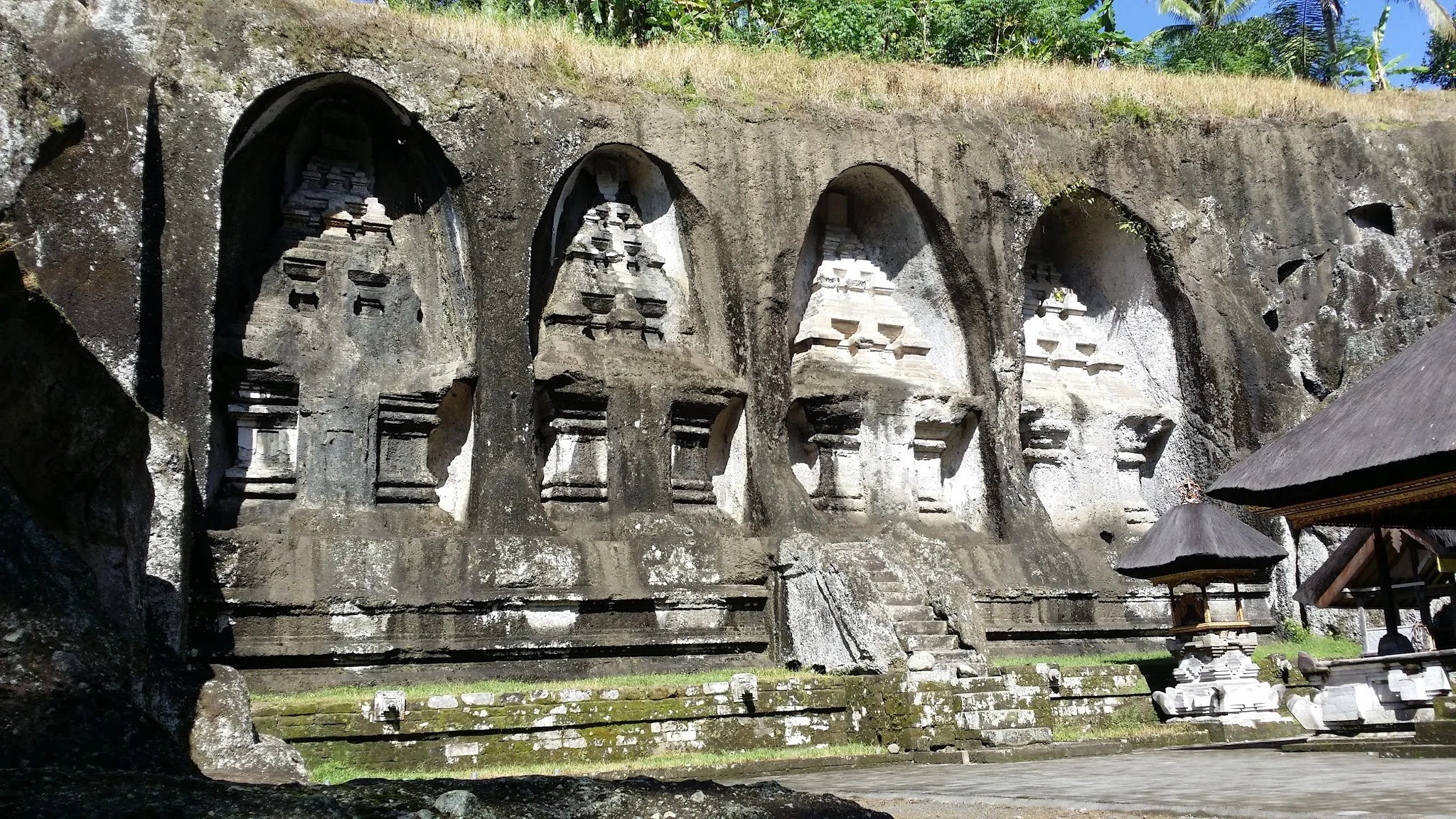
One side of the Gunung Kawi temple
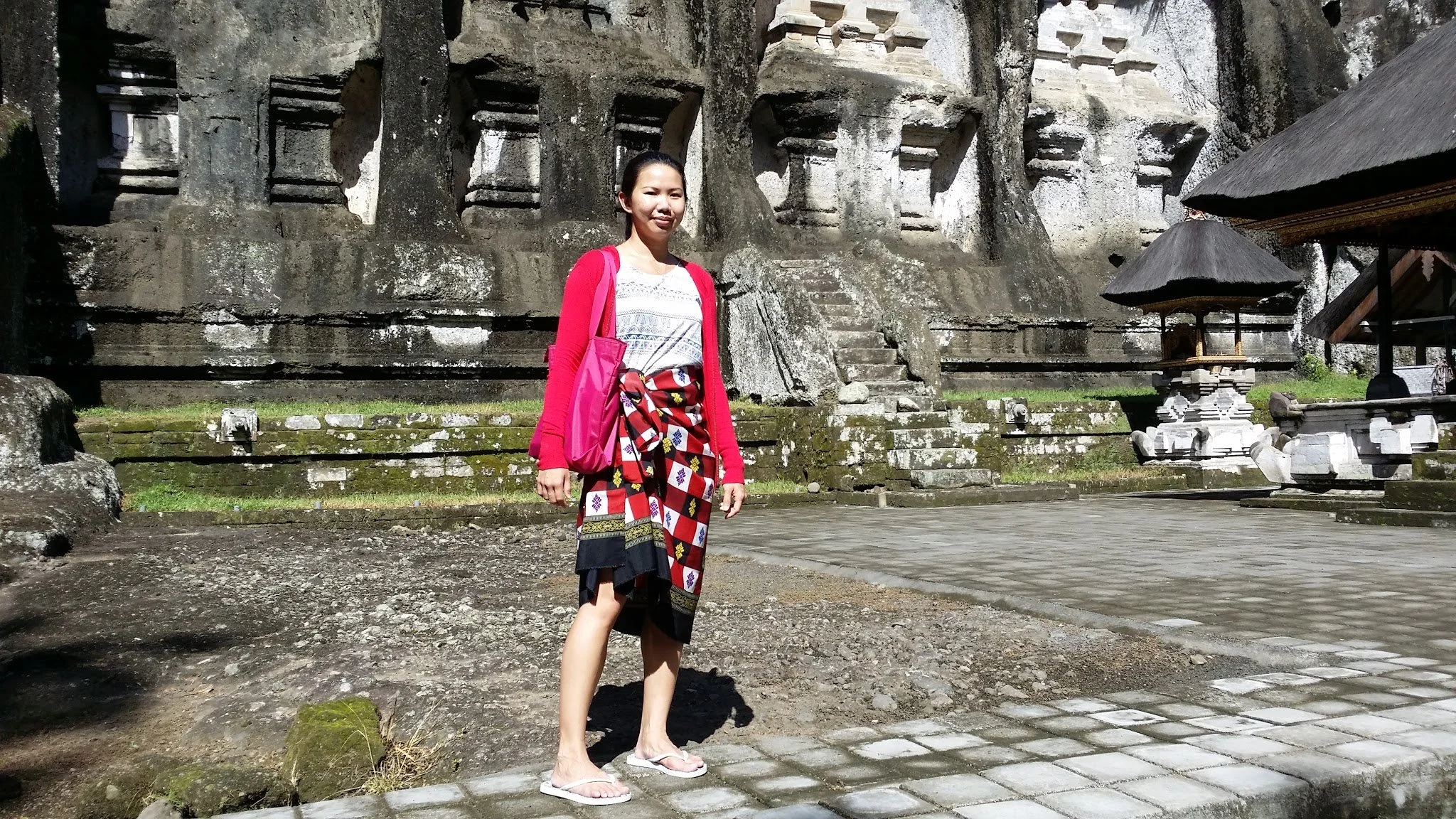
The other side of the Gunung Kawi temple
· Gunung Kawi temple: I let my Ubud guide plan the tour, although I did mention that I wanted to see the "temple that has the large stone carvings" which I had seen online as part of my research for the trip, so the first stop was the Gunung Kawi temple, also known as The Rocky temple. It is my favourite temple of the four temples that I visited, so I would definitely recommend it. A little warning: There are many steps to climb, but you get to see some rice terraces along the way.
Tirta Empul temple aka The Holy Spring temple
One of the locals at the Tirta Empul temple
This is where the water flows from, all year round
Praying mantis on my Ubud guide's finger
· Tirta Empul temple: This temple is also known as the Holy Spring temple. It is an ancient temple and there are tourists who will also go into the water for cleansing. There is a spring from which all the water comes from and apparently there is water flowing from it all the time.

Tegallalang

Selfie at Tegallalang; the path was very narrow and I was trying my best to balance
· Tegallalang Rice Terrace: The rice terraces are perfectly manicured. There were tourists who walked through them, but I didn't, since I had already walked through the rice terraces that were near the Gunung Kawi temple.
· I asked my guide if he could plan a spa session for me and so he dropped me off at a spa place -- I did two hours of massage, scrub and soak. After the pampering session, the spa owner dropped me off at Suly and I took an afternoon nap.
Avocado on pita bread
Coconut-based vanilla drink, with a hollow stem for a straw
Organic chocolate mousse
· Down to Earth Cafe: [http://www.downtoearthbali.com/#!__dte-ubud] I met my guide for dinner and he took me to this organic food cafe, which served fresh produce and had a very good ambience. We had gone to Bali Buddha first, but there were no available seats. This time, though, he came on a motorbike, so I rode pillion without a helmet, at about 30-34 km/hour. It was fun having the cool night wind in my hair and being on a motorbike after five years. I didn't think he was serious when he had casually mentioned in the afternoon that he would come on a motorbike, but I think he knew I was game for almost anything.
Day 10 (Thursday): Return home to Singapore
Breakfast at Suly resort
· It was a quiet morning of having breakfast while looking at the small plots of padi fields in the gentle sunshine. I returned my hotel key and went to Ngurah Rai airport with my guide. I thanked him for the awesome company -- he spoke good English, explained the little details of the Balinese way of life which I was interested in, and knew the best spots for sight-seeing and photo-taking at the different sites. If you would like his contact, let me know. Many thanks to you for passing his contact to me! :)
· I arrived at the airport, checked in my luggage, paid the departure tax at another counter, went through the security clearance smoothly, and had a safe flight. I landed in Singapore at 5pm, took a cab at 5.45pm and was home at 6pm, with my dog sticking to me for the next few hours since we missed each other so much. Haha.
Post-trip
· I didn't miss Singapore food at all, which is strange since I usually miss bak chor mee very much. Then again, I had my sambal stingray and fried hokkien prawn mee fix before the Bali trip, thanks to a friend.
· It's always good to be home. Home sweet home. I love Singapore!
Thanks for reading this extremely long entry!
—
Travelling solo as a woman?
I wrote this article after travelling around Bali alone for 10 days in 2014. More than a decade later, many of the lessons I took away from travelling solo - awareness, composure, confidence, good judgment, and knowing what to do when something does not feel right - are also reflected in the work I now do through Iron Flora.
If you are preparing for your first solo trip, travelling regularly for work, or simply want to feel more confident navigating unfamiliar situations on your own, you are welcome to learn with us.
Through Iron Flora, we practise practical awareness, communication, confidence-building and simple effective self-protection skills in a supportive environment for women.